
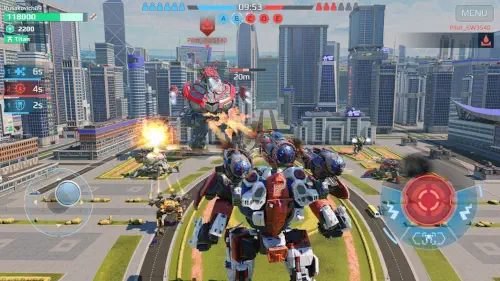
War Robots is a f2p 6v6 online mech shooter from MYGAMES, formerly associated with Pixonic, where players pilot giant combat robots through fast real time battles.

Rather than simply turning every match into a race for eliminations, the War Robots game mixes third person shooting with beacon control, tactical positioning, weapon customization, robot abilities, and team coordination. That combination gives War Robots mech shooter gameplay a distinctive rhythm: choosing the right machine and loadout can matter just as much as aiming accurately.
Set in a post apocalyptic science fiction world, War Robots puts players behind the controls of heavily armed machines built for close range clashes, long distance attacks, rapid movement, and specialized battlefield roles. The combat is accessible enough to understand quickly, but its deeper systems encourage players to experiment with different robots, weapons, modules, pilots, and strategies as their collection grows.
What Is War Robots?
The Story Behind War Robots
From Pixonic’s Mech Shooter to the Modern War Robots
War Robots began as Pixonic’s vision of a mobile mech shooter where players could control heavily armed combat robots instead of traditional soldiers. Since its 2014 launch, the game has developed from a relatively straightforward robot versus robot shooter into a much larger multiplayer experience built around customizable machines, evolving weapon systems, competitive modes, and long term progression.
The modern game, now associated with MYGAMES, keeps that original mechanical identity intact while expanding the number of robots, weapons, abilities, maps, progression systems, and competitive activities available to players. That combination is a major reason War Robots remains one of the better-known mobile mech combat games for players looking for something deeper than a simple arcade shooter.
The Post Apocalyptic Sci-Fi Setting
The battlefield of War Robots is built around a post-apocalyptic science-fiction atmosphere rather than a realistic military setting. Players fight through ruined cities, industrial environments, futuristic facilities, and other war-torn locations while controlling machines that look more like walking weapons platforms than conventional tanks.
This setting gives the game room to introduce robots with radically different designs and abilities. A fast machine can dash around cover, a heavily armored robot can absorb punishment on the frontline, while another chassis can specialize in long-range attacks or tactical abilities. The result is a battlefield where movement, robot selection, and weapon configuration matter almost as much as raw firepower.
Building a Game Around Giant Combat Robots
The central idea behind War Robots is simple: put giant combat machines into a real-time multiplayer arena and give players control over how those machines fight.
Every robot brings its own combination of movement speed, durability, weapon hardpoints, and special capabilities. This means that choosing a robot is already part of the strategy. A player who prefers aggressive close-range combat needs a very different setup from someone who prefers keeping enemies at distance.
The customization system pushes that idea further. Weapons can be changed, modules can be installed, pilot abilities can be developed, and equipment can be upgraded. A robot therefore becomes more than a character selection; it becomes a combat platform that players can gradually shape around a preferred playstyle.
War Robots’ Growth Since Its 2014 Launch
Since launching in 2014, War Robots has expanded considerably beyond its original mobile shooter concept. The game now features more than 50 robot chassis, a large collection of weapons, multiple multiplayer modes, clan competition, progression systems, and cross-platform play.
That growth has also changed the experience for returning players. The modern version contains considerably more equipment and strategic possibilities than the early game, while new content and balance changes continue to influence which robots and weapons are effective.
For someone searching for a War Robots mobile mech game with deep customization, this long term evolution is important. The game is no longer simply about choosing a robot and shooting the opposing team; understanding builds, objectives, positioning, progression, and the current competitive environment has become part of the experience.
What Type of Game Is War Robots?
Third Person Mech Shooter
At its core, War Robots is a third-person mech shooter. The camera remains behind the player’s robot, providing a broad view of the battlefield while players move, aim weapons, engage opponents, and navigate around obstacles.
The third-person perspective is particularly useful during close combat because players need to monitor both the target directly ahead and the surrounding battlefield. Cover, enemy positioning, beacon locations, and incoming attacks can all influence whether it is safe to continue firing or reposition.
6v6 Team-Based PvP
The primary multiplayer experience revolves around 6v6 battles, putting twelve players into the same real-time battlefield. Each player controls a combat robot and contributes to the team’s overall performance.
In objective focused modes, simply achieving the highest number of eliminations is not always enough. Teams may need to capture and hold beacons, control important areas, or maintain enough battlefield pressure to secure victory.
This makes War Robots 6v6 gameplay more tactical than a straightforward deathmatch. A robot capturing an important beacon can sometimes contribute more to the team’s victory than one chasing an isolated enemy across the map.
Real Time Multiplayer Combat
Combat takes place in real time, so decisions have immediate consequences. Moving into the wrong position can expose a robot to several enemies, while capturing a beacon at the right moment can completely change the flow of a match.
Weapon range, reload times, robot speed, armor, shields, and special abilities all influence individual engagements. Players therefore need to think about when to attack, when to retreat, and when supporting a teammate is more valuable than pursuing another elimination.
The real time structure also gives War Robots multiplayer battles their fast pace. Matches can shift rapidly when one team loses several robots or when control of key beacons changes hands.
Free to Play Robot Warfare
War Robots uses a free-to-play model, allowing players to enter the battlefield without purchasing the base game. Progression is connected to several resources and currencies, while robots, weapons, upgrades, modules, and other items provide long-term goals.
The model also creates one of the game’s most discussed aspects: monetization. Premium currencies, newer equipment, faster progression, and powerful items can influence how quickly players develop their hangars.
For free players, understanding where to spend resources becomes important. Building a focused collection of effective robots can be more useful than attempting to upgrade everything at once.
Cross Platform Mech Battles
War Robots extends beyond mobile devices through cross-platform play, with the game available across supported iOS, Android, and PC environments. This gives players more flexibility in how they access their account and compete.
Cross-platform multiplayer also expands the potential player pool, allowing people using different supported platforms to participate in the same competitive ecosystem.
For players searching for a cross platform mobile mech shooter, this is one of War Robots’ more significant advantages because the game does not restrict its multiplayer identity to a single device type.
What Makes War Robots Different?
Mech Combat
War Robots delivers a faster and more accessible version of giant-robot combat than traditional military simulations. Players control machines directly from a third person perspective while tracking enemies, navigating the environment, managing weapons, and responding to changing objectives.
The result is combat that feels immediately approachable but still leaves room for tactical decisions about positioning and timing.
More Than 50 Robot Chassis
The game’s large robot roster is one of its biggest attractions. Different chassis offer different combinations of speed, armor, weapon hardpoints, and abilities, making robot selection an important part of preparation.
For players searching for War Robots best robots for beginners, understanding these differences is more useful than simply choosing the machine with the highest advertised statistics. A robot that matches a player’s preferred range and movement style can be easier to master than a supposedly stronger machine that requires advanced positioning.
Hundreds of Weapon Combinations
War Robots goes beyond simple robot collection by allowing players to experiment with extensive weapon combinations. Ballistic guns, energy weapons, missiles, melee weapons, and specialized systems can produce very different combat approaches.
This loadout system gives players a reason to revisit older robots rather than treating the garage as a simple collection of progressively stronger machines.
Special Robot Abilities
Special abilities give individual robots another way to differentiate themselves. Depending on the machine, abilities can influence movement, survivability, positioning, or offensive pressure.
Learning when to activate an ability can be just as important as knowing what the ability does. Using it too early may leave a robot vulnerable later, while saving it for the right engagement can completely change an encounter.
Beacon Based Objectives
Beacon battles make War Robots more tactical than a straightforward team deathmatch. Players must think about territory, routes, timing, and defensive positions while also dealing damage.
A team that focuses exclusively on eliminations can still lose control of the battlefield, while a coordinated group can turn beacon ownership into sustained pressure.
Multiple Battle Modes
War Robots offers several modes that change the way players approach combat. Domination and Beacon Rush emphasize territorial control, while Team Deathmatch focuses more directly on eliminations. Free for All removes traditional team structure, while modes such as Extermination and Arena provide different combat experiences.
This variety helps prevent the core robot-shooter formula from becoming completely repetitive and gives players different ways to use their collection.
Robot and Pilot Progression
Progression extends beyond simply unlocking another robot. Players can improve their machines, experiment with modules, develop weapon setups, and work with pilot skills to create more specialized builds.
That layered progression is a major reason War Robots can appeal to players who enjoy collecting and optimizing equipment as much as the shooting itself. The garage gradually becomes a reflection of personal strategy rather than merely a list of unlocked machines.
War Robots Gameplay
Starting Your Mech Combat Career
Creating Your Player Profile
Starting War Robots gameplay means building a hangar that can eventually support several different combat situations. Your player profile becomes the foundation for progression, while your early battles introduce the basic movement, aiming, weapon, and objective systems that remain important even after you unlock more advanced robots.
The early game is less about creating a perfect hangar immediately and more about learning how the battlefield works. Understanding why a robot survives one engagement but disappears quickly in another will make later progression much easier.
Choosing Your First Robot
Your first robot should be treated as a learning tool rather than a permanent commitment. War Robots divides machines into different categories based on speed, armor, weapon hardpoints, and special abilities, so the ideal starting choice depends on how you naturally approach combat.
A faster robot can teach positioning and flanking, while a tougher machine provides more room to learn enemy targeting and frontline engagements. Players searching for the best War Robots robot for beginners should therefore consider playstyle and survivability rather than focusing only on raw damage statistics.
Learning Movement Controls
Movement is one of the first mechanics worth mastering because standing still makes a robot an easy target. The virtual movement controls allow players to advance, retreat, change direction, and reposition around structures and terrain.
Good movement is not simply about moving quickly. It is about reaching useful cover, changing firing angles, escaping concentrated enemy fire, and arriving at beacons before the opposing team.
Understanding the Third Person Camera
The third-person camera gives players a wider view of their robot and the surrounding battlefield. This perspective is particularly useful for checking nearby enemies, monitoring cover, and judging whether another robot is approaching from the side.
Keeping the camera moving while travelling can reveal threats before they become immediate problems. In a game where several robots can concentrate fire on one target, awareness of the space around your machine can make the difference between surviving and being destroyed.
Entering Your First 6v6 Battle
The first 6v6 battle introduces the central War Robots loop: move with purpose, engage enemy machines, support teammates, and contest important battlefield positions.
New players should resist the temptation to sprint toward the first enemy they see. The opening moments are often better spent identifying where teammates are moving, locating nearby beacons, and finding a position that allows the robot to contribute without becoming an isolated target.
Understanding Robot Classes
Light Robots
Light robots emphasize mobility. Their speed allows them to reach objectives quickly, change flanks, pursue vulnerable enemies, and escape situations that would be dangerous for slower machines.
Their lower durability means they generally cannot trade damage with heavily armored robots for long. A light robot is more effective when it uses movement as its primary defense rather than attempting to absorb incoming fire.
Medium Robots
Medium robots sit between speed and durability, making them versatile choices for players who want flexibility. They can support frontline attacks, move between objectives, and exploit openings created by heavier teammates.
This versatility makes medium robots particularly useful for learning the fundamentals of War Robots tactical positioning because they can participate in several types of engagement without being locked into one battlefield role.
Heavy Robots
Heavy robots are designed around durability and frontline pressure. Their additional armor allows them to remain in dangerous positions longer and contest important areas against enemy machines.
However, greater durability does not make a heavy robot invincible. Poor positioning can still expose it to concentrated fire, flanking attacks, or weapons that exploit its weaknesses. A strong heavy player knows when to hold ground and when to retreat.
Specialist and Experimental Robots
Specialist robots introduce mechanics that do not always fit neatly into the basic light, medium, and heavy categories. Their unique abilities can provide unusual mobility, offensive pressure, defensive tools, or other battlefield advantages.
These machines can be extremely effective when their mechanics are understood, but they can also require more deliberate play. Their strengths are often tied to specific situations rather than being universally useful.
Choosing a Robot Class for Your Playstyle
The right robot class should match how you prefer to solve battlefield problems. Players who enjoy speed and aggressive repositioning may prefer light machines, while those who like absorbing pressure and holding territory may feel more comfortable with heavy robots.
Medium machines offer a natural middle ground, while specialist robots appeal to players who enjoy learning unusual abilities and creating specialized strategies.
The important lesson is that War Robots robot classes and roles are connected to positioning. A robot becomes far more effective when its strengths are used in situations where those strengths actually matter.
Mastering Robot Combat
Aiming Enemy Robots
Aiming in War Robots is only the first step toward effective damage. Players need to consider the enemy’s movement, distance, cover, and defensive capabilities before committing to an attack.
Firing continuously at an opponent who is safely protected behind cover can waste ammunition and reveal your position. Waiting until the target exposes itself can produce a much better engagement.
Managing Weapon Range
Every weapon has an effective range where it performs best. Close range weapons become more threatening when an enemy cannot escape, while longer range systems reward players who maintain distance and exploit open firing lanes.
A good loadout should therefore match the robot’s movement characteristics. A fast robot equipped for close combat can close gaps quickly, whereas a slower machine may benefit more from weapons that allow it to contribute without constantly exposing itself.
Understanding Reload Times
Reload management is crucial because an empty weapon can leave a robot temporarily vulnerable. Players should pay attention to when their weapons are available and avoid entering a prolonged engagement immediately before a reload cycle.
Experienced players also watch enemy firing patterns. If an opponent has just exhausted a major weapon system, that brief window can provide an opportunity to attack, reposition, or capture a nearby beacon.
Combining Different Weapon Types
Weapon combinations allow players to create more flexible combat builds. Ballistic weapons, energy systems, missiles, melee weapons, and specialized equipment can perform differently depending on distance and target behavior.
The strongest setup is not necessarily the one with the highest individual damage values. Weapon synergy matters because a robot may need to pressure enemies at several ranges or exploit openings created by another weapon’s firing cycle.
Using Special Abilities
Special abilities can dramatically change an engagement, particularly when they affect movement, defense, or offensive pressure. The timing of an ability can be more important than simply activating it whenever it becomes available.
For example, using a mobility ability to initiate an attack may work when an isolated enemy is exposed, but saving that same ability for an emergency escape could keep the robot alive long enough to capture another beacon later.
Movement and Positioning
Using Speed to Reposition
Speed is a tactical resource. A fast robot can leave an unfavorable engagement, reach an uncontested beacon, reinforce a weak flank, or attack an enemy from an unexpected direction.
Repositioning is particularly valuable when the enemy has established a strong firing line. Instead of repeatedly attacking the same defended position, moving to another angle can force opponents to turn their weapons and expose new weaknesses.
Using Armor to Absorb Damage
Armor allows certain robots to remain in exposed positions longer, but it should not be treated as permission to stand in the open. Even heavily armored machines can be overwhelmed when several opponents concentrate fire on them.
The best use of armor is to convert durability into positional advantage. A heavy robot can hold a doorway, contest a beacon, or protect a teammate while using terrain to reduce the number of directions from which it can be attacked.
Flanking Enemy Robots
Flanking changes the geometry of an engagement. Instead of attacking an enemy from the direction they are already prepared to defend, a mobile robot can approach from the side and force them to divide their attention.
Successful flanking requires patience. Moving too early can expose the attacker before teammates are ready, while waiting for the enemy to commit to another fight can create a much safer opening.
Escaping Dangerous Engagements
Knowing how to disengage is just as important as knowing how to attack. When multiple enemies focus on one robot, continuing to trade damage may simply accelerate its destruction.
Retreating behind cover, changing direction, breaking line of sight, or moving toward friendly robots can turn a losing engagement into a temporary withdrawal. Preserving a damaged robot can also matter when it is carrying an important battlefield position.
Choosing Strong Battlefield Positions
Strong positions provide some combination of cover, useful sightlines, access to objectives, and escape routes. A position that offers excellent visibility but leaves a robot exposed from three directions may be less valuable than a slightly less aggressive location with reliable protection.
For players learning how to survive longer in War Robots, battlefield positioning is one of the most important skills to develop. Good positioning reduces the number of threats a robot has to manage simultaneously and creates more opportunities to choose when an engagement begins.
Managing Damage and Survival
Protecting Robot Health
Robot health should be treated as a limited resource rather than something that can be freely exchanged for damage. A robot with low health may still contribute through beacon capture, scouting, support fire, or carefully selected attacks.
Throwing away the remaining health for a single elimination can be a poor trade if the robot could instead survive and influence the final stages of the battle.
Understanding Armor
Armor determines how much punishment a robot can withstand, but its value depends on how it is used. Heavy armor is most effective when combined with cover, favorable positioning, and controlled exposure.
A player who understands the durability of their machine can make better decisions about which enemies to challenge and when an engagement has become too dangerous.
Using Energy Shields
Some robots can use energy shields or other defensive systems to reduce incoming damage. These defenses can create valuable windows for crossing exposed areas, contesting objectives, or surviving concentrated attacks.
The important consideration is timing. A defensive system used too early may expire before the most dangerous part of the engagement, while saving it for the moment enemy fire peaks can dramatically improve survival.
Managing Modules
Modules provide another way to reinforce a robot’s strengths or compensate for weaknesses. Depending on the build, they can contribute to survivability, offensive capability, or other aspects of battlefield performance.
Module choices should support the robot’s actual role. A fast flanking robot and a slow frontline machine do not necessarily benefit from the same setup, so copying another player’s build without considering the underlying strategy can produce disappointing results.
Knowing When to Retreat
Retreating is not automatically a sign that an attack failed. In War Robots, withdrawing at the correct moment can preserve a valuable robot, deny an enemy an easy elimination, and create another opportunity to fight from a better position.
The strongest players learn to recognize the point where an engagement stops being favorable. When health is low, weapons are reloading, teammates are absent, or several enemies are converging, breaking contact can be the most effective move available.
War Robots Game Modes and Objectives
Domination
Capturing Five Beacons
War Robots Domination is built around controlling five beacons positioned across the battlefield. Instead of measuring success purely through eliminations, teams must move their robots toward strategic control points and capture them before the opposing team can establish control.
The location of each beacon creates different tactical priorities. Some can be reached quickly by mobile robots, while others become natural frontline positions where heavily armored machines are more valuable.
Holding Beacons for Points
Capturing a beacon is only the beginning. Teams need to hold their captured positions because controlled beacons generate points over time. This creates an important distinction between attacking for territory and simply chasing enemy robots.
A team that constantly abandons captured beacons to pursue kills can lose a match despite having a strong elimination count. Effective War Robots beacon strategy requires players to recognize when defending territory is more valuable than extending a fight.
Protecting Important Control Points
Not every beacon has the same strategic value at every moment. A central or strategically positioned beacon can influence several routes across the battlefield, making it particularly important to defend when the enemy begins pushing toward it.
Heavy robots can be useful for holding contested positions, while faster machines can rotate between threatened beacons. The strongest defensive play often involves controlling the approach to a beacon rather than waiting directly on top of it.
Coordinating Beacon Attacks
Attacking a beacon works best when several teammates approach together. A lone robot may capture the point temporarily but can be eliminated before the rest of the team arrives.
Coordinated attacks force the opposing team to choose which threat to answer. One group can pressure a heavily defended beacon while another attacks a weaker position, creating openings that would be difficult to produce through individual play.
Beacon Rush
Changing Beacon Positions
Beacon Rush changes the rhythm of objective combat by allowing beacon positions to shift during a battle. This means players cannot simply memorize one defensive route and repeat it throughout the match.
The battlefield becomes more dynamic as control points change and teams are forced to react to new opportunities. Robots with strong mobility become particularly useful when a newly available beacon appears far from the current frontline.
Aggressive Beacon Captures
Aggressive captures can create immediate pressure, especially when a team takes a beacon before the enemy has established a defensive position.
However, rushing every available beacon can leave the attacking robot isolated. A successful capture should be followed by either reinforcement or a planned withdrawal rather than an automatic attempt to fight every enemy approaching the area.
Managing Respawn and Reinforcement Pressure
Beacon Rush also makes reinforcement timing important. Players need to consider where teammates can re-enter the fight and whether a newly captured position can realistically be defended.
A beacon may look vulnerable because no enemy is currently nearby, but the situation can change quickly when opposing robots return to the battlefield. Understanding reinforcement pressure is therefore essential for players learning how to win Beacon Rush in War Robots.
Team Deathmatch
Fighting for the Highest Kill Count
Team Deathmatch shifts the focus away from beacon control and toward eliminations. The team that achieves the required kill advantage wins, making target selection and survival especially important.
This does not mean players should attack constantly. Every destroyed robot contributes to the opposing team’s score, so careless engagements can reverse an advantage surprisingly quickly.
Protecting Your Team’s Robot Advantage
Once a team gains a lead, preserving surviving robots becomes increasingly valuable. A player with low health may be more useful staying behind cover than attempting an unnecessary attack.
The goal is to make the enemy spend more resources trying to remove your remaining robots while your team looks for safe opportunities to increase the lead.
Managing Aggression and Survival
Team Deathmatch rewards controlled aggression. Players should recognize vulnerable opponents but avoid chasing them into areas where several enemy robots can concentrate fire.
A successful attack should ideally create a favorable trade: eliminate or seriously damage an opponent without exposing your own robot to an equally dangerous counterattack.
Free for All
Fighting Without Team Support
Free for All removes the protection and coordination normally provided by teammates. Every robot becomes an independent combatant, and players must constantly evaluate threats from several directions.
This makes positioning especially important. A strong location can provide cover from one opponent while giving enough visibility to monitor another.
Choosing Safe Engagements
In Free for All, not every enemy is worth attacking immediately. Two opponents fighting each other may create a better opportunity than initiating a fresh engagement against a full-health robot.
Patience can therefore produce more eliminations than constant aggression. Waiting for another robot to become damaged before committing to the fight can significantly reduce the risk.
Managing Multiple Enemy Threats
The biggest challenge is avoiding tunnel vision. Focusing on one target for too long can allow another player to approach from the side or rear.
Players should regularly check their surroundings, maintain escape routes, and avoid fighting in locations where several opponents can attack simultaneously.
Extermination
Destroying Enemy Robots
Extermination changes War Robots gameplay into a PvE-focused challenge where the objective is to eliminate waves of enemy robots rather than defeat human-controlled opponents.
The mode provides a useful change of pace because players can concentrate on damage output, robot survivability, and weapon performance without dealing with the unpredictability of a competitive team.
Managing PvE Combat
AI-controlled enemies can create different combat patterns from human players. Rather than trying to predict complex tactical decisions, players can focus on controlling distance, managing incoming damage, and clearing threats efficiently.
Robot selection matters because some machines are better suited to sustained damage while others provide mobility or defensive advantages.
Using Robot Abilities Against AI Enemies
Extermination is also a practical environment for learning robot abilities. Players can experiment with movement skills, defensive abilities, and weapon combinations without immediately placing those mechanics under the pressure of a competitive PvP match.
This makes the mode particularly useful when testing an unfamiliar robot before taking it into a serious multiplayer battle.
Payload
Escorting the Payload
Payload introduces an objective that must be escorted along a designated route. Instead of simply hunting enemy robots, the attacking team must protect its progress while continuing to deal with opposing defenders.
This creates moving frontlines. A robot that is safe behind the payload at one moment may suddenly become exposed when the route enters an open section of the map.
Stopping the Enemy Push
For the defending team, the priority is preventing the payload from reaching its destination. Eliminations are valuable because removing attackers temporarily reduces the pressure around the objective.
However, defenders should avoid pursuing an isolated robot so far that they abandon the route. The payload remains the central objective, and losing control of it can undo otherwise successful fights.
Controlling the Route
The route itself determines where battles occur. Narrow passages can favor close-range robots, while open sections can create opportunities for longer-range weapons.
Players who understand the route can anticipate where the next engagement will happen and establish advantageous positions before the opposing team arrives.
Arena
Fighting AI Opponents
Arena provides a more controlled environment where players can fight AI opponents rather than immediately entering another competitive multiplayer battle.
This makes it useful for learning how individual robots behave, especially when experimenting with a machine that has unfamiliar movement or ability mechanics.
Practicing Robot Mechanics
Players can use Arena to become comfortable with weapon ranges, reload behavior, movement abilities, and defensive mechanics.
For someone learning War Robots combat mechanics, this controlled environment can be more productive than repeatedly discovering the same mistake during live PvP matches.
Learning Weapons Without PvP Pressure
New weapons can change how a robot should be positioned and played. Arena provides an opportunity to understand those changes before risking a competitive match.
Players can test whether a weapon works better at close, medium, or long range and learn how its reload cycle affects attack timing.
Custom Rooms
Private Battles With Friends
Custom Rooms allow players to create private battles with friends and experiment outside the standard matchmaking environment.
These matches can be useful for testing different robot builds, practicing against familiar opponents, or simply creating informal competitions without the pressure of ranked progression.
Creating Community Matches
Custom battles can also provide a flexible space for community-created challenges. Groups can organize their own matches, compare robot builds, test unusual strategies, or practice specific battlefield situations.
For players who enjoy the social side of War Robots multiplayer, Custom Rooms add another layer beyond standard matchmaking by giving friends greater control over how their battles are organized.
Beginner Tips for New War Robots Players
Learn Your Robot’s Role Before Chasing Kills
One of the fastest ways to struggle in War Robots is to judge a robot only by its damage potential. A light robot built for speed and beacon pressure should not try to trade shots with a heavily armored machine, while a heavy robot can often afford to contest positions that would destroy a fragile scout.
Before chasing eliminations, understand what your robot is supposed to accomplish. If its greatest advantage is mobility, use that mobility to reach objectives and attack exposed enemies. If it has strong durability, use that strength to hold territory and create space for teammates.
Stay Near Teammates During Early Battles
The opening phase of a 6v6 match is rarely the right time to become a solo hero. A lone robot can quickly attract fire from several opponents, while two or three allied robots can combine their weapons and punish an enemy that moves too far forward.
Staying near teammates also gives you more options when an engagement goes wrong. You can retreat behind allied robots, help focus a target, or reinforce a contested beacon without crossing the entire map alone.
Prioritize Beacons in Objective Modes
In Domination and Beacon Rush, kills are only part of the equation. Beacons generate strategic value, so ignoring an uncontested control point simply to chase an enemy can cost the team more than the elimination is worth.
A useful War Robots beacon strategy for beginners is to ask whether capturing or defending a beacon improves the team’s position before deciding to attack. Sometimes the smartest move is to leave an enemy with low health and secure the objective instead.
Use Cover Between Weapon Reloads
Standing in the open while weapons reload gives opponents an easy opportunity to punish you. Buildings, walls, rocks, terrain, and other battlefield structures can dramatically reduce the amount of incoming fire.
Try to treat cover as part of your weapon cycle. Fire when your weapons are ready, then move behind protection while waiting for the next attack window. This simple habit can significantly improve survival.
Watch the Minimap Constantly
The minimap provides information that your camera cannot. It can reveal enemy movements, beacon ownership, isolated teammates, and areas where your team is beginning to lose control.
Checking the minimap before committing to a fight can prevent unnecessary deaths. If several enemy robots are moving toward your position, the correct decision may be to retreat before they arrive rather than waiting until escape becomes impossible.
Protect Your Robot’s Health
Health is a resource that becomes increasingly valuable as a battle develops. Losing most of your robot’s durability during an unnecessary opening fight can leave your team without a useful combat unit when the final beacon battle begins.
Do not assume that dealing damage is always worth taking damage in return. A favorable engagement is one where your robot remains capable of contributing after the fight ends.
Avoid Unnecessary Early Fights
The first enemy you see is not necessarily the enemy you should attack. Early battles can become chaotic, and committing too aggressively may expose your robot to several opponents at once.
Look for isolated machines, exposed positions, or enemies already engaged with your teammates. Choosing a favorable fight is usually more valuable than creating a fight simply because a target is nearby.
Learn One Robot Build Before Expanding
New players often spread their resources across too many robots and weapons before understanding how any individual build works. Concentrating on one reliable setup makes it easier to learn weapon range, reload timing, movement, abilities, and positioning.
Once you understand how that build behaves, expanding your hangar becomes much easier because you can identify which strengths and weaknesses a new robot introduces.
Practice in Arena Mode
Arena can provide a useful environment for learning robot mechanics without the same pressure as a competitive 6v6 battle. It gives new players an opportunity to become comfortable with movement, weapons, abilities, and target selection.
Use this time deliberately. If a new robot has an unusual ability, practice its timing until you can activate it naturally rather than trying to understand it for the first time during an important PvP engagement.
Complete Daily Missions
Daily missions can provide useful rewards while encouraging players to experience different parts of the game. Completing them consistently can help support progression without relying entirely on premium purchases.
Instead of treating missions as chores unrelated to gameplay, use them to structure your early sessions. A mission involving a particular robot, weapon, or battle objective can become a reason to practice a mechanic you have not yet mastered.
Join a Clan Early
A clan can make the multiplayer side of War Robots considerably more useful for new players. Beyond the social element, playing with more experienced players can expose you to different robot builds, battlefield routes, and team strategies.
Clan participation also gives the game a longer-term competitive structure. Players who enjoy coordinated battles may find clan activity more rewarding than playing every match through random matchmaking.
Save Silver and Gold for Important Upgrades
Resources are easy to waste when a player is constantly purchasing small improvements without a clear progression plan. Silver and Gold should be treated as strategic resources rather than money that needs to be spent immediately.
Before upgrading, consider whether the improvement will meaningfully strengthen a robot you actually intend to use. Investing heavily in a temporary setup can slow down progress toward a much more useful long-term build.
Learn When to Retreat
Retreating at the right moment can save a robot and preserve your team’s options. If several enemies are focusing you, your weapons are reloading, or your health has fallen dangerously low, continuing the fight may only give the opponent an easy elimination.
A retreat does not necessarily mean abandoning the objective. Moving behind cover, regrouping with teammates, or rotating toward another beacon can turn a losing engagement into a second opportunity.
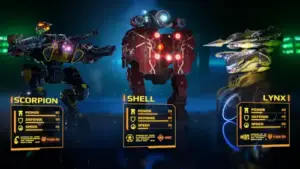
Advanced War Robots Strategy
Improving Battlefield Positioning
Holding Strong Defensive Positions
Strong defensive positions combine cover, useful firing angles, and access to important objectives. A position becomes particularly valuable when enemies must expose themselves to attack your robot while you remain relatively protected.
For heavy robots, this can mean anchoring a frontline near a beacon. For medium or light robots, it may mean occupying a position that allows rapid movement toward whichever objective becomes threatened.
Using Cover to Reduce Incoming Damage
Advanced players do not simply use cover when their health is low. They incorporate cover into their entire attack cycle.
A robot can expose itself long enough to fire, retreat while weapons reload, and return when another attack window opens. This reduces the amount of time enemies have to deal uninterrupted damage and makes the robot considerably harder to eliminate.
Rotating Between Beacons
Beacon control requires constant movement across the battlefield. Holding one position while another beacon falls can leave the team trapped in a losing formation.
Learn to recognize when a rotation is necessary. If an enemy flank has become overloaded with defenders while another beacon is exposed, moving before the situation becomes critical can preserve control of the map.
Escaping Bad Engagements
A fight that looked favorable can change rapidly when additional enemies arrive. Advanced players monitor the wider battlefield rather than focusing exclusively on the robot directly in front of them.
If the engagement becomes unfavorable, break line of sight, retreat toward teammates, or rotate toward a safer objective. Preserving a damaged robot can be more valuable than squeezing out a small amount of additional damage.
Mastering Flanking
Identifying Exposed Enemy Robots
The best flank targets are often robots that have moved away from their team or committed too far toward an objective. Their isolation reduces the likelihood that several opponents can immediately return fire.
Watch for enemies concentrating on your frontline while leaving another route poorly defended. That gap can create an opportunity for a mobile robot to attack from an unexpected direction.
Using Fast Robots for Side Attacks
Fast robots are particularly effective when they use mobility to change the angle of an engagement. Instead of repeatedly attacking an enemy’s strongest defensive position, move around it and force the opponent to react.
The goal is not simply to reach the enemy’s side. A successful flank should create a situation where the target has fewer safe options and your teammates can exploit the distraction.
Attacking Isolated Targets
An isolated robot is generally a safer target than an enemy surrounded by several allies. Concentrating your attack on vulnerable machines can produce better trades and gradually reduce the opposing team’s ability to contest objectives.
Avoid becoming so focused on the isolated target that you forget the rest of the battlefield. The safest elimination is one that does not leave your own robot stranded afterward.
Returning to Beacon Defense
After a successful flank, do not automatically continue hunting enemies. Check the battlefield again and determine whether your team needs help defending or capturing a beacon.
This transition from attack to objective control is an important part of advanced War Robots strategy. A kill has temporary value; controlling a strategically important beacon can influence the remainder of the match.
Building Weapon Synergy
Combining Different Ranges
A strong loadout should make sense with the robot’s movement and intended role. Combining weapons with complementary ranges can prevent the robot from becoming ineffective whenever the battlefield distance changes.
A close range build can excel when pushing through confined areas, while a longer-range setup may be better suited to supporting teammates from protected positions. The important point is consistency between weapon range and battlefield role.
Matching Weapons to Robot Abilities
Robot abilities can change which weapons are most effective. A machine capable of rapidly closing distance can make better use of weapons designed for close combat, while a robot built around sustained positioning may benefit from systems that remain effective from farther away.
The strongest builds are therefore combinations rather than collections of individually powerful weapons.
Creating Close Range Burst Builds
Close-range burst builds focus on overwhelming an enemy during a short engagement window. They can be particularly dangerous when a mobile robot approaches through cover and activates its offensive abilities at the right moment.
The weakness is exposure. Once the burst window ends, the robot may be vulnerable while weapons reload, so successful players plan an escape route before beginning the attack.
Creating Long Range Support Builds
Long-range support builds allow players to contribute without constantly entering the center of the fight. They can pressure exposed enemies, support beacon defenses, and punish robots that remain in open areas.
However, distance should not become an excuse to ignore objectives. A long-range robot still needs to reposition when the battle moves elsewhere, otherwise its damage may have little influence on the final result.
Coordinating Team Attacks
Concentrating Fire
Several robots attacking the same target can eliminate it much faster than scattering their damage across multiple enemies. Focus fire is especially powerful when removing a key defender from a beacon.
Before committing to an attack, identify which enemy is the easiest or most strategically important target. Removing one robot completely can create a temporary numerical advantage for the entire team.
Supporting Heavy Robots
Heavy robots can absorb pressure and hold positions that lighter machines cannot. Supporting them rather than leaving them isolated can allow the team to maintain a stronger frontline.
Light and medium robots can attack enemies attempting to flank the heavy, while longer-range weapons can punish opponents exposed by the frontline battle.
Protecting Beacon Captures
Capturing a beacon often leaves the capturing robot exposed. Teammates should treat the capture as the beginning of a defensive phase rather than the end of the attack.
Supporting the newly captured position can prevent the enemy from immediately retaking it and can force opponents to spend valuable time and health attempting to break the defensive formation.
Rotating as a Team
Team rotations are more effective when several players move together. A coordinated shift can overwhelm a weak side of the battlefield while preventing the enemy from easily isolating individual robots.
The key is timing. Rotating too late can leave a beacon undefended, while rotating too early can abandon a position that still provides valuable control.
Managing the Endgame
Preserving Remaining Robot Health
As the battle approaches its conclusion, every surviving robot becomes more important. A player with low health should avoid unnecessary exchanges because there may be no opportunity to replace that lost combat strength.
Endgame decisions should focus on what the team needs to win rather than simply maximizing individual damage.
Defending Critical Beacons
When the score is close, a single beacon can determine the outcome. Players should identify which control points are essential and prioritize their defense accordingly.
Sometimes this means abandoning an unimportant fight to reinforce a critical objective before the enemy arrives.
Hunting Isolated Enemies
Once the opposing team has been weakened, isolated robots become increasingly attractive targets. Removing the last few enemy machines can prevent them from contesting objectives or returning to support their teammates.
Still, chasing a damaged robot across the map can be dangerous if it pulls you away from a critical beacon. The target’s strategic importance should determine whether the pursuit is worthwhile.
Avoiding Unnecessary Risks
The best endgame play is often the least spectacular. If your team has the advantage, there may be no reason to take a risky fight simply to increase the kill count.
Preserve healthy robots, defend the objectives that matter, and force the opposing team to make the dangerous move. In War Robots, disciplined decision-making in the final moments can turn a narrow advantage into a controlled victory.
What Players Like and Dislike About War Robots
What Players Enjoy
Mech Battles
One of the strongest attractions of War Robots is the pace of its multiplayer combat. Battles move quickly enough to keep mobile sessions engaging, but the shooting is not simply about pointing at the nearest target. Players have to consider movement, weapon range, cover, robot abilities, and the location of objectives while the fight develops.
The 6v6 format also creates frequent moments where several robots collide around a beacon, making even a short match capable of producing dramatic swings in momentum.
Large Robot Selection
The large selection of robot chassis gives players plenty of room to experiment with different approaches to combat. Robots can vary significantly in speed, durability, hardpoints, and special abilities, so changing chassis can change the way an entire battle feels.
For players searching for War Robots best robot builds, the variety is particularly appealing because there is no single setup that feels identical across every robot. A fast machine can pressure objectives and flank opponents, while a heavily armored robot can create a frontline around contested territory.
Extensive Weapon Customization
Weapon customization is another major reason players keep returning. Different weapons provide different ranges, damage patterns, reload cycles, and special effects, allowing players to tailor a robot around a particular combat role.
The interesting part is the interaction between robot and weapons. A weapon that performs well on one chassis may feel considerably less effective on another because movement speed, hardpoints, abilities, and preferred engagement distance all change.
Multiple Battle Modes
War Robots avoids making every match follow exactly the same pattern. Domination and Beacon Rush emphasize objective control, Team Deathmatch focuses on eliminations, while Free-for-All removes team support entirely.
PvE-focused modes such as Extermination and Arena provide another way to use the robot roster. This variety helps prevent the core combat mechanics from feeling locked into a single competitive format.
Strategic Beacon Gameplay
Beacon control gives War Robots more tactical depth than a straightforward team deathmatch. Capturing a beacon changes the team’s position on the map and can generate points over time, forcing players to think about territory rather than individual statistics alone.
This is one of the game’s most satisfying elements when teams cooperate. A player who captures an important beacon or prevents an enemy takeover can make a major contribution without necessarily topping the damage chart.
Clan Features
The clan system gives War Robots a longer-term social layer. Players can organize with friends, communicate about strategies, participate in competitive activities, and work toward shared objectives.
For players who enjoy coordinated multiplayer rather than random matches alone, clan participation can make the game feel substantially more persistent. The social side also creates reasons to improve beyond simply upgrading an individual robot.
Cross Platform Multiplayer
Cross-platform support makes it easier for players on supported devices to participate in the same wider multiplayer ecosystem. This is particularly useful for people who move between mobile and PC gaming.
It also strengthens the competitive community by bringing players from different platforms into the same overall game environment rather than separating the audience into completely different versions.
Mobile Friendly Graphics
War Robots delivers detailed 3D robot models, weapon effects, ruined environments, explosions, and sci-fi battlefields while remaining designed around mobile hardware.
The visual presentation helps distinguish the different chassis and weapons during combat. Players can generally recognize a robot’s silhouette and understand what is happening around them without the game needing to become a full military simulation.
Common Criticisms
Pay to Win Concerns
The biggest criticism surrounding War Robots is the perception that spending can provide a substantial competitive advantage. Powerful robots, weapons, upgrades, and premium items can affect how quickly a player reaches a strong combat setup.
This creates a noticeable divide between simply enjoying the game and trying to compete seriously. A free-to-play player can progress, but the route toward high-level competitive builds may feel considerably slower.
Grind Heavy Progression
War Robots contains several progression systems, and advancing a robot or completing a high-level build can require considerable time and resources.
For players who enjoy gradual progression, this can provide a reason to keep playing. For others, the amount of grinding required to stay competitive can make the later stages feel more demanding than the early game.
Robot and Weapon Balance
The large number of robots, weapons, modules, and abilities creates a difficult balance problem. When a particular combination becomes significantly more effective than alternatives, players can quickly notice a shift in the competitive environment.
Balance complaints are therefore often connected to the game’s evolving equipment ecosystem. A build that feels excellent after an update may become less attractive after later changes introduce new equipment or adjust existing systems.
Matchmaking Problems
Matchmaking can be frustrating when players feel that the opposing team has stronger equipment, more experienced players, or a better coordinated group.
Because War Robots relies heavily on team cooperation, one-sided matches can feel especially harsh. A player may perform well individually but still struggle when the overall team composition or experience level is heavily uneven.
Server and Connection Issues
Real-time mech combat depends heavily on stable connectivity. Lag, disconnections, or server-related problems can be particularly frustrating because movement and aiming are directly affected by connection quality.
A brief connection problem can also have a much greater consequence in a competitive match than it would in a single-player game.
AI Behavior
PvE modes provide a useful alternative to competitive multiplayer, but AI-controlled opponents do not always reproduce the decision-making of human players.
This can make certain encounters feel predictable. Arena and Extermination are valuable for practice and progression, but players looking for the unpredictability of human opponents will naturally find PvP more demanding.
Monetization Pressure
The game’s free-to-play structure can place frequent attention on purchases, premium currencies, limited offers, and progression acceleration.
That does not prevent players from enjoying the core combat, but it can affect the overall experience for people who prefer games where progression is determined primarily by playtime and skill.
For anyone researching whether War Robots is pay to win, monetization is therefore one of the most important parts of the discussion. The issue is not simply that purchases exist; it is how premium progression can influence access to competitive equipment and how long a non-spending player must work to reach comparable strength.
Overall Community Opinion
First Time Player Experience
New players can find War Robots immediately appealing because the basic controls are easy to understand. Moving a robot, aiming weapons, and entering a 6v6 battle require little explanation compared with more complicated strategy games.
The deeper challenge appears later. Understanding weapon combinations, robot abilities, beacon timing, resource management, and competitive positioning takes considerably more experience.
Casual Mobile Players
Casual players can enjoy War Robots because individual matches fit naturally into shorter gaming sessions. The straightforward shooting mechanics also make it easy to return to the game after a break.
The main issue for casual players is progression speed. Someone who plays occasionally may notice the difference between their equipment and that of highly invested players more quickly than someone who plays every day.
Competitive Mech Players
Competitive players have considerably more systems to study. Robot selection, weapon synergy, positioning, beacon control, timing, and team coordination can all influence the outcome of a battle.
For players who enjoy optimizing builds and learning the current competitive environment, this complexity can become one of War Robots’ strongest long-term attractions.
Free to Play Players
Free to play players can experience the core battles without automatically purchasing a premium package, but progression can be slower when compared with players who spend heavily.
The most important factor is expectation. Players who approach War Robots as a gradual progression game may find the resource management manageable, while players expecting to reach the strongest equipment quickly without spending may become frustrated.
Long Term Progression Fans
Players who enjoy collecting, upgrading, and refining multiple builds have a substantial amount to work toward. The combination of robots, weapons, modules, pilots, and other progression systems creates a large number of possible long-term goals.
That depth can be motivating, particularly when a player has a specific robot build they want to develop. At the same time, the sheer number of upgrade paths can make resource decisions increasingly important.
Veteran Community Perspective
Veteran players tend to evaluate War Robots differently from newcomers because they have experienced multiple changes to its balance, equipment ecosystem, progression systems, and competitive environment.
That history explains why community opinion can be sharply divided. Long-time players may appreciate how much the game has expanded since its earlier years while remaining critical of balance changes, monetization, or the growing complexity of the progression system.
Overall, War Robots player reviews reflect a game with a compelling combat foundation but a controversial free to play economy. Its robot variety, weapon customization, beacon objectives, and team battles remain the core reasons players enjoy it, while progression speed, competitive balance, and monetization are the recurring issues that determine whether individual players stay for the long term.
Games Like War Robots
Mech Arena
Fast 5v5 Mech Combat and Customization
Mech Arena is one of the closest alternatives to War Robots for players who want fast mobile mech battles without giving up customizable robots. Its 5v5 format keeps matches compact, while different mechs, weapons, abilities, and maps encourage players to build around specific combat roles.
The main difference is the structure of the combat. War Robots puts considerable emphasis on robot builds, beacon control, and 6v6 team coordination, while Mech Arena leans more heavily toward accessible arena style shooting. For someone searching for games like War Robots with mech customization, Mech Arena is a natural place to start.
War Machines
Mobile Team Based Armored Warfare
War Machines shifts the concept from science fiction robots to armored military vehicles. Its team-based battles are designed around tanks rather than walking mechs, giving players a more conventional battlefield experience while retaining the quick-match format associated with mobile competitive shooters.
Players who enjoy War Robots primarily because of its positioning, team combat, and vehicle upgrades may find War Machines appealing. However, it does not offer the same robot abilities, futuristic weapons, or extensive mech-focused loadout possibilities.
World of Tanks Blitz
Tactical Tank Combat With Vehicle Progression
World of Tanks Blitz is a stronger choice for players who prefer recognizable military vehicles and more deliberate armored combat. Its 7v7 battles revolve around tank classes, armor angling, penetration, map positioning, and technology tree progression.
Compared with War Robots, Blitz replaces futuristic robot abilities with tank specific characteristics and armor mechanics. Players who enjoy learning how different vehicles behave can find considerably more emphasis on tactical positioning and vehicle roles.
For searches such as War Robots vs World of Tanks Blitz, the biggest distinction is easy to understand: War Robots is sci-fi mech warfare built around customizable robots and beacon objectives, while Blitz focuses on tactical tank combat and vehicle progression.
Armored Warfare: Assault
Modern Armored Vehicle PvP
Armored Warfare: Assault provides another option for players who like vehicle based PvP but want modern armored warfare rather than giant futuristic robots.
Its appeal comes from combining recognizable armored vehicles with competitive multiplayer combat. It is particularly relevant for War Robots players who enjoy the strategic side of choosing engagements, positioning around terrain, and improving their vehicles rather than the science-fiction setting itself.
The experience is less about constructing a robot from multiple futuristic systems and more about controlling a military vehicle effectively during battle.
Battle Prime
Competitive Third-Person Multiplayer Without Mechs
Battle Prime removes the vehicles entirely but retains an important part of the War Robots formula: fast third person competitive shooting.
Instead of controlling a robot, players select combat characters with different abilities and weapons. This makes Battle Prime interesting for someone who enjoys War Robots mainly for its camera perspective, shooting mechanics, movement, and competitive matches.
It is not a direct mech replacement, but it can satisfy the same desire for fast third-person multiplayer games on mobile without requiring players to manage a robot garage.
Other Mobile Mech Games
Arcade Mech Combat and Robot Customization
The mobile mech genre includes several games built around customizable robots, futuristic weapons, arena battles, and team-based objectives. These titles can vary considerably in how much they emphasize shooting, progression, strategy, or RPG-style upgrades.
War Robots remains distinctive because it combines several of these systems at once. Its robot roster, weapon hardpoints, modules, pilot progression, beacon mechanics, multiple modes, and clan features create a broader progression ecosystem than a simple arena shooter.
For players choosing an alternative, the most useful question is not simply which game has robots. It is whether the game offers the particular combination of mech customization, multiplayer objectives, and progression that makes War Robots appealing.
Ultimately, War Robots occupies a useful middle ground between a traditional vehicle game and an arcade shooter: it delivers the immediate excitement of third person combat while giving players a deep robot building system to master. That combination is what makes it difficult for competing games to feel like exact replacements.
Conclusion
Looking Back at War Robots’ Evolution
Since its 2014 launch, War Robots has evolved from a relatively straightforward mobile mech shooter into a much broader multiplayer ecosystem. The addition of new robots, weapons, abilities, progression systems, modes, and competitive features has significantly expanded the original formula.
That evolution is a major reason the game remains recognizable while offering considerably more complexity than its early versions.
War Robots remains a compelling choice for players who want a mobile mech shooter with genuine build experimentation and tactical objectives. Its strongest qualities are the robot variety, flexible weapon system, beacon-based battles, and long term hangar progression. Its biggest drawbacks are the grind, monetization pressure, and the possibility of balance shifts affecting competitive builds. For the right player, however, that combination still makes War Robots one of the more distinctive multiplayer mech experiences available on mobile.

FAQ
Is War Robots free to download and play?
Yes. War Robots is a free to play online mech shooter where you pilot giant combat robots in realtime multiplayer battles. The official game supports multiple platforms and provides access to the Google Play download directly from its website.
Download War Robots from the Official Google Play Store, is the safest option is to use rather than an unofficial APK mirror.
How does War Robots gameplay work?
War Robots combines third-person shooting with customizable robots, different weapon loadouts, special abilities and objective-based multiplayer. Its signature 6v6 battles can revolve around capturing and controlling beacons, while other modes change the objective and pace of combat.
For new players, understanding War Robots robot builds, weapon range and beacon positioning is more useful than simply trying to maximize kills.
Where can I find War Robots robots, weapons and map information?
The official War Robots Knowledge Base, known as the Iron Library, contains information about robots, Titans, equipment and maps, along with gameplay guides. It is particularly useful when you want to compare equipment or understand how a specific robot works.
War Robots Knowledge Base / Iron Library
For technical problems, account issues, payments and gameplay support, you can also use the official support center.
Where can I find War Robots forums and community discussions?
For community strategy, robot builds, balance discussions and player experiences, the War Robots community is active on Reddit and Discord. The official War Robots website also maintains an official Discord where players can find teammates, discuss the game and get gameplay advice.
The official Knowledge Base is the better choice for structured robot, weapon and map information, while Reddit and Discord are more useful for current player discussions and practical build opinions.