

Pokémon GO is an augmented reality, GPS based mobile game developed by Niantic in partnership with The Pokémon Company.


Pokémon GO game focuses on exploration, Pokémon collection, battles, and real world interaction through location tracking.
Players move through physical environments using a map interface that mirrors nearby locations. Throughout gameplay, users encounter wild Pokémon, visit PokéStops for rewards, challenge Gyms, and join Raids to battle powerful creatures. Seasonal updates, live events, and ongoing content expansions give the experience a live-service structure that continuously evolves over time.
Pokémon GO remains culturally significant because it introduced a new way to experience gaming outside traditional environments. It combines fitness, exploration, collection mechanics, and social interaction into a single ecosystem that appeals to both casual and dedicated players.
Long term engagement comes from its layered progression systems, rotating events, collectible Pokémon, and competitive gameplay. Community driven activities such as Raids, tournaments, and regional events encourage players to connect in real life. The game also promotes outdoor movement, making it one of the few mobile experiences that successfully blends entertainment with physical exploration.
What is Pokémon GO?
Pokémon GO is an augmented reality and GPS based mobile game that allows players to explore real-world locations while discovering and catching Pokémon. Developed by Niantic alongside The Pokémon Company, it uses real-time location tracking to create a dynamic exploration experience.
Pokémon appear based on player location, environmental conditions, and event rotations. This means neighborhoods, parks, landmarks, and cities become part of the gameplay loop. Players collect Pokémon, battle others, participate in cooperative challenges, and progress through a living ecosystem of updates and seasonal content.
The game has become one of the most influential mobile releases in gaming history, shaping the popularity of AR-based experiences and location driven gameplay.
Core Purpose
The main purpose of Pokémon GO is to encourage exploration through movement and discovery. Instead of remaining stationary, players engage with gameplay while walking through real environments.
It combines Pokémon collection, progression, exploration, and social interaction into a unified experience. The game supports both casual play and competitive systems, allowing users to choose how deeply they want to engage.
Who It’s For
This game appeals to a wide audience, including:
- Pokémon fans and collectors.
- Players who enjoy exploration and outdoor activities.
- Competitive PvP battlers.
- Casual mobile gamers seeking flexible play sessions.
- Social players who enjoy coordinated events and multiplayer interaction.
Primary Use Case
Players primarily use Pokémon GO for:
- Catching Pokémon while exploring real locations.
- Participating in Gym battles and Raid encounters.
- Completing Pokédex goals.
- Engaging in PvP through Battle League systems.
- Joining live events, community gatherings, and seasonal activities.
Pokémon GO Key Features
Augmented Reality Gameplay
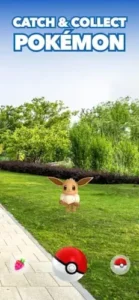
One of the defining features of Pokémon GO is its augmented reality system. Players can use their phone camera to place Pokémon directly into real environments.
This creates an immersive experience where creatures appear to exist within nearby surroundings. AR also supports photos, snapshots, and interactive moments during encounters.
GPS Based Exploration
Gameplay is directly connected to physical movement. The in-game map mirrors real-world geography, encouraging exploration through walking and travel.
Players unlock encounters, collect items, and discover new Pokémon by visiting different locations. Exploration acts as progression rather than simply being optional content.
Pokémon Catching System
Wild Pokémon appear dynamically based on location, weather, and events. Players interact with encounters by throwing Poké Balls using touch controls.
Capture mechanics reward timing, curve throws, and accuracy. Rarity levels influence encounter value and collection progression.
PokéStops and Gyms
PokéStops function as item hubs where players collect Poké Balls, healing supplies, and rewards.
Gyms serve as competitive locations where teams battle for control. These locations also act as community gathering points during events and Raid activities.
Raid Battles
Raid Battles introduce cooperative multiplayer gameplay. Players team up to defeat powerful Pokémon bosses within a limited time window.
Raids encourage local coordination and offer rewards such as rare Pokémon, items, and Legendary encounters.
Go Battle League
The competitive side of Pokémon GO appears through Go Battle League.
Players fight in ranked PvP matches using Pokémon teams under CP restrictions. Seasonal progression rewards encourage long term competition.
Team Selection
Players choose between three teams:
- Team Valor
- Team Mystic
- Team Instinct
These teams influence Gym ownership and community identity.
Buddy System
The Buddy feature allows players to travel with a selected Pokémon.
Walking with a buddy grants bonuses, affection progression, and special rewards tied to companionship.
Seasonal Events
Live service updates introduce seasonal changes, rotating spawns, limited time bonuses, and exclusive Pokémon appearances.
Community Day events remain among the most popular features, creating recurring engagement.
Avatar Customization
Players personalize their appearance through clothing, cosmetics, and accessories.
Customization adds identity to player profiles while supporting social interaction.
Pokémon GO Game Mechanics
Core Gameplay Loop
The gameplay cycle follows a simple but effective structure:
Walk → Discover Pokémon → Catch → Earn Candy → Power Up → Battle → Explore → Repeat.
This loop encourages daily activity and long-term collection.
Exploration Mechanics
GPS tracking determines movement and encounter opportunities.
Spawn locations change depending on geography, biome, weather, and events. Exploration becomes a strategic advantage for finding rare Pokémon.
Catching Mechanics
Capturing Pokémon involves touch-based throwing mechanics.
Players improve catch success using:
- Curveball throws.
- Timed releases.
- Berry usage.
- Ball upgrades.
Pokémon Progression
Progression centers around Candy and Stardust resources.
Players evolve Pokémon, increase CP, and improve battle viability over time.
Gym Battles
Gyms create territory based gameplay where teams defend captured locations.
Rewards include coins and prestige tied to active participation.
Raid Mechanics
Raids use timed cooperative combat.
Players contribute damage, defeat bosses, and earn rewards depending on participation and success.
PvP Battle Mechanics
Combat includes:
- Fast attacks.
- Charged attacks.
- Type advantages.
- Shield management.
Strategic team building becomes essential in competitive play.
Resource Economy
Key resources include:
- Poké Balls.
- Candy.
- Stardust.
- Raid Passes.
- Healing items.
Managing resources efficiently supports progression.
Event Rotation System
The game regularly cycles through events and seasonal updates.
Weekly bonuses, themed encounters, and exclusive rewards maintain player engagement.
Pokémon GO Graphics and Design
Visual Style
Pokémon GO uses a bright, colorful visual identity inspired by Pokémon’s recognizable aesthetic.
The design prioritizes readability and accessibility over realism.
Map Design
The game overlays a stylized map onto real world geography.
Roads, parks, landmarks, and locations appear in simplified form for easy navigation.
AR Presentation
Augmented reality places Pokémon into real environments using the device camera.
This feature enhances immersion and encourages creative screenshots.
User Interface
Menus are organized around inventory, Pokémon management, and battle systems.
Navigation is streamlined to support quick mobile interactions.
Accessibility Design
Touch controls remain simple and approachable.
The interface is designed for fast decision-making during exploration and encounters.
Design Philosophy
The design encourages outdoor interaction while remaining approachable to casual players.
It balances exploration, collection, and social features without overwhelming users.
Pokémon GO User Reviews and Feedback
Positive Feedback
Players frequently praise:
- Nostalgic Pokémon appeal.
- Encouragement of physical activity.
- Strong social interaction.
- Frequent events and updates.
Popular Use Cases
Common ways players engage include:
- Daily walking routines.
- Community meetups.
- Shiny hunting.
- Coordinated Raid sessions.
Criticism
Some users report concerns regarding:
- Monetization strategies.
- Technical bugs and crashes.
- GPS inconsistencies.
- Event fatigue over long periods.
Overall
Despite criticism, Pokémon GO remains one of the most recognizable mobile games worldwide.
Its combination of exploration, collection, and community engagement gives it strong long term appeal, even as opinions vary depending on updates and player expectations.
Pokémon GO Practical Use Cases
Outdoor Exploration
One of the biggest advantages of Pokémon GO is how it encourages players to move outside and interact with their environment. Unlike traditional mobile games that keep users stationary, this experience rewards walking, exploration, and discovering new places.
Players often use the game as motivation for exercise, turning walks into rewarding gameplay sessions. Parks, landmarks, public spaces, and unfamiliar neighborhoods become valuable exploration zones. The game also encourages travel, as different regions may contain exclusive Pokémon, special events, or location-based encounters.
Pokémon Collection
Collection remains at the heart of Pokémon GO. Players build Pokédex progress by catching species from different regions, participating in events, and evolving Pokémon over time.
Collectors often focus on:
- Completing Pokédex entries.
- Hunting shiny or rare Pokémon.
- Building themed teams or regional collections.
- Acquiring event-exclusive variants.
This long-term collection system creates ongoing goals that extend far beyond casual play sessions.
Competitive PvP
Competitive players use the game for ranked battles through Go Battle League. PvP introduces strategic depth by requiring team composition, type matchups, and resource management.
Players climb rankings by:
- Building optimized teams.
- Understanding move timing and shield usage.
- Learning meta Pokémon selections.
- Improving battle strategy over time.
Competitive play transforms Pokémon collection into a tactical system where preparation directly affects performance.
Social Gaming
Pokémon GO thrives as a social experience. Raids, events, and community gatherings encourage teamwork and local interaction.
Many players engage through:
- Group raid participation.
- Local community meetups.
- Friend gifting and trading systems.
- Coordinated event sessions.
The social layer makes the game feel collaborative rather than isolated.
Daily Mobile Play
The game is designed to support short, consistent sessions rather than requiring long commitments.
Daily engagement often includes:
- Spinning PokéStops.
- Completing daily tasks.
- Catching nearby Pokémon.
- Participating in limited-time events.
- Maintaining streak bonuses.
This structure makes the game easy to integrate into routines.
Pokémon GO Tips and Tricks
Visit PokéStops Regularly
PokéStops provide essential resources such as Poké Balls, healing items, and berries. Visiting frequently helps maintain a healthy inventory without spending currency.
Save Stardust Wisely
Stardust is one of the most valuable progression resources. Instead of upgrading every Pokémon, prioritize powerful or competitive choices that offer long-term value.
Join Local Raid Groups
Raid participation becomes easier and more rewarding when coordinated with other players. Local communities often organize raid routes and event gatherings.
Focus on Event Bonuses
Seasonal events frequently offer increased spawn rates, rare Pokémon, bonus XP, or enhanced rewards. Participating during events accelerates progression.
Use Type Advantages in Battles
Understanding Pokémon typing provides a major combat advantage. Matching strong counters against opponents improves PvP performance and Raid efficiency.
Keep Storage Organized
Managing Pokémon storage prevents clutter and improves long-term collection management. Sorting by role, rarity, or battle usefulness saves time.
Plan Walking Routes
Choosing areas with multiple PokéStops, Gyms, and spawn locations improves efficiency. Parks and downtown locations often provide stronger gameplay density.
Manage Inventory Efficiently
Avoid carrying unnecessary duplicates of items. Regularly clear excess inventory to maintain space for valuable rewards and event items.
Pokémon GO Similar Games
| Game | Main Similarity |
|---|---|
| Pikmin Bloom | Outdoor exploration and walking progression |
| Monster Hunter Now | GPS based combat and progression |
| Ingress Prime | Real world exploration gameplay |
| Jurassic World Alive | Creature collecting with GPS mechanics |
| Dragon Quest Walk | Walking based progression |
These alternatives share location based mechanics, exploration systems, or collection gameplay that appeal to players who enjoy outdoor mobile experiences.
Pokémon GO Community and Social Features
Local Communities
One of the strongest aspects of Pokémon GO is its local player communities.
Players frequently organize:
- Raid groups.
- Meetups.
- Community Day gatherings.
- Regional events.
These local communities create social interaction that extends beyond the app itself.
Friend System
The friend system supports long-term social progression.
Players can:
- Trade Pokémon.
- Send gifts.
- Build friendship levels.
- Unlock bonuses through interaction.
This feature strengthens cooperative play and long-term engagement.
Social Coordination
Gameplay often benefits from coordination, especially during high-level Raids and special events.
Players schedule:
- Raid routes.
- PvP tournaments.
- Event meetups.
- Group exploration sessions.
Coordination helps maximize rewards and encourages teamwork.
Online Communities
Outside the game, large communities continue discussion and strategy sharing.
Popular spaces include:
- Reddit discussions.
- Discord servers.
- Social media groups.
- Strategy forums and guides.
These communities support learning, trading, and event planning.
Live Events
The game regularly hosts live-service content and community gatherings.
Examples include:
- Global festivals.
- Regional in-person events.
- Seasonal themed celebrations.
- Limited-time collaborative challenges.
These events keep the player base active and connected.
Conclusion
Pokémon GO combines exploration, collection, and multiplayer interaction into one of the most recognizable mobile experiences ever created. By using AR and GPS systems, it transforms real-world environments into playable spaces filled with Pokémon encounters, social events, and long-term goals.
The game remains active because it continuously evolves through seasonal content, progression systems, and community engagement.
Some of the strongest features include:
- Outdoor exploration and movement-based gameplay.
- Strong social interaction and cooperative features.
- Constant updates and event rotations.
- Balance between casual accessibility and competitive depth.
Pokémon GO stands as a defining example of location-based gaming done successfully. Its mix of exploration, nostalgia, collection, and social interaction creates an experience that remains relevant years after release.
For players who enjoy discovering new places, collecting creatures, participating in community events, and blending gaming with real world movement, Pokémon GO continues to offer a uniquely engaging adventure.

FAQ
What is Pokémon GO?
Pokémon GO is a location-based augmented reality mobile game developed by Niantic in partnership with The Pokémon Company. Players explore real-world locations to catch Pokémon, battle in Gyms, join Raids, and complete Pokédex collections.
Where can I find the official Pokémon GO download?
Download Pokémon GO from the Official Google Play Store.
Is Pokémon GO free to play?
Yes, Pokémon GO is free to download and play. However, it includes optional in-game purchases such as PokéCoins, storage upgrades, cosmetics, and event-related items.
Can I play Pokémon GO without walking outside?
Yes, but exploration is a major part of the experience. Walking unlocks Pokémon encounters, PokéStops, Eggs, events, and bonuses. Some gameplay can still be enjoyed from home during special events or remote features.
Where can I learn more about Pokémon GO communities and guides?
Useful Pokémon GO resources include:
- Wikipedia: https://en.wikipedia.org/wiki/Pokémon_Go
- Reddit Community: https://www.reddit.com/r/pokemongo
- Pokémon GO Wiki: https://pokemon.fandom.com/wiki/Pokémon_GO