

Path to Nowhere is a f2p real time tower defense RPG that combines strategic battlefield control, a dark noir atmosphere and a mature story about dangerous criminals with supernatural powers.


Path to Nowhere anime style gacha game puts you in the role of the Chief of the Minos Bureau of Crisis Control (MBCC), an organization responsible for containing the Sinners whose extraordinary abilities could threaten an already unstable world. Your mission is to control these dangerous individuals, investigate the mysterious Mania plague, and protect a dystopian city from forces that reach far beyond ordinary crime.
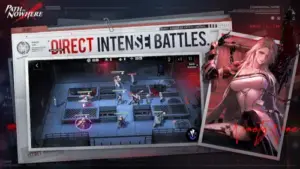
What makes Path to Nowhere particularly interesting is how it changes the familiar tower defense formula. Instead of placing characters in fixed positions and relying mainly on cooldowns, you can move your deployed Sinners around the battlefield in real time, react to enemy movements, and use tactical abilities when a fight begins to turn against you. The result is a more hands-on experience where positioning, timing, and team composition can matter as much as character strength.
What Is Path to Nowhere?
Path to Nowhere is a free to play, noir styled tower defense RPG developed by AISNO Games. Available on Android, iOS and PC through Steam, it combines real time squad control with gacha character collection, character progression and a story built around the Mania crisis. You play as the Chief, the leader tasked with managing the Minos Bureau of Crisis Control and using the abilities of dangerous Sinners to confront threats to the city.
Unlike a traditional tower defense game in which units remain in fixed positions, Path to Nowhere allows you to move your deployed characters across the battlefield. This means a successful strategy requires more than recruiting powerful Sinners. You must understand their roles, time their skills, and adjust their positions as enemy waves develop. Between battles, you can strengthen your roster, recruit new characters, equip Crimebrands, and follow story chapters that reveal more about the world’s mysteries.
The game balances its tactical combat with a mature narrative and a distinctive visual style. Its noir presentation, supernatural themes and character focused storytelling help distinguish it from mobile RPGs that concentrate primarily on collecting characters or repeating automated encounters. The result is a game that blends strategic decisions with an ongoing mystery about power, control and the dangers surrounding the Mania plague.
Path to Nowhere Gameplay
Path to Nowhere gameplay combines real time tower defense, strategic team building and gacha RPG progression in a way that rewards players who can adapt quickly during combat. Developed by AISNO Games, it places you in control of up to six Sinners, each with individual abilities and battlefield roles. Instead of relying entirely on a fixed formation, you can reposition deployed characters, respond to enemy movements and time skills to prevent dangerous opponents from overwhelming your defenses.
This active combat system is one of the main reasons Path to Nowhere feels different from traditional mobile tower defense games. Your decisions do not end when a battle begins. You must keep watching enemy waves, recognize which threats need immediate attention and decide when to move a Sinner or activate an ability. At the same time, character progression remains important because stronger Sinners and well developed teams are better equipped to handle demanding encounters.
Real Time Tower Defense Meets Gacha RPG Combat
Path to Nowhere combines the tactical demands of tower defense with the collection and progression systems of a f2p gacha RPG. You recruit Sinners through character banners, develop their abilities and assemble a squad suited to the challenges ahead. Once combat begins, however, having a powerful roster is only part of the equation. You must also manage positioning, skill cooldowns, and the changing flow of enemy attacks.
Unlike tower defense games built around permanently fixed unit placement, Path to Nowhere lets you move deployed Sinners across the battlefield. This gives you more freedom to respond when enemies approach an exposed route or when a particular character is needed elsewhere. The ability to react during a fight makes the combat feel more hands-on than a system that depends primarily on setting up a formation and waiting for enemies to arrive.
The gacha system supports this tactical structure by giving players a growing selection of Sinners with different skills and specialties. New characters can open up additional team-building possibilities, but recruiting every available unit is not essential to enjoying the game. Investing in a focused roster and learning how its abilities work together can be more useful than constantly chasing new banners.
For players searching for a real time tower defense RPG with character collection, Path to Nowhere offers two connected challenges: developing a capable team between battles and making smart decisions once combat starts.
Deploying Up to Six Sinners
Each Path to Nowhere battle allows you to deploy a squad of up to six Sinners. This limit makes team composition an important part of preparation because every available position needs to contribute to the overall strategy. A team built entirely around damage may struggle to survive sustained pressure, while a formation with too little offensive power can have difficulty eliminating dangerous enemies before they reach critical positions.
The most effective approach is to think about what each Sinner contributes rather than choosing characters solely because they have a high rarity. Damage dealers help eliminate enemies, defensive characters protect important positions and support oriented Sinners provide abilities that can improve the team’s performance. The precise balance depends on the encounter, the enemies you expect to face, and the characters available in your roster.
Your decisions before entering a stage also affect how easily you can react during combat. A balanced squad gives you more options when an enemy wave changes direction or a powerful opponent requires concentrated damage. Because defeated Sinners cannot simply be redeployed in the same battle, each member’s survival and placement deserve attention.
For beginners, a strong Path to Nowhere team does not need to contain every highly sought after Sinner. Developing a manageable group of characters, understanding their roles, and learning how they complement one another creates a more reliable foundation for story stages and later challenges.
Moving Sinners Around the Battlefield
One of the defining features of Path to Nowhere is the ability to reposition Sinners after combat begins. Instead of treating unit placement as a decision that cannot be changed, the game allows you to move characters around the grid as the situation develops. This makes battlefield awareness an important skill, especially when multiple enemy routes or threats demand attention at the same time.
For example, a Sinner positioned to handle one group of enemies may need to move when a more dangerous opponent appears elsewhere. Repositioning lets you respond to that change instead of waiting for the existing formation to solve the problem on its own. A damage dealer can be shifted toward a priority target, while another character can help cover a vulnerable area.
This freedom does not mean movement should be constant or careless. Every repositioning decision needs a purpose. Moving a character away from a useful position may leave another route exposed, and sending a Sinner toward a dangerous enemy without considering the rest of the battlefield can create new problems.
Learning when to move and when to keep a character where they are is part of mastering Path to Nowhere’s real time combat. Players who pay attention to enemy paths and anticipate incoming threats can make better use of the same roster than those who rely on character strength alone.
Intercepting Enemy Waves in Real Time
Enemy waves are a central part of Path to Nowhere’s tactical challenge. As opponents enter the battlefield, you must identify which threats are most dangerous and position your Sinners to respond. Some situations call for concentrated damage against a priority enemy, while others require quick movement to prevent several opponents from advancing unchecked.
The ability to reposition units makes these encounters more reactive than conventional tower defense. Rather than depending exclusively on a formation established before the first wave arrives, you can adjust your approach as the fight develops. This becomes especially important when enemy spawns create pressure in different areas or when a powerful opponent changes the priorities of the encounter.
Recognizing enemy patterns helps you make these decisions earlier. If you understand where pressure is likely to appear, you can avoid moving your entire team only after a situation has already become dangerous. Keeping important abilities available and maintaining a useful distribution of Sinners also gives you more ways to respond when a wave becomes difficult to control.
For players learning how to clear Path to Nowhere stages, the key is to treat every wave as a changing tactical problem rather than a simple test of character levels. Strong units help, but noticing threats early and reacting with the right character can make a meaningful difference.
Understanding Sinner Roles
Path to Nowhere’s team building system becomes easier to understand when you look at what each Sinner contributes to a fight. Some characters focus on dealing damage, others help defend the team and support oriented characters provide utility or control that can make difficult encounters more manageable.
These roles should work together rather than compete for space in your formation. A damage dealer may be able to eliminate enemies quickly but still need help surviving pressure. A defensive Sinner can provide stability, while a support character can create opportunities for the rest of the squad. Building around these complementary strengths gives you more flexibility when enemy waves become unpredictable.
Damage Dealers and Burst DPS
Damage dealers are responsible for eliminating enemies before they become overwhelming threats. Their importance becomes particularly clear when a stage introduces dangerous opponents that need to be defeated quickly. Burst damage is useful when a short window of opportunity allows your team to concentrate its attacks on a priority target.
However, damage output alone does not guarantee success. A powerful Sinner may struggle if positioned too far from the action or if important skills are unavailable when a boss or dangerous enemy appears. Timing and movement help ensure that your offensive characters can contribute when their abilities are most valuable.
When building a team, consider how your damage dealers work with the rest of your roster. A character that performs well alongside appropriate support may be more useful than one whose individual statistics look impressive but whose abilities are difficult to coordinate. Investing in one or two main damage dealers can also help beginners avoid spreading progression resources across too many characters.
Tanks and Defensive Sinners
Defensive Sinners help keep the team stable when enemy pressure increases. Their role is particularly important when opponents approach vulnerable areas or when a battle requires your damage dealers to remain focused on eliminating priority targets. A defensive character can provide a more secure foundation for the rest of the squad.
In Path to Nowhere, defensive strength should be considered alongside positioning. A durable Sinner placed where they cannot contribute meaningfully may not solve the problem facing your team. Moving a defensive character toward an emerging threat can help maintain control, but leaving another route uncovered may create a different weakness.
The goal is to use defensive characters deliberately rather than assuming that durability alone will carry a stage. When combined with good movement and well timed skills, defensive Sinners can help your damage dealers and support characters perform their roles more effectively.
Support and Crowd Control Characters
Support and crowd control Sinners provide tools that go beyond direct damage. Their abilities can help manage threats, create opportunities for stronger attacks and make difficult encounters easier to control. Depending on the situation, their contribution may come from disrupting enemies, improving team performance or helping the squad survive a dangerous sequence.
These characters are especially valuable when a battle cannot be solved by simply attacking the strongest enemy. A well timed ability can create an opening for a damage dealer, while crowd control can help reduce pressure when several threats appear together. Their value depends on recognizing the right moment to use their skills.
For beginners, support characters may initially seem less impressive than Sinners with high damage numbers. Yet a balanced team often performs more consistently than a squad built around offense alone. Learning how utility and damage complement each other is an important step toward building stronger Path to Nowhere teams.
Skill Cooldowns and Tactical Timing
Every Sinner brings individual skills to combat, and using those abilities at the right time is a major part of Path to Nowhere’s strategy. Skills can contribute burst damage, crowd control, or survival, but their cooldowns mean you cannot necessarily rely on the same ability whenever a new threat appears.
Using a powerful skill as soon as it becomes available may be effective in some situations, but it can also leave you without an important response when a more dangerous enemy arrives. Watching the battlefield and deciding which threats deserve immediate attention helps you preserve valuable abilities for the moments when they can have the greatest impact.
Timing becomes particularly important during boss encounters and difficult enemy waves. You may need to coordinate several skills to eliminate a priority target quickly, interrupt a dangerous sequence or prevent your formation from losing control. Repositioning a Sinner before activating a skill can also help you respond to a changing situation.
Players who want to improve their Path to Nowhere combat strategy should focus on learning what each character’s skills are designed to accomplish. Understanding cooldowns, recognizing opportunities and avoiding unnecessary ability use can make a familiar team feel more capable without requiring an entirely new roster.
Boss Battles and Enemy Wave Management
Boss battles test how well you understand your team’s abilities and the importance of timing. Compared with ordinary enemies, bosses and special opponents may require more deliberate positioning, concentrated damage and careful skill sequencing. Simply deploying strong Sinners is not always enough if the team cannot respond effectively to the encounter’s demands.
A useful starting point is to identify the most important threat and consider how your squad can deal with it. Your damage dealers may need to focus their abilities on the boss, while defensive or support characters help the rest of the team manage incoming pressure. Moving Sinners as the battle changes can prevent a fixed formation from becoming ineffective.
Enemy wave management is closely connected to this approach. If smaller enemies begin to overwhelm the battlefield, you may need to adjust your priorities before focusing entirely on the boss. Saving every skill for one target can be risky when other enemies threaten the team’s stability, so the best response depends on what is happening at that moment.
Path to Nowhere rewards players who can balance immediate threats with longer term priorities. By studying enemy behavior, coordinating skills and making purposeful movement decisions, you can approach difficult stages with a clearer plan rather than relying exclusively on higher character levels.
Why Positioning Matters More Than You Might Expect
Positioning in Path to Nowhere affects how effectively your Sinners can respond to threats. Because characters can be moved during combat, a formation is not simply something you choose before a stage and leave unchanged. It is a tactical arrangement that may need to evolve as enemies enter the battlefield and new priorities emerge.
A damage dealer may need to move closer to an important target, while a defensive character may need to cover a vulnerable area. Support characters also depend on the wider situation: an ability used at the right moment can improve the team’s response, but poor timing or an unhelpful position can reduce its value.
Positioning is especially important because defeated Sinners cannot be redeployed during the same battle. Losing a key character can therefore create a lasting weakness in your formation. Moving a Sinner into danger without considering the likely consequences can cost more than a single tactical mistake; it may leave the remaining squad without an essential role.
The strongest approach is to think one step ahead. Watch where enemies are coming from, identify which Sinners are most important to the next encounter, and avoid moving characters without a clear reason. Learning this habit is one of the most useful ways to improve at Path to Nowhere, particularly when advancing into more demanding stages.
Path to Nowhere Character Progression
Path to Nowhere character progression revolves around strengthening your Sinners so they can handle increasingly difficult battles. Recruiting a character is only the beginning: you also need to level them, promote them, improve their skills and equip suitable Crimebrands. Each of these systems contributes to your team’s performance, but the resources required to develop a full roster can make prioritization essential.
For new players, focusing on a core group of Sinners is generally more practical than upgrading every character as soon as they are recruited. A well developed damage dealer, supported by characters who cover defensive and utility needs, can provide a stronger foundation than a large collection of underdeveloped units. As you progress, you can expand your roster when a new stage or team strategy calls for a different approach.
Progression also connects directly to the game’s event structure. Story stages, dedicated resource missions and limited time events provide opportunities to collect materials, but difficult content can demand more investment than a new account can immediately afford. Understanding where your resources go helps you build a team steadily without wasting materials on characters you rarely use.
Leveling Up Sinners
Leveling is one of the first steps in developing a Sinner in Path to Nowhere. As you invest in a character, you prepare them to face stronger opponents and contribute more effectively to your squad. This is particularly important when advancing beyond early story stages, where an underdeveloped team may struggle to deal with increasing enemy pressure.
However, leveling every Sinner equally is rarely the most efficient approach for a new player. Upgrade materials are limited, so it is worth identifying the characters that form the backbone of your team. Main damage dealers often deserve early attention, while defensive and support characters should receive enough investment to perform their roles reliably.
Your choices should also reflect how you actually use your roster. A Sinner who consistently contributes to story clears and difficult encounters is usually a more practical investment than a character you rarely deploy. This does not mean ignoring the rest of your collection; it means developing a reliable core before committing significant resources to additional characters.
A focused leveling strategy can make progression smoother and reduce the frustration of reaching a difficult stage with too many partially developed Sinners. Once your main team is performing consistently, you can gradually invest in alternatives for specific enemies, bosses, and events.
Ascension and Character Promotion
Leveling is only one part of Path to Nowhere’s character progression. Ascension and promotion provide another way to strengthen Sinners as your account advances, helping prepare them for more demanding content. These systems require additional materials, which makes it important to consider the value of each upgrade before spending resources.
For a developing account, promoting the characters you rely on most can be more effective than distributing materials across the entire roster. Your main damage dealers may need priority because they are responsible for eliminating threats, but the needs of your team should determine the final order. A defensive Sinner or support character can also deserve investment if their abilities are essential to your strategy.
Promotion becomes especially relevant when your current team begins to struggle against stronger enemies. Rather than immediately replacing a character or spending premium currency to recruit someone new, consider whether your existing Sinners need additional development. Better investment in a familiar team may solve a progression problem without requiring a major change to your roster.
The important point is to treat ascension as part of a longer plan. Collect the materials you need, prioritize characters with clear roles in your team and avoid promoting every new Sinner simply because the option becomes available. This approach helps keep character progression manageable as the game’s difficulty increases.
Upgrading Sinner Skills
Skill upgrades help Sinners perform their combat roles more effectively. Since Path to Nowhere relies on character specific abilities and tactical timing, improving a skill can be valuable when it strengthens an ability your team uses frequently. A damage dealer may benefit from investment in the abilities that help eliminate priority targets, while a support character may become more useful when their key utility is improved.
The main challenge is deciding where those resources will make the biggest difference. Upgrading every skill across every character can quickly consume materials that would be more useful elsewhere. Instead, consider how often you deploy each Sinner, which abilities are most important to your strategy, and what currently prevents your team from clearing difficult stages.
Skill development should also complement character leveling and promotion. A high-level Sinner with poorly developed abilities may not contribute as effectively as a character whose overall investment matches their role. Likewise, upgrading a skill on a Sinner you rarely use may provide little immediate value to your main team.
For players searching for practical Path to Nowhere progression tips, the best approach is to improve skills with a clear purpose. Build around the characters you depend on, strengthen their most relevant abilities, and expand your investment as your roster and progression needs change.
Equipping Crimebrands for Better Stats
Crimebrands are equipment like items that provide additional statistics and set bonuses for Sinners. They form an important part of character development because leveling and skill upgrades are not the only ways to improve a team’s performance. Equipping suitable Crimebrands allows you to further develop characters around their roles and the demands of particular encounters.
Choosing Crimebrands should begin with the Sinner you want to strengthen. A damage dealer may benefit from a setup that supports their offensive contribution, while another character may need bonuses that better complement their utility or place in the team. The goal is not simply to equip whatever offers the highest looking numbers, but to consider how the available bonuses support the character’s purpose.
Crimebrands also add another layer of long term resource management. Obtaining desirable pieces and developing the right combinations can take time, particularly when you are trying to optimize several Sinners. For newer accounts, it is more sensible to establish useful setups for the main team before spending substantial effort chasing ideal combinations for every character.
Because Crimebrands are part of the progression grind, they are worth approaching gradually. A practical setup that helps your team clear current content is often more valuable than delaying progress while trying to obtain a perfect configuration.
Crimebrand Sets and Their Bonuses
Crimebrand sets can provide additional bonuses beyond the basic statistics of individual pieces. These effects give players another way to customize Sinners and strengthen a team’s overall performance. Finding a suitable combination can be particularly helpful when you want a character to perform a specific role more reliably.
The best set depends on the Sinner and how you use them. A character focused on dealing damage may need a different configuration from a defensive or support oriented Sinner. Rather than choosing a set solely because it is popular, consider whether its bonuses actually support the skills and responsibilities that make the character valuable to your team.
Building ideal Crimebrand combinations can become a lengthy process because useful pieces may require repeated farming or additional investment. This is one reason progression can feel demanding for players who want to optimize every member of their roster. Early on, functional combinations that support your core team are generally more practical than chasing perfect sets for characters you seldom deploy.
As your account develops, you can gradually refine your Crimebrand setups for tougher stages, bosses and limited time events. This gives you a manageable path toward stronger builds without making equipment optimization an unnecessary barrier to enjoying the game.
Farming Character Upgrade Materials
Developing Sinners requires a steady supply of upgrade materials. Leveling, ascension and skill improvements all compete for resources, so farming becomes an important part of long term progression in Path to Nowhere. Players who invest without a plan can find themselves short of materials when their main team needs a crucial upgrade.
A focused farming routine helps reduce this problem. Decide which Sinners you want to develop first, identify the materials their next upgrades require and prioritize the stages that supply those resources. This makes each farming session more purposeful than repeatedly clearing stages without a clear progression goal.
It is also worth considering the difference between immediate needs and future plans. If your core team can already handle current story content, you may want to prepare for a promotion or skill upgrade that will help with the next major challenge. Event rewards can also contribute useful materials, making limited-time content an important part of resource planning.
The goal is to keep progression moving without exhausting your resources on too many projects at once. By investing in a manageable number of Sinners and farming with specific upgrades in mind, you can make more consistent progress even when the material requirements become demanding.
Story Stages and Dedicated Resource Missions
Story stages and dedicated resource missions provide important routes for progressing in Path to Nowhere. Story content advances the narrative while exposing your team to new encounters, whereas resource focused stages help supply materials needed to develop Sinners. Using both systems effectively is important when you want to strengthen your roster without losing sight of the game’s story.
Story progression can be rewarding because it combines combat with further insight into the world and its characters. At the same time, a difficult stage may reveal weaknesses in your current team. When that happens, returning to resource missions can help you address the problem through leveling, promotion, skill upgrades, or Crimebrand improvements.
Dedicated farming should be tied to a specific goal whenever possible. If a character needs materials for their next upgrade, concentrate on the relevant resource rather than spending all your available stamina across unrelated activities. This makes it easier to see how each farming session contributes to your team’s development.
Events provide another opportunity to obtain useful resources, so it is worth considering their rewards alongside regular progression. Balancing story chapters, resource missions and event stages gives you a more flexible approach to developing Sinners and preparing for the challenges ahead.
Preparing Your Roster for Difficult Events
Limited time events can introduce new story content, special challenges and rewards, but some encounters demand a stronger roster than ordinary early game stages. Players who have spread their resources across too many Sinners may find it difficult to meet these requirements, particularly when an event expects characters to survive sustained pressure or deal with dangerous enemies efficiently.
Preparation starts with a reliable core team. Focus on developing the characters you use most often, make sure their important skills are upgraded and equip Crimebrands that support their roles. This provides a foundation for event battles without requiring you to build every Sinner in your collection to the same level.
It is also important to understand what a particular encounter demands. A stage that emphasizes boss damage may require a different approach from one where multiple enemy waves threaten your formation. Repositioning, skill timing and choosing the right mix of damage, defense and support remain valuable even when your characters are well developed.
Event rewards can help strengthen your account, but it is not always realistic to expect a new roster to complete every difficult objective immediately. Prioritize the content you can clear reliably, collect accessible rewards, and use what you earn to improve your team for future challenges.
Why High Level Progression Can Become Grindy
Path to Nowhere’s progression can become demanding as you move toward higher level content. Developing Sinners requires repeated investment in character levels, promotions, skills and Crimebrands, and each system competes for materials. When several characters need attention at once, the amount of farming required can begin to feel like a significant part of the game.
Crimebrands are a particular source of long-term investment because obtaining desirable pieces and set bonuses can take time. Players who want to optimize their entire roster may spend considerable effort farming equipment rather than progressing directly through new story content. Events can also become harder for underdeveloped teams, which adds pressure to keep the most important characters upgraded.
The grind is easier to manage when you focus on a core roster instead of trying to perfect every Sinner. Choose characters that consistently contribute to your team, prioritize upgrades that solve actual combat problems and avoid spending scarce materials on characters you rarely use. This does not remove the need to farm, but it makes the process more purposeful.
Some players may enjoy the long term planning involved in optimizing a roster, while others may find the repeated material farming less appealing. Path to Nowhere is most comfortable when you accept that progression takes time and treat upgrades as a gradual process rather than a race to maximize every character at once.
Path Nowhere Tips and Tricks
Starting Path to Nowhere can feel straightforward during the early story stages, but building a team that can handle tougher enemies takes more planning. You need to balance character development with real time positioning, skill timing and resource management. The most useful Path to Nowhere beginner tips are not about recruiting every powerful Sinner as quickly as possible. They are about learning how your current characters work together and investing in the ones who help you clear content consistently.
A strong start also makes the game’s gacha and progression systems easier to manage. Instead of spending resources whenever an upgrade becomes available, focus on building a reliable squad, completing content that rewards useful materials and learning how to react to enemy waves. These habits can help you progress without making the grind feel unnecessarily demanding.
Focus on a Core Team Early
One of the most practical beginner tips for Path to Nowhere is to build a dependable core team before investing heavily in your entire collection. You can deploy up to six Sinners in battle, but that does not mean every character you own needs equal attention. Upgrade materials are limited, and spreading them across too many characters can leave your entire roster underdeveloped when more difficult stages appear.
Start by identifying the Sinners you use most often and consider what your team is missing. You need enough damage to eliminate dangerous enemies, defensive options to manage pressure and useful support abilities that make difficult encounters easier to control. The exact combination depends on your available characters, so focus on how they perform together rather than following rarity alone.
A core team also makes it easier to understand each character’s abilities. When you repeatedly use the same Sinners, you become more familiar with their skills, cooldowns, strengths and limitations. That knowledge helps you make faster decisions during real time battles, especially when enemy waves arrive from different directions.
Once your main squad can handle the content you are currently playing, you can begin developing additional Sinners for specific challenges. This approach provides a practical balance between progression and flexibility without exhausting your resources too early.
Prioritize One or Two Main Damage Dealers
Your main damage dealers deserve early investment because they help eliminate enemies before the battlefield becomes difficult to control. In Path to Nowhere, a team that cannot defeat priority targets quickly may struggle even when its defensive characters are well developed. Concentrating resources on one or two reliable offensive Sinners gives you a stronger foundation for story stages and later encounters.
When choosing a main damage dealer, consider more than the character’s rarity or reputation. Think about how their abilities fit your current team and whether you can use them effectively during combat. A Sinner whose skills you understand and can time consistently may be more useful to your progress than a character who looks impressive but does not fit your strategy.
Investing in a focused damage core also makes resource planning simpler. Instead of upgrading several offensive characters simultaneously, you can direct materials toward improving the Sinners who contribute most to your clears. Once they are strong enough for your current challenges, you can decide whether another damage option would address a specific weakness.
During battles, remember that high damage is only valuable when you can apply it at the right moment. Reposition your main attackers when a dangerous enemy needs immediate attention, and pay attention to skill cooldowns so that important abilities are available when they matter most.
Build Around Useful Supports and Tanks
A strong Path to Nowhere team needs more than damage. Defensive Sinners and support characters can help your main attackers survive dangerous encounters, control enemy pressure and use their abilities more effectively. If your team repeatedly struggles despite having strong offensive characters, the problem may be a lack of balance rather than insufficient damage.
Tanks and defensive Sinners can help protect vulnerable positions when enemy waves become difficult to manage. Support characters contribute through utility, crowd control or other abilities that make the team’s overall response more effective. Their value may not always be obvious from damage numbers, but they can make a major difference when a battle requires careful timing.
You should also consider how your support and defensive characters interact with your main damage dealers. A team works best when each Sinner has a clear purpose. If two characters perform similar jobs while another important role is missing, you may have fewer options when an encounter changes unexpectedly.
You do not need to build the theoretically perfect team at the beginning. Focus on identifying the weaknesses that actually cause problems in battle. If your damage dealers survive but cannot finish enemies quickly enough, improve your offensive setup. If your formation collapses under pressure, consider whether a defensive or support character could help stabilize it.
Learn Sinner Positioning and Enemy Spawn Patterns
Learning how to reposition Sinners is one of the most important skills for new Path to Nowhere players. Unlike tower defense games that rely on fixed unit placement, this game allows you to move deployed characters across the grid as combat unfolds. That freedom is useful only when you understand why a character needs to move and what the decision might leave exposed.
Pay attention to where enemies enter the battlefield and which routes they follow. Recognizing spawn patterns helps you anticipate danger instead of waiting until an enemy has already reached a critical position. You can then move an appropriate Sinner toward the threat or prepare a skill before the situation becomes difficult.
Avoid moving characters simply because movement is available. Every repositioning decision should improve your team’s response to a particular problem. Moving a damage dealer toward a priority target may help eliminate it faster, but shifting a defensive character away from another route could expose your formation to additional pressure.
Remember that defeated Sinners cannot be redeployed during the same battle. Losing an important character can leave your squad without a key role for the rest of the encounter. By watching enemy movements, keeping your formation balanced, and anticipating where help will be needed, you can reduce avoidable mistakes and make better use of your existing roster.
Master Crimebrand Chains and Enemy Control
The Crimebrand chain mechanic adds a hands-on element to Path to Nowhere combat by allowing you to grab, drag and reposition enemies during a fight. For beginners, learning when and why to use this mechanic can make encounters feel more manageable, especially when a dangerous opponent or advancing group threatens your formation.
Rather than treating enemy control as something to use randomly, look for situations where changing an enemy’s position can help you respond to a threat. The battlefield may require you to redirect your attention toward a priority target or create a better opportunity for your Sinners to attack. Recognizing these moments helps you make more purposeful decisions.
Enemy control also works alongside your team’s positioning and skill timing. A well timed action can help you manage an encounter, but it is less useful if your Sinners are poorly positioned or their important abilities are unavailable. Think about how your movement decisions, control options, and character skills can support one another.
As you gain experience, pay attention to which situations repeatedly cause problems. If a particular enemy advances too far or forces your team to abandon a useful position, consider how the Crimebrand chain mechanic could help you respond. Practicing with a clear goal is more effective than using every available action without considering its tactical value.
Time Skills Around Bosses and Enemy Waves
Path to Nowhere gives each Sinner unique skills with cooldowns, making ability timing an important part of combat. Beginners may be tempted to activate a powerful skill as soon as it becomes available, but this can leave the team without a crucial response when a more dangerous enemy appears.
Instead, watch the battlefield and decide which threats deserve immediate attention. A boss may require concentrated damage, while a large enemy wave may demand a different response to prevent the formation from being overwhelmed. Learning to distinguish between these situations helps you use your abilities more efficiently.
It is also worth thinking about how multiple Sinners can work together. A support or control ability may create an opportunity for a main damage dealer to deal with a priority target. Likewise, repositioning a character before using a skill can help you respond to a changing encounter rather than relying on the same action every time.
Do not save every ability indefinitely, either. An unused skill cannot help your team survive a difficult moment. The goal is to understand what each ability accomplishes and recognize when its effect is worth using. With practice, you will become better at coordinating cooldowns and handling the pressure created by bosses and enemy waves.
Avoid Spreading Upgrade Materials Too Thinly
Character progression in Path to Nowhere involves leveling Sinners, promoting them, improving their skills and equipping Crimebrands. Each system consumes resources, so trying to upgrade every character at once can slow your progress. You may end up with a large roster that looks promising but lacks the investment needed to clear demanding stages reliably.
A more efficient approach is to identify the Sinners who contribute most to your main team and prioritize their immediate needs. If your primary damage dealer cannot defeat enemies quickly enough, an upgrade to that character may be more valuable than developing a rarely used Sinner. If survival is the main issue, improving a defensive character or an important support ability may be the better decision.
Before farming materials, decide which upgrade you are working toward. This gives your resource runs a clear purpose and helps you avoid spending stamina on materials that do not support your current goals. Story stages, dedicated resource missions and events can all contribute to character development, so consider which available activity best matches your needs.
You can expand your investment later, once your core team is capable of handling the content you want to clear. Keeping your progression focused makes the early game more manageable and reduces the frustration of running out of resources when an important upgrade becomes available.
Invest in Useful Low Rarity Sinners
A common mistake in gacha games is assuming that the highest rarity characters are always the best investment. Path to Nowhere gives players reasons to consider how well a Sinner performs in their team rather than judging a character by rarity alone. Useful lower rarity Sinners can help fill important roles, especially when a new account has limited recruitment options.
Before deciding whether to develop a character, look at what they contribute to your squad. A lower rarity Sinner who provides useful support, defensive stability or reliable damage may be more valuable to your current progression than a higher rarity character you cannot afford to develop properly. Team balance and investment matter alongside the character’s rarity.
This approach can also help you conserve resources. If an accessible Sinner already fills a role effectively, you may not need to spend heavily or rebuild your team just because a new banner introduces a more sought after character. You can continue progressing while saving your resources for a future unit that offers a meaningful improvement to your roster.
Lower-rarity characters will not automatically outperform every high rarity option, and their usefulness depends on the situation. The important lesson for beginners is to judge characters by their abilities, role, and fit with your team. That mindset makes roster building more flexible and helps you get more value from the Sinners you already own.
Save Pulls for Limited Time Banners
Path to Nowhere uses gacha banners to let players recruit Sinners, including characters featured for a limited time. It can be tempting to spend every available ticket or premium currency whenever a banner appears, especially when a character looks appealing. However, planning your pulls gives you more control over your account’s long term development.
Think about what your current roster needs before deciding to recruit a new Sinner. A character who strengthens a missing role or offers a useful new strategy may provide more value than one who simply duplicates a role your team already handles well. If you are satisfied with your current squad, saving resources for a future limited time banner can give you more options later.
Free pulls, login bonuses, event rewards and daily activities can help you build your recruitment resources over time. Using these opportunities consistently is especially useful if you prefer to play without spending money. Although gacha results are never guaranteed simply because you save for a particular character, planning makes it easier to decide when to use your resources.
It is also important to avoid treating every new Sinner as essential. Path to Nowhere offers progression systems that can improve the characters you already own, so strengthening your existing roster may be a better short-term choice than constantly pursuing new recruits. Save for banners that genuinely interest you or address a clear team building need.
Complete Story Stages and Events for Rewards
Story stages and limited time events provide more than narrative content in Path to Nowhere. They also offer opportunities to earn progression materials and other rewards that help strengthen your account. For beginners, completing available story content is a practical way to develop a better understanding of the world while unlocking more opportunities to improve the roster.
Events deserve attention because they can include additional story chapters, special battles, login rewards, and useful upgrade materials. Some encounters may be difficult for a new account, so it is sensible to focus on the content you can clear reliably rather than assuming you must complete every challenge immediately.
If a stage becomes too difficult, use it as a signal to review your team’s investment and tactics. Your Sinners may need stronger skills or Crimebrands, or you may need to improve your positioning and skill timing. Returning to an event after strengthening your core team can be more productive than repeatedly attempting an encounter that currently exceeds your roster’s capabilities.
A balanced routine is usually more sustainable than chasing every available reward. Prioritize story progress, collect accessible event rewards and choose challenges that support your current development goals. This allows you to enjoy Path to Nowhere’s narrative and character content while steadily building a stronger team.
Use Daily Missions to Build Resources Consistently
Daily missions and regular activities can help you develop your Path to Nowhere account over time. Their value is not limited to a single reward; completing useful activities consistently supports the gradual accumulation of resources needed for character upgrades and recruitment. For free to play players, this steady progress can make a noticeable difference over a longer period.
The key is to make your routine manageable. Focus on activities that contribute to your current goals instead of treating every available task as equally important. If your main team needs promotion materials, prioritize activities that help you work toward those upgrades. If you are saving for a banner, regular rewards can support your recruitment plan.
Consistency is more useful than an unsustainable burst of activity followed by long periods of inactivity. You do not need to spend every available moment farming to make progress. A routine that fits your schedule can help you develop your roster without turning the game into a chore.
Daily activities are also a useful way to stay connected with ongoing events and available rewards. By checking what is active and deciding which tasks are worth your time, you can avoid overlooking useful opportunities while keeping your progression focused.
Path to Nowhere vs Similar Games
Path to Nowhere sits in a distinctive part of the gacha RPG market. It combines real time tower defense with movable Sinners, character collection, and a dark narrative, but several other games appeal to players who enjoy strategic combat or story focused character rosters. Comparing them helps clarify what Path to Nowhere does differently and which type of player is most likely to enjoy it.
Its strongest point of distinction is the way you interact with the battlefield. Rather than focusing exclusively on a fixed tower defense formation, you can reposition characters while enemies are moving and use the Crimebrand chain mechanic to control threats. Its noir atmosphere and mature storytelling also give it a different identity from games built around card combat, cover based shooting, or more action oriented RPG battles.
Path to Nowhere vs Arknights
Path to Nowhere and Arknights both combine character collection with tower defense strategy, making Arknights one of the most natural comparisons. Both games ask players to develop a roster of operators or characters with different roles, manage resources, and select an appropriate team for each stage. They also feature substantial worldbuilding and character focused content beyond the battles themselves.
The most noticeable difference is how the two games handle unit positioning. Arknights is known for its placement based tower defense, where positioning decisions and careful planning before and during a stage are central to success. Path to Nowhere allows you to move deployed Sinners around the battlefield in real time, making it easier to react directly to changing enemy paths and immediate threats.
Path to Nowhere also emphasizes its noir aesthetic, dangerous Sinners and Mania related mysteries. Arknights offers a different science-fiction and fantasy setting, with its own tactical systems and extensive story. Neither game is automatically better for every player; the choice depends on which combat structure and world appeal to you more.
Choose Path to Nowhere if you want a darker, character driven tower defense gacha with active repositioning and a more reactive battlefield. Arknights may suit you better if you prefer carefully planned placements, intricate stage layouts, and a strategy experience built around anticipating how enemies move through a fixed map.
Path to Nowhere vs Reverse: 1999
Path to Nowhere and Reverse: 1999 appeal to players who value distinctive art direction, character-driven storytelling, and gacha based progression, but their combat systems are substantially different. Path to Nowhere uses real time tower defense, allowing you to move Sinners around the battlefield and respond to enemy waves as they develop. Reverse: 1999 uses turn based combat built around Incantation cards, card merging, and decisions about which abilities to play during each round.
Their settings also create different moods. Path to Nowhere leans into noir, dystopian themes, dangerous criminals and supernatural horror surrounding the Mania plague. Reverse: 1999 focuses on time travel, historical eras, and the mystery of the Storm, supported by a distinctive period inspired visual style.
Both games place considerable importance on their characters and narrative presentation. However, the way you interact with those characters in battle is likely to determine which one you prefer. Path to Nowhere rewards real time positioning and quick responses, while Reverse: 1999 asks you to plan around card combinations, action points and turnbased ability choices.
If you want a story driven gacha with active tower defense combat, Path to Nowhere is the more direct fit. If you prefer a turn based RPG with card based strategy and a time-travel narrative, Reverse: 1999 offers a different kind of tactical challenge.
Path to Nowhere vs Goddess of Victory: NIKKE
Goddess of Victory: NIKKE is another character collection game known for its story, character presentation and gacha systems, but its combat is built around a different genre. NIKKE uses cover based shooting and character specific burst skills, whereas Path to Nowhere focuses on real-time tower defense, unit repositioning and controlling enemy movement.
This difference affects how players approach each battle. In NIKKE, combat emphasizes aiming, shooting, managing cover and coordinating burst abilities. In Path to Nowhere, you concentrate on positioning Sinners across the grid, responding to enemy waves and deciding when to use skills or control mechanics. Both require team building, but the moment to moment interaction feels very different.
Their presentation also differs. Path to Nowhere uses a dark noir atmosphere and supernatural threats to establish its mature tone. NIKKE blends science fiction action with its own dramatic story and character driven presentation. Players who enjoy collecting characters and following an ongoing narrative may find something appealing in either game, even if they prefer one combat style over the other.
Choose Path to Nowhere if you want tactical battlefield management rather than a shooting focused experience. NIKKE may be a better match if you prefer cover based combat, aiming mechanics and burst skill combinations.
Path to Nowhere vs Aether Gazer
Path to Nowhere and Aether Gazer both offer character collection, action oriented encounters, and progression systems, but they place very different demands on the player. Path to Nowhere is built around real time tower defense, where you control a squad of Sinners by moving them around a grid and timing their abilities. Aether Gazer leans toward action RPG combat, with direct character control and a greater emphasis on fighting enemies through real time action.
That distinction makes the two games appealing for different reasons. Path to Nowhere rewards tactical awareness, team composition, and decisions about which character should respond to a particular threat. Aether Gazer is more suitable for players who want a more action-focused combat experience rather than managing a formation of units.
Their visual identities also differ. Path to Nowhere’s noir-inspired setting and Mania related mysteries create a darker, crime focused atmosphere. Aether Gazer offers a science fiction world and an action RPG structure that places more emphasis on combat encounters and character abilities.
If you enjoy planning team roles and repositioning units to control enemy waves, Path to Nowhere offers the more tactical tower defense experience. If direct action combat and controlling a character through battles sound more appealing, Aether Gazer may be the better fit.
Conclusion
The game’s strongest qualities are its atmosphere, Sinner backstories, voice acting and hands-on combat. Its f2p structure can also be welcoming to players who manage their resources carefully and focus on developing a core team. You do not need to collect every limited character to begin exploring the story or learning the tactical systems.
The main trade-offs are the grind involved in character and Crimebrand progression, uneven combat depth in some encounters and possible performance issues on certain devices. These drawbacks may matter more to players who want quick sessions, effortless automation, or consistently complex battles.
If dark storytelling, distinctive characters and real time tactical positioning sound appealing, Path to Nowhere deserves a place on your shortlist. It is not the ideal gacha RPG for everyone, but for players who want a story driven tower defense game with a darker identity and a more active combat system, it remains a compelling option to explore.

FAQ About Path to Nowhere
Where can I get Path to Nowhere download?
You can get Path to Nowhere download through the official Google Play Store listing. Use the official store page rather than unofficial APK sites to find the legitimate Android version and check its latest availability.
Where can I find the official Path to Nowhere website and latest updates?
Visit the official Path to Nowhere website for announcements, story updates and game information. You can also follow the official Path to Nowhere X account for news and event announcements.
Is there a Path to Nowhere wiki tips?
Yes. Community resources can help you research Sinner skills, team compositions, Crimebrands, tier lists and stage strategies. Start with the Path to Nowhere community wiki and resources and check the resources linked in the community’s help threads for detailed guides.