
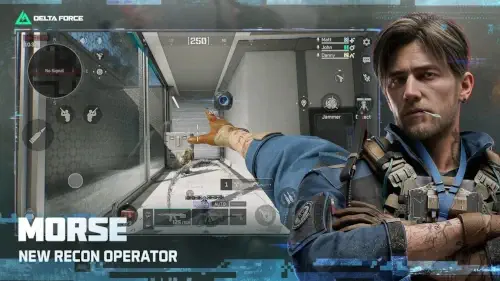
Delta Force positions itself within growing demand by delivering a f2p tactical first person shooter that blends multiple military gameplay styles into one unified experience.

Delta Force is developed by Level Infinite, the game revives the long running Delta Force franchise with a modern design philosophy built around large scale warfare, extraction based missions, class driven teamwork, and vehicle combat. Rather than focusing exclusively on one style of play, Delta Force combines traditional battlefield control modes with survival oriented extraction gameplay, allowing players to shift between high intensity PvP warfare and risk-driven tactical operations.
The addition of cross platform support further broadens accessibility, enabling players across PC, mobile, and console environments to participate within the same ecosystem.
Tactical military shooters have experienced a major resurgence over the past decade as players increasingly seek experiences that go beyond fast reflexes and simple elimination matches. Modern audiences are drawn to games that emphasize teamwork, battlefield awareness, and large scale combat scenarios where every role matters. Unlike traditional arcade shooters that focus heavily on individual performance, tactical FPS titles reward communication, positioning, and strategic planning.
The rise of online multiplayer ecosystems, cross-platform gaming, and persistent progression systems has also contributed to the popularity of these experiences, creating communities that remain active long after launch. Players are no longer looking only for quick matches; they want immersive military environments where combat feels meaningful and every decision can influence the outcome of a battle.
What makes Delta Force particularly relevant in the current shooter landscape is how it captures the evolution of multiplayer design. Modern tactical shooters are no longer just about winning gunfights; they are about mastering coordination, adapting to dynamic battlefield conditions, and developing long term progression. Team composition, class roles, map awareness, and communication all contribute to success.
Games like Delta Force create a persistent engagement loop where players return not only to improve mechanical skill but also to unlock gear, refine strategies, and build synergy with teammates. This combination of progression, competition, and strategic depth gives tactical shooters lasting appeal and helps explain why the genre continues to grow among both casual and highly competitive players.
Overview of Delta Force
What is Delta Force?
Delta Force is a tactical first person shooter developed by Level Infinite that reimagines one of the most recognized military shooter franchises for a modern audience. Built as a f2p multiplayer experience, the game combines realistic combat principles with large scale multiplayer design. It serves as a revival of the classic Delta Force series while introducing updated gameplay systems designed to compete with modern military shooters. Instead of relying on arcade action alone, Delta Force emphasizes tactical decision making, class specialization, and coordinated team play.
The modern version of Delta Force expands the franchise beyond traditional mission based combat by introducing multiple gameplay modes that cater to different player preferences. Large scale warfare modes place dozens of players into expansive battlefields where objectives, vehicles, and territory control become essential to victory. Extraction focused gameplay adds another dimension by encouraging careful planning, resource gathering, and survival under pressure. These systems create a layered experience that appeals to players who enjoy structured military gameplay rather than pure run and gun chaos.
At its core, Delta Force revolves around teamwork and battlefield roles. Players are encouraged to contribute to objectives through specialized classes rather than relying entirely on individual kill counts. The game’s identity centers on combining squad coordination, tactical positioning, and long-term progression into a military FPS environment that feels grounded and strategic.
Core Purpose
The primary purpose of Delta Force is to deliver a military shooter experience where teamwork and objectives matter as much as gun skill. Instead of rewarding reckless aggression, the game encourages players to cooperate with squadmates, use battlefield resources effectively, and approach encounters strategically. Objective control, tactical movement, and class synergy become critical factors in determining success.
Another major goal of Delta Force is to bridge accessibility with tactical complexity. While the game offers deep mechanics such as class roles, extraction systems, and vehicle warfare, it remains approachable due to its free to play model and structured progression. This balance allows newer players to learn gradually while still offering enough depth for experienced shooter veterans seeking a more strategic multiplayer environment.
Who It’s For
Delta Force is designed for players who appreciate military realism and tactical engagement rather than purely arcade style combat. Fans of realistic shooters will likely enjoy its focus on teamwork, objective based gameplay, and battlefield immersion. Players who enjoy coordinating with friends, supporting a squad, and fulfilling specialized roles can find significant depth within the class based system.
Competitive FPS players are another major audience for Delta Force. The large scale multiplayer battles create opportunities for strategic positioning, communication, and skill-based progression. Because matches involve multiple objectives and tactical layers, players who enjoy improving map knowledge and battlefield awareness can benefit greatly from long-term play.
Extraction mode enthusiasts are also likely to find appeal in Delta Force. The tension created by entering dangerous zones, collecting resources, and successfully escaping adds a survival oriented dimension that differs from traditional multiplayer matches. Cross-platform gamers additionally benefit from the ability to play across multiple devices, making it easier to maintain progression and connect with friends regardless of hardware preference.
Delta Force Key Features
Free to Play Tactical Shooter
Delta Force adopts a free-to-play structure that removes the barrier of entry commonly associated with premium military shooters. This accessibility allows a broader player base to experience tactical multiplayer combat without an upfront purchase. Despite being free to play, the game maintains a competitive framework centered around progression, skill, and strategic mastery rather than simple casual matchmaking.
The multiplayer first design ensures that players can quickly enter large scale battles, experiment with different classes, and engage with multiple gameplay modes. This structure makes Delta Force appealing to both newcomers and longtime shooter fans.
Cross Platform Support
One of Delta Force’s strongest features is its cross-platform ecosystem. Players can access the game across PC, console, and mobile devices, allowing for broader connectivity and flexibility. Cross-platform support helps maintain an active player base while giving users freedom to choose how they prefer to play.
This shared ecosystem also strengthens social engagement. Friends using different platforms can squad up together, reducing fragmentation between communities and increasing multiplayer accessibility.
Large Scale Warfare Mode
Delta Force includes large scale PvP combat where multiple squads battle across expansive maps filled with objectives, vehicles, and tactical opportunities. Warfare mode emphasizes coordinated assaults, defensive positioning, and strategic control points.
These battles are designed to feel like modern military conflicts, with multiple combat fronts operating simultaneously. Players must balance aggression with positioning, ensuring that teamwork remains essential throughout every encounter.
Extraction Gameplay
Hazard Operations introduces extraction style gameplay where survival becomes just as important as combat. Players enter dangerous environments, search for resources, defeat enemies, and attempt to escape safely.
The extraction system creates tension because players risk losing valuable loot if they fail to survive. This risk-versus-reward structure encourages cautious decision-making and strategic planning.
Operator Classes
Delta Force includes multiple operator roles that shape battlefield responsibilities. Assault players focus on direct combat and pushing objectives. Engineers specialize in utility tools and anti vehicle tactics. Support or Medic classes sustain the team through healing and assistance. Recon or Sniper roles provide intelligence gathering and long range pressure.
These class systems reinforce teamwork by ensuring that each player contributes to squad success in a different way.
Vehicle Combat
Vehicles add a large scale warfare component to Delta Force. Tanks, helicopters, boats, ATVs, and military transports allow players to traverse maps quickly and control strategic areas.
Vehicle combat introduces another layer of battlefield depth, requiring teams to coordinate movement and counter enemy mobility.
Tactical Combat Systems
Combat in Delta Force emphasizes positioning, cover usage, and objective awareness. Players are rewarded for controlling territory, communicating effectively, and making smart tactical choices.
Rather than prioritizing pure elimination, the gameplay encourages teamwork and coordinated attacks.
Loadout Customization
Players can modify weapons, equipment, and class builds to suit their preferred combat style. Customization allows experimentation with different tactical approaches, from aggressive assault builds to defensive support-focused setups.
This system supports long term progression by giving players meaningful upgrades and personalization options.
Dynamic Events and PvE Elements
Extraction gameplay includes unpredictable elements such as AI enemies, mission events, and changing battlefield conditions. These additions prevent matches from feeling repetitive and create varied gameplay scenarios.
PvE encounters mixed with PvP pressure add complexity to every mission, forcing players to adapt quickly.
Delta Force Graphics and Design
Visual Style
Delta Force uses a grounded military aesthetic that prioritizes realism over exaggerated effects. Environments aim to feel believable, supporting immersion during combat.
Environment Design
Maps include urban warfare zones, military facilities, open terrain, and strategic choke points designed to encourage varied combat approaches.
Battlefield Readability
The interface emphasizes tactical awareness through clear objective markers, teammate indicators, and threat visibility.
User Interface
Menus are organized around classes, weapons, and progression systems. The HUD provides essential combat information without overwhelming the player.
Design Philosophy
The design focuses on immersion, realism, and tactical control while remaining accessible enough for players entering the genre for the first time.
Delta Force User Reviews and Feedback
Positive Feedback
Early impressions praise Delta Force for its large scale combat, tactical pacing, and multiplayer variety. Many players appreciate the return of a classic military shooter franchise with updated mechanics.
Cross platform functionality and vehicle gameplay are also viewed positively, helping the game stand out from smaller-scale competitors.
Popular Use Cases
Players commonly use Delta Force for squad-based PvP, extraction missions, and long-term loadout progression. Tactical teamwork often becomes the main reason for continued engagement.
Criticism
Some concerns focus on matchmaking quality, technical optimization, and the learning curve associated with tactical gameplay. New players may initially struggle with complexity.
Overall Reception
Reception appears promising due to strong interest in military shooters and nostalgia tied to the franchise. While opinions vary based on realism expectations, Delta Force is widely viewed as a high potential tactical FPS.
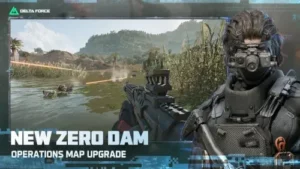
Delta Force Tips and Tricks
Learn Your Preferred Operator Class
One of the smartest ways to improve quickly in Delta Force is to commit to a specific operator class early rather than constantly switching between roles. Each class serves a unique purpose on the battlefield, and understanding how that role contributes to team success makes gameplay far more effective. Assault players thrive in aggressive frontline combat, Engineers focus on utility and anti vehicle control, Support classes keep teammates alive, and Recon operators provide intelligence and long-range pressure.
Choosing a role that naturally matches your playstyle helps build confidence and consistency. Players who enjoy pushing objectives may perform best as Assault, while those who prefer strategic positioning may gravitate toward Recon. Spending time mastering one class allows you to learn its strengths, weaknesses, gadgets, and positioning strategies. This specialization leads to better decision-making during chaotic battles because you understand exactly what your role should accomplish.
Once you gain confidence with one operator class, branching into others becomes easier because you already understand the larger tactical ecosystem. Learning multiple classes eventually improves squad awareness, but beginning with a focused role creates a stronger foundation.
Stay Close to Your Squad
Delta Force rewards teamwork far more than isolated playstyles. Staying close to your squad dramatically improves survivability because teammates provide support, revives, covering fire, and tactical flexibility. Moving together allows squads to overwhelm enemies through coordinated pressure rather than relying on individual aim alone.
Lone wolf behavior may occasionally lead to isolated eliminations, but it often results in getting surrounded or eliminated without backup. Tactical shooters depend heavily on positioning, and players separated from their squad become vulnerable to flanking, vehicles, and coordinated enemy pushes.
Squad cohesion also improves information flow. When players remain grouped, communication becomes more meaningful because teammates can react immediately to enemy sightings, objective changes, or incoming threats. Whether defending an area or pushing toward a control point, coordinated movement almost always outperforms solo aggression.
Use Vehicles Strategically
Vehicles in Delta Force are not simply transportation tools; they are battlefield assets capable of changing momentum. Tanks, helicopters, boats, and armored vehicles provide tactical mobility, firepower, and strategic map control. Learning when and how to use vehicles effectively can significantly improve your contribution during warfare matches.
Vehicles should be used with purpose rather than convenience. Driving directly into heavy combat without support often results in quick destruction. Instead, vehicles work best when used to reposition squads, secure high-value areas, or apply pressure from safer distances.
Map awareness becomes especially important when using vehicles. Knowing where enemy anti vehicle players are positioned helps avoid unnecessary losses. Because vehicles often have limited availability, wasting them in low impact situations can hurt your team’s overall effectiveness. Smart vehicle usage creates advantages that extend beyond mobility by giving squads battlefield dominance.
Understand Map Flow
Map knowledge is one of the strongest long term advantages in tactical shooters. Understanding how players move through environments, where common firefights occur, and which locations provide strategic control can dramatically improve survival and combat efficiency.
Every battlefield contains natural flow patterns shaped by objectives, terrain, chokepoints, and elevated positions. Learning these patterns allows players to anticipate enemy movement instead of reacting blindly. High ground locations often provide better visibility, while chokepoints create opportunities for defensive control.
Spending time learning routes between objectives helps players move more efficiently and avoid predictable danger zones. Understanding map flow also improves positioning during firefights because players begin recognizing where reinforcements, vehicles, or enemy flanks are likely to appear.
The more familiar you become with a map, the more confident your tactical decisions become. Experienced players rarely rely solely on reflexes because they already understand how the battlefield naturally develops over time.
Communicate Frequently
Communication is one of the most important tools in Delta Force. Tactical shooters rely heavily on shared information, and teams that communicate consistently often outperform mechanically stronger opponents who remain silent.
Simple callouts can dramatically improve squad coordination. Informing teammates about enemy positions, vehicle movement, sniper locations, or objective pressure allows everyone to react more efficiently. Communication reduces uncertainty and creates opportunities for synchronized pushes and defensive rotations.
Even minimal communication provides value. Calling for revives, marking enemy directions, or warning about incoming threats can prevent squad wipes. Strong communication also helps coordinate tactical timing, ensuring teammates move together instead of acting independently.
Teams that develop good communication habits typically perform more consistently because every player contributes to battlefield awareness.
Adjust Loadouts for Different Modes
Delta Force includes multiple gameplay experiences, and each mode rewards different equipment choices. Using the same loadout across every situation limits flexibility and reduces effectiveness.
Warfare mode often benefits from balanced weapons, anti-vehicle equipment, and defensive utility because large-scale combat creates varied encounters. Extraction gameplay, however, may require quieter weapons, survival oriented gear, and equipment suited for prolonged engagements.
Loadout customization should reflect mission goals rather than personal preference alone. Players entering extraction missions may prioritize mobility and resource management, while warfare players may focus on sustained firepower and support tools.
Experimenting with multiple loadout configurations allows you to adapt quickly depending on map size, objective type, or squad composition. Tactical preparation before deployment often matters just as much as performance during combat.
Know When to Retreat
One of the most underrated tactical skills is knowing when to disengage. Many players lose progress because they overcommit to fights that no longer provide value. Delta Force rewards survival, especially in extraction based gameplay where escaping successfully matters more than chasing unnecessary eliminations.
Retreating does not mean failure. Tactical repositioning allows squads to heal, regroup, reload, and approach encounters from stronger angles. Players who remain disciplined under pressure often survive longer and contribute more consistently.
Extraction gameplay especially reinforces this mindset. Carrying valuable loot creates tension because greed can easily lead to defeat. Recognizing when risk outweighs reward becomes a critical skill for long-term success.
Smart players understand that survival is sometimes the best strategic decision.
Delta Force Similar Games
| Game | Main Similarity |
|---|---|
| Battlefield | Large scale warfare, vehicles, and objective based multiplayer combat. |
| Call of Duty: Warzone | Tactical combat combined with survival pressure and large scale engagements. |
| Escape from Tarkov | High risk extraction gameplay focused on loot, survival, and tactical pacing. |
| Hell Let Loose | Squad coordination, realistic pacing, and teamwork-driven battlefield strategy. |
| PUBG Mobile | Tactical gunplay, squad survival, and large map positioning. |
These games share similarities with Delta Force by emphasizing teamwork, map awareness, strategic pacing, and military style combat systems. While each title approaches the genre differently, they all reward planning, communication, and role based decision making rather than pure arcade action.
Delta Force Community
Squad Based Gameplay
Delta Force is designed around squad cooperation, making teamwork one of the core pillars of the experience. Players are encouraged to operate in coordinated groups where each member fulfills a tactical role. Squad systems create natural social interaction because players rely on one another for support, revives, information sharing, and objective completion.
This teamwork-driven structure strengthens long-term engagement because players often build familiarity with teammates over repeated matches. Tactical shooters thrive when communication becomes part of the gameplay loop, and Delta Force supports this through shared objectives and role specialization.
Cross Platform Community
Cross-platform functionality expands the Delta Force community by removing hardware restrictions. Players on PC, mobile, and console can join the same ecosystem, which creates larger matchmaking pools and broader social interaction.
This accessibility encourages stronger multiplayer communities because friends are no longer separated by platform choice. Cross-platform support also contributes to healthier long-term population stability, ensuring active lobbies and consistent match availability.
Tactical Discussions
The tactical nature of Delta Force naturally encourages discussion around strategies, builds, and gameplay optimization. Players frequently share loadout recommendations, class combinations, map tactics, and objective approaches.
Community created guides, videos, and tutorials help newer players understand advanced mechanics while giving experienced players opportunities to refine their performance. Tactical shooters often develop strong knowledge sharing communities because success depends heavily on learning and adaptation.
Clan and Team Play
Organized squad systems often evolve into larger communities such as clans, competitive teams, and coordinated groups. These social structures create long term goals beyond casual matchmaking.
Clan participation encourages teamwork, practice sessions, and role specialization. Competitive communities also emerge around coordinated play, offering players a more structured environment for improvement.
Live Service Ecosystem
Delta Force follows a live service model that supports ongoing updates, seasonal content, events, and new gameplay additions. This system helps maintain player interest by continuously refreshing the experience.
Live service design strengthens community activity because players regularly return for new rewards, challenges, and content updates. Seasonal progression also gives players reasons to remain invested over time rather than treating the game as a short-term experience.
Conclusion
Delta Force brings together multiple pillars of modern military shooters into one unified experience. By combining tactical first-person combat, large scale warfare, extraction systems, squad-based gameplay, and vehicle combat, the game creates a battlefield environment that feels dynamic and strategic. Rather than focusing solely on reflex-based action, Delta Force encourages communication, teamwork, and long-term mastery.
One of the strongest aspects of Delta Force is its heavy emphasis on teamwork. Squad coordination matters in nearly every mode, giving players clear battlefield roles and meaningful responsibilities. The variety of gameplay modes ensures that players can enjoy both traditional warfare and extraction based survival scenarios.
Vehicle combat adds another layer of depth, expanding map control and mobility while creating large-scale military encounters. Cross-platform accessibility also strengthens the overall experience by allowing players to participate regardless of hardware preference.
Delta Force stands out as a modern tactical shooter built for players who enjoy strategy, communication, and structured military combat. Its blend of realism, teamwork, progression systems, and multiple gameplay styles creates a multiplayer experience that appeals to both competitive players and tactical enthusiasts.
As the live service ecosystem continues to expand, Delta Force has strong potential to become a long term multiplayer platform where teamwork and battlefield mastery remain central to the experience.

FAQ
What is Delta Force and what type of game is it?
Delta Force is a free-to-play tactical military FPS developed by Level Infinite that combines large-scale warfare, extraction missions, operator classes, vehicles, and squad-based combat. The game focuses on teamwork, battlefield tactics, and objective-driven gameplay rather than fast arcade shooting.
Is Delta Force free to play?
Yes, Delta Force is designed as a free-to-play multiplayer shooter, allowing players to access core gameplay modes without an upfront purchase. Optional cosmetics, progression systems, and seasonal content may be included as part of the live-service model.
Where can I find the Delta Force download for mobile ?
Download Delta Force from the Official Google Play Store.
Does Delta Force support multiplayer and cross platform gameplay?
Yes, Delta Force supports multiplayer gameplay across multiple platforms, allowing players to join battles with friends on PC, console, and mobile. Cross platform support helps expand matchmaking pools and makes squad coordination easier across devices.
What makes Delta Force different from other military shooters?
Delta Force stands out because it combines large scale battlefield warfare, extraction survival mechanics, vehicles, operator roles, and tactical teamwork into a single ecosystem. Instead of focusing only on fast kills, the game rewards positioning, communication, and long-term strategy.