
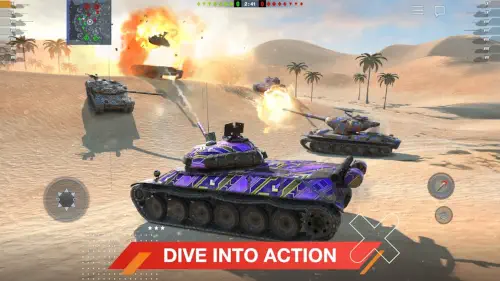
World of Tanks Blitz is Wargaming’s free to play 7v7 online tank shooter built for players who want tactical armored combat without committing to a long battlefield session.

Instead of recreating the slower pace of a full scale tank MMO, World of Tanks Blitz compresses the action into matches that commonly last around five to seven minutes while keeping the important decisions intact: which route to take, where to position your armor, when to fire, when to retreat, and how to support seven-player team composition.
What makes World of Tanks Blitz particularly interesting is how much tactical information fits into a short match. A battle is not simply about pointing the crosshair at an enemy and pulling the trigger. Tank class, armor thickness, penetration, hull angle, reload time, terrain, cover, map layout, and the position of teammates can all determine whether an attack succeeds or turns into an early garage visit. That combination gives Blitz a distinctive place among mobile tank games.
What Is World of Tanks Blitz?
The Story Behind World of Tanks Blitz
From World of Tanks to World of Tanks Blitz
World of Tanks Blitz takes the fundamental armored-combat concept of Wargaming’s World of Tanks and reshapes it around shorter, more accessible matches. The result is not simply the desktop game placed on a smaller screen. Blitz emphasizes compact maps, seven player teams, quicker engagements, and controls suited to mobile devices while retaining familiar concepts such as vehicle classes, armor, penetration, upgrades, and technology trees.
Wargaming’s Mobile Tank Battlefield
The battlefield is built around tanks rather than infantry combat. Players control individual armored vehicles and must use their vehicle’s characteristics intelligently. A heavily armored tank can anchor a push, a medium can exploit an exposed flank, while a tank destroyer can punish enemies from a protected firing position.
That distinction makes Blitz particularly appealing to players searching for tactical mobile tank combat with progression rather than a conventional mobile military shooter.
Designing Shorter 7v7 Battles
The seven versus seven format is central to the Blitz identity. Smaller teams allow battles to develop quickly, while compact arenas ensure that players can influence the action without spending several minutes simply driving toward the frontline.
The five to seven minute match length also fits naturally into mobile gaming. A player can complete a meaningful PvP battle without committing to the much longer sessions associated with some traditional multiplayer games.
Expanding Blitz Across Multiple Platforms
World of Tanks Blitz eventually grew beyond its mobile origins, supporting multiplayer across platforms including Android, iOS, Windows, Steam, Mac, and Nintendo Switch according to the supplied research.
Cross-platform support is important because it expands the potential player pool while allowing Blitz to function as more than a phone only tank game.
Building a Long Term Tank Progression System
The game’s long-term structure revolves around vehicle research. Players begin with lower-tier machines, earn experience and resources, research modules, unlock additional vehicles, and gradually work through ten tiers.
This creates a progression loop in which every battle can contribute toward a larger garage rather than ending when the match is over.
What Type of Game Is World of Tanks Blitz?
Online Tank Shooter
At its core, Blitz is an online PvP shooter where the weapon is the tank itself. Accuracy matters, but so do armor protection, vehicle characteristics, ammunition penetration, reload timing, and battlefield positioning.
7v7 Team Based PvP
The seven-player team structure means success cannot be measured entirely through personal damage. A player who scouts effectively, holds a key route, protects a flank, or creates an opening for teammates can influence the result without topping the damage chart.
Tactical Vehicle Combat
Blitz rewards players who understand the relationship between vehicle characteristics and terrain. A heavy tank exposed in open ground may be vulnerable despite its armor, while the same vehicle positioned behind a ridge can become extremely difficult to dislodge.
Free to Play Multiplayer Game
The game uses a f2p progression model with in-game resources, vehicle research, equipment, premium content, and special events. This makes the game accessible to new players while also creating one of its most frequently discussed areas of criticism: the relationship between progression, grinding, and premium purchases.
Cross Platform Competitive Experience
Cross-platform multiplayer gives Blitz a broader competitive environment than a typical mobile-only title. Players can encounter opponents across supported platforms while progressing through the same fundamental tank-combat ecosystem.
What Makes World of Tanks Blitz Different?
Fast Five to Seven Minute Battles
The biggest advantage for time conscious players is the match structure. Blitz offers enough room for positioning, flanking, coordinated pushes, and tactical mistakes to matter without turning every battle into a lengthy commitment.
Armor and Penetration Mechanics
The shooting system goes beyond basic hit detection. Armor thickness, impact angles, weak points, ammunition penetration, and vehicle positioning all influence whether a shot achieves the desired result.
A player learning World of Tanks Blitz armor and penetration mechanics quickly discovers that a well-placed shot can be more valuable than simply firing as soon as an enemy appears.
Distinct Tank Classes
Light, medium, heavy, and tank destroyer roles create different approaches to the same map. A light tank may gather information and exploit mobility, while a heavy tank can contest a frontline position that would be too dangerous for a lightly armored vehicle.
Ten Tiers of Vehicle Progression
The Tier I–X structure gives Blitz a clear sense of advancement. New players can concentrate on learning fundamentals at lower tiers before gradually encountering more sophisticated vehicles and increasingly demanding battles.
Tactical Map Positioning
Maps are not merely backgrounds for tank combat. Hills, buildings, bridges, open fields, cliffs, corridors, capture areas, and firing positions determine how vehicles should move and where engagements are likely to develop.
The result is a mobile tank game where World of Tanks Blitz map positioning strategy can matter just as much as raw firepower. A stronger tank in the wrong location can still become an easy target, while a correctly positioned vehicle can control an important section of the battlefield with considerably less risk.
Cross Platform Multiplayer
The combination of mobile accessibility and cross platform competition gives Blitz unusual longevity. Players can approach the game casually on a phone or tablet while still participating in the same wider multiplayer ecosystem available on supported PC and console style platforms.
World of Tanks Blitz Gameplay
Beginning Your Tank Career
Creating Your Player Profile
World of Tanks Blitz gets straight to the point: your first battles are about learning how your vehicle behaves before the technology tree becomes the bigger attraction. Your player profile becomes the starting point for building a garage, earning battle experience, collecting vehicles, and gradually moving toward higher-tier tanks. Unlike a purely casual mobile shooter, your early decisions affect which vehicle lines you become comfortable with and which battlefield roles you eventually master.
Choosing Your First Vehicle
Your first tank is less about finding the “best” vehicle and more about discovering which style of combat suits you. A mobile light tank teaches movement and spotting, while a heavier vehicle introduces armor management and frontline positioning. Choosing a tank that matches your preferred pace makes the early World of Tanks Blitz beginner experience considerably easier because you can concentrate on learning positioning instead of fighting against the vehicle’s limitations.
Learning Battlefield Controls
The controls combine movement, turret positioning, aiming, firing, camera control, and battlefield awareness. On mobile, the challenge is not simply learning which button fires the cannon; it is learning to move, aim, and remain protected while watching what the enemy team is doing.
A useful early habit is to separate movement from aiming. Your hull determines where the tank travels, while the turret can often track a different direction. Understanding that relationship becomes crucial when peeking around buildings, defending a position, or preparing to fire while retreating.
Playing Your First 7v7 Battle
The first 7v7 battle demonstrates why Blitz feels more tactical than its short match length suggests. Seven players per side means every vehicle has a meaningful role, and losing a tank early can remove an important source of damage, scouting, or frontline armor.
Instead of immediately charging toward the enemy, watch where your teammates are going. The opening seconds reveal which flank is receiving support, where the opposing force is concentrating, and whether your vehicle should attack, defend, scout, or wait for an opportunity.
Understanding Tank Classes
Light Tanks
Light tanks trade protection for mobility and battlefield information. Their speed allows them to reach positions quickly, investigate enemy movements, flank exposed vehicles, and exploit gaps in the opposing line.
Their greatest mistake is treating speed as an invitation to rush. A light tank that enters enemy territory without support can disappear before its mobility becomes useful. The strongest light tank play combines movement with timing, using speed to create opportunities rather than simply driving toward the nearest opponent.
Medium Tanks
Medium tanks occupy the flexible middle ground. They can support heavier vehicles, exploit exposed flanks, reposition relatively quickly, and contribute meaningful damage without being tied to one location.
This makes them particularly useful for players who enjoy adapting during a battle. A medium tank might begin by supporting a frontline push, rotate when another flank collapses, and then hunt isolated enemies during the final stages.
Heavy Tanks
Heavy tanks are designed around armor, durability, and close range pressure. They are most effective when their protection can be used to control important areas rather than when they are left fighting in open ground.
A heavy tank player needs to understand hull angles, turret protection, cover, and reload timing. The goal is not simply to absorb shells. It is to expose as little vulnerable armor as possible while forcing opponents to deal with a difficult target.
Tank Destroyers
Tank destroyers specialize in delivering damage from advantageous positions. Their strengths can include powerful guns, penetration, and long-range firepower, but their effectiveness often depends on choosing the right firing location.
A tank destroyer sitting in an exposed position after firing can quickly become a priority target. Good players constantly consider escape routes and alternative firing positions rather than assuming that one successful ambush will remain safe throughout the battle.
Special and Experimental Vehicles
Special and experimental vehicles can introduce characteristics that do not fit neatly into the traditional light, medium, heavy, or tank destroyer formula. These machines can alter how a familiar battlefield situation is approached, particularly when events or unusual vehicle mechanics are involved.
For players learning Blitz, these tanks are best understood through their individual strengths rather than through their appearance alone. A vehicle that looks like a conventional heavy tank may reward a completely different tactical approach.
Choosing a Tank Class That Matches Your Playstyle
If you enjoy aggressive movement and flanking, light or medium tanks provide more opportunities to influence several parts of the map. If you prefer holding ground and trading shots, heavy tanks offer a more natural learning path. Players who enjoy patience, positioning, and punishing exposed opponents may prefer tank destroyers.
The important distinction is that tank class determines tactical responsibilities. Learning those responsibilities is more valuable than simply memorizing which vehicle has the highest damage statistic.
Mastering Tank Combat
Aiming at Enemy Armor
Aiming in Blitz is about more than placing the reticle over an enemy silhouette. The angle of the target, distance, armor thickness, and location of vulnerable components can determine whether a shot becomes meaningful damage or a frustrating bounce.
When possible, wait for an opponent to expose a weaker section rather than firing immediately at the strongest armor available.
Understanding Shell Penetration
Penetration mechanics give World of Tanks Blitz its tactical edge. A powerful gun does not automatically guarantee damage because the shell still has to overcome the target’s effective armor.
The practical lesson is simple: look at the armor you are actually hitting. A shell aimed at a heavily protected turret can fail while a carefully selected shot against thinner side or rear armor can succeed.
Targeting Weak Points
Weak points become increasingly important as battles move into higher tiers. Lower hull sections, exposed sides, rear armor, vulnerable modules, and other poorly protected areas can provide better targets than the front of a heavily armored vehicle.
Learning these locations transforms combat from point and shoot gameplay into a constant search for advantageous angles.
Managing Reload Timing
Every shot creates a temporary vulnerability. Once your cannon fires, the enemy knows that you cannot immediately return another shell, giving aggressive opponents an opportunity to push.
Instead of treating reload time as dead time, use it strategically. Retreat behind cover, reposition the hull, communicate with teammates, or prepare a better angle for your next shot.
Using Ammunition Effectively
Different ammunition choices can matter when facing heavily armored targets or situations where standard penetration is unreliable. Ammunition management therefore becomes part of the larger decision about whether an engagement is worth taking.
The strongest approach is not to fire premium ammunition automatically. It is to recognize when penetration is genuinely the limiting factor and choose ammunition accordingly.
Using Armor to Survive
Hull Angling
Hull angling can make incoming shots more difficult to penetrate by changing the effective angle presented to the enemy. A tank that simply faces an opponent directly may expose predictable armor, while a carefully angled hull can force less favorable shots.
However, angling must be controlled. Turning too far can expose vulnerable side armor and create exactly the opportunity the opponent is waiting for.
Turret Protection
Some vehicles can use their turret armor to absorb incoming fire while keeping most of the hull protected. This is especially valuable when fighting from terrain that allows the player to expose only a small portion of the vehicle.
Recognizing when the turret is stronger than the hull can completely change how a tank approaches an engagement.
Side Scraping Positions
Side scraping allows certain heavily armored tanks to use buildings or other solid cover while exposing an angled section of the hull. Done correctly, this can make an otherwise vulnerable position surprisingly difficult to attack.
The technique is particularly useful in urban environments where buildings provide enough physical protection to control the angle of engagement.
Hull Down Tactics
A hull-down position hides much of the vehicle behind a ridge or terrain feature while leaving the turret available for firing. For tanks with strong turret protection, this can turn a seemingly ordinary hill into a defensive firing position.
The key is to avoid exposing more of the tank than necessary. A good hull-down position reduces the number of armor surfaces the opponent can realistically target.
Protecting Vulnerable Armor
Armor is not equally strong across the entire vehicle. Experienced players learn which sections should remain hidden and which areas can safely absorb fire.
This makes battlefield geometry extremely important. A rock, ridge, building, destroyed vehicle, or terrain depression can become more valuable than simply having a large armor rating.
Mastering Battlefield Positioning
Using Buildings for Cover
Buildings provide protection from enemy fire and can create controlled engagements at close range. Heavy tanks can use them to trade shots while minimizing exposed armor, while faster vehicles can use corners to launch surprise attacks.
The important detail is what happens after the shot. A good position should provide both a firing opportunity and somewhere to retreat during reload.
Fighting From Ridges
Ridges can create powerful firing positions because they allow tanks to expose only part of their profile. Vehicles with strong turrets benefit particularly from this style of terrain.
Before committing to a ridge, however, check where the enemy tank destroyers and long-range guns are positioned. A visually attractive firing position is not useful if several opponents already have a clear line of fire toward it.
Controlling Chokepoints
Chokepoints concentrate movement into predictable routes. Holding one can prevent an enemy push, delay a stronger force, or create opportunities for teammates to focus fire on vehicles entering the area.
Control does not always mean occupying the exact center of the chokepoint. Sometimes the better position is slightly behind it, where you can punish enemies as they advance without exposing yourself unnecessarily.
Finding Long Range Firing Positions
Tank destroyers and other accurate vehicles can benefit from firing positions that overlook major routes. The best locations provide distance, visibility, and a reliable retreat path.
Avoid remaining stationary simply because a position produced one successful shot. Once enemies identify where damage is coming from, they can change their route or focus fire on the exposed vehicle.
Rotating Between Flanks
A battle can change rapidly when one side loses several tanks. Remaining on the original flank after it has become irrelevant can waste valuable time.
Strong players monitor the minimap and rotate when the tactical situation changes. A mobile medium tank, for example, can abandon a quiet lane and reinforce a collapsing flank before the enemy converts its numerical advantage into a decisive push.
Understanding Reload and Shot Timing
Knowing When to Fire
A shot should have a purpose. Firing at an opponent’s strongest armor simply because the cannon is loaded can reveal your position without producing useful damage.
Look for exposed weak points, distracted enemies, isolated vehicles, or targets that cannot immediately retaliate. Sometimes holding the shot for another second creates a much better engagement.
Retreating During Reload
Reloading in open ground makes your tank vulnerable. Once the shot has been fired, retreat behind cover whenever the position no longer offers protection.
This is particularly important for slower vehicles. A heavy tank that remains exposed while reloading can lose a large portion of its health before its next shell is ready.
Punishing Enemy Reloads
The same vulnerability applies to opponents. If you see an enemy fire and know its reload is lengthy, that moment can become an opportunity to advance, flank, or focus fire.
Recognizing enemy reload windows is one of the clearest differences between simply playing Blitz and actually understanding its combat rhythm.
Coordinating Focus Fire
Several teammates firing at the same target can remove an enemy much faster than distributing damage across multiple vehicles. Eliminating one tank creates a temporary numerical advantage that can be more valuable than slightly damaging several opponents.
Focus fire becomes especially powerful when the selected target has already fired and is waiting for its reload.
Why Shooting Immediately Is Not Always the Best Choice
A loaded cannon creates an opportunity, not an obligation. Waiting can reveal a weaker armor plate, allow an ally to join the engagement, prevent an enemy from escaping, or create a safer firing angle.
In World of Tanks Blitz, patience can therefore produce more damage than constant firing. The best shot is often the one that leaves the opponent with fewer options after the shell lands.
Playing Around Objectives
Capture Zones
Objective-based battles require more than eliminating opponents. Capture zones can force teams to move, defend specific areas, or interrupt enemy progress.
A tank entering a capture zone should always consider whether the position is actually defensible. Capturing quickly is meaningless if the vehicle becomes an easy target immediately afterward.
Destroying the Enemy Team
Elimination remains one of the most direct paths to victory. Removing enemy vehicles reduces their team’s firepower, mobility, and ability to contest objectives.
This is why finishing a vulnerable opponent can sometimes be more valuable than switching targets simply to spread damage around the battlefield.
Controlling Strategic Areas
Certain map locations provide better visibility, cover, firing angles, or access to multiple routes. Controlling these areas can influence the entire battle even when no formal capture zone is present.
A team positioned on the right terrain can force opponents into predictable approaches, making map control a weapon in itself.
Protecting Capture Progress
Once a team begins securing an objective, protecting the capture progress becomes a tactical problem. Players need to prevent opponents from reaching the zone while avoiding unnecessary exposure.
A damaged tank may sometimes be more useful defending an objective from cover than chasing an enemy across the map.
Adapting to Different Victory Conditions
The correct strategy depends on what the battle requires. An elimination-focused fight rewards target selection and coordinated damage, while an objective battle can reward positioning, timing, and controlled aggression.
The strongest Blitz players constantly reassess the win condition rather than following the same attack pattern every match. A team that recognizes the objective faster can force the opposing side to react instead of dictate the battle.
World of Tanks Blitz Tanks, Technology Trees, and Progression
Understanding the Ten Tier System
The World of Tanks Blitz progression system is built around ten vehicle tiers, giving the game a clear path from beginner-friendly machines to highly specialized high tier tanks. Moving through the tiers is not simply a matter of owning increasingly powerful vehicles. Each step introduces stronger opponents, more demanding maps, greater importance on armor knowledge, and less room for careless positioning.
For new players, the best approach is to treat each tier as a learning stage. Understanding your current tank before rushing toward the next unlock makes the eventual transition into competitive higher-tier battles much smoother.
Tier I Beginner Vehicles
Tier I vehicles provide the first introduction to Blitz’s core mechanics without immediately overwhelming new players with complex battlefield decisions. At this stage, players can learn movement, aiming, firing, basic cover usage, and the differences between vehicle types.
The most valuable progression at Tier I is not how quickly you can leave it. It is how much you understand about tank positioning before moving forward.
Mid-Tier Tank Progression
Mid-tier vehicles are where the World of Tanks Blitz tank progression system starts demanding more deliberate decision making. Opponents become more capable, vehicle roles become clearer, and simply relying on the basic controls is no longer enough.
This is a useful stage for learning map routes, armor angles, penetration behavior, reload timing, and the strengths of individual vehicle lines. Players who develop these habits here will have a much easier time when they eventually encounter high-tier competition.
High-Tier Battles
High-tier battles punish mistakes more severely because vehicles have stronger guns, more specialized characteristics, and greater tactical potential. A poorly positioned tank can lose a significant amount of health before the player has a chance to recover.
At this point, understanding your tank’s role matters as much as its statistics. A heavy tank needs to know where it can safely contest ground, while a medium tank needs to recognize when mobility can create a flank rather than simply following the frontline.
Tier X Vehicles
Tier X represents the upper end of the standard progression path and provides one of the major long-term goals for players building their garage. These vehicles are not simply rewards for grinding through the technology tree; they require a stronger understanding of battlefield mechanics.
At Tier X, opponents are generally better equipped to punish exposed armor, predictable movement, and poor target selection. Reaching the tier is therefore only part of the achievement. Learning how to use the vehicle effectively is the real progression milestone.
When Should You Move to a Higher Tier?
Moving upward makes sense when you understand your current vehicle’s basic role, can consistently contribute without immediately losing your tank, and know how to use its armor, gun, and mobility.
There is little benefit in rushing through the technology tree if every new tier feels like a completely different game. Spending extra time with a comfortable vehicle can build transferable skills that make later progression considerably less frustrating.
Researching New Tanks
Earning Battle Experience
Battles provide the experience needed to progress through vehicle lines. This creates a useful connection between gameplay and garage development: learning to perform better can help accelerate the process of reaching new vehicles.
Rather than thinking only about the next unlock, it is worth treating every battle as practice for the mechanics required at higher tiers.
Unlocking Modules
Modules allow players to improve individual aspects of a vehicle before moving to another tank. Guns can change firepower and penetration, engines can improve mobility, turrets can affect protection and handling, and tracks can influence movement and equipment capacity.
Unlocking the right module can sometimes make an existing tank feel substantially better without requiring an entirely new vehicle.
Researching New Vehicles
The technology tree connects individual tanks into longer progression lines. Unlocking a new vehicle opens another stage of development while also exposing players to different national designs, classes, and battlefield roles.
Following one line consistently can be useful for beginners because it allows them to learn a familiar style instead of constantly adapting to completely different vehicles.
Managing Research Costs
Research resources should be treated as part of your long-term progression rather than something to spend without planning. Some upgrades provide an immediate improvement to a tank’s performance, while others may be less important depending on how you play.
A sensible World of Tanks Blitz technology tree strategy is to prioritize upgrades that directly improve the characteristics you rely on most, then work toward the next vehicle once your current machine is properly developed.
Upgrading Your Vehicles
Guns
The gun is one of the most influential upgrades because it directly affects how a tank deals with enemy armor. Improvements can change damage potential, penetration, accuracy, or other characteristics that determine how confidently you can engage opponents.
A stronger gun does not eliminate the need for good positioning, however. Even excellent firepower becomes ineffective when the tank cannot find a safe firing angle.
Engines
Engine upgrades improve mobility and can change how quickly a tank reaches important positions. For light and medium vehicles, additional mobility can make a particularly noticeable difference because their effectiveness often depends on repositioning and flanking.
For heavier tanks, better mobility can help compensate for slow acceleration and improve the ability to retreat or relocate after a flank collapses.
Turrets
Turret upgrades can improve protection and combat performance while potentially changing how a vehicle interacts with terrain. A stronger turret can make ridges and hull-down positions significantly more useful.
This is particularly important for players who prefer defensive positions where only the turret needs to be exposed.
Tracks
Tracks influence movement and can affect a tank’s ability to traverse terrain and support additional upgrades. Better tracks can make a vehicle feel more responsive and help it reach or leave important battlefield positions.
Their value becomes easier to appreciate on maps where hills, uneven ground, and rapid repositioning matter.
Equipment
Equipment allows players to refine a vehicle beyond its basic specifications. Instead of simply making every statistic larger, equipment can be selected to support the role you want the tank to perform.
A player using a tank as a mobile support vehicle may prioritize different improvements from someone who wants to hold a frontline position and trade shots.
Consumables
Consumables provide additional tools during battles and can become increasingly important as competition becomes more demanding. They should be considered part of the vehicle’s overall battlefield setup rather than an afterthought.
Learning when a consumable can preserve health, restore performance, or create a tactical advantage can make a noticeable difference during close matches.
Building an Effective Garage
Keeping Different Tank Classes
A garage containing only one vehicle type can limit your understanding of Blitz. Keeping light, medium, heavy, and tank-destroyer options available allows you to experience different battlefield responsibilities.
Playing multiple classes also makes you a better opponent. Once you understand what a tank destroyer needs to find a firing position or what a heavy tank needs to reach the frontline safely, you become better at predicting how those vehicles will behave against you.
Developing Multiple Vehicle Lines
There is value in exploring different technology trees, but beginners should avoid spreading their resources across too many vehicles simultaneously.
Developing several lines gradually can provide variety without creating a garage full of half-upgraded tanks. Once you know which classes and national vehicle characteristics suit you, specializing becomes much easier.
Choosing Tanks for Different Maps
Some tanks naturally perform better in particular environments. Open maps can reward mobility, scouting, and long-range firepower, while urban areas often create closer engagements where heavy armor and corner positioning become more valuable.
A versatile garage gives you more opportunities to play different tactical styles instead of forcing every vehicle into the same strategy.
Investing in Your Best Vehicles
Not every tank needs to receive equal attention. If a particular vehicle consistently matches your playstyle and produces strong results, it can make sense to prioritize its upgrades and equipment.
The goal is not to build the largest possible garage as quickly as possible. A smaller collection of well-understood vehicles can be far more useful than dozens of machines that you barely know how to operate.
Managing In-Game Resources
Credits
Credits form an important part of vehicle progression because advancing through the garage requires more than simply unlocking a tank. Players need resources to support upgrades, equipment, consumables, and continued battlefield activity.
Managing credits carefully becomes increasingly important as vehicles become more expensive to develop.
Experience
Battle experience connects your performance in matches with technology-tree progression. The more you play, the more opportunities you have to unlock modules and eventually progress toward new vehicles.
However, speed should not be the only objective. Farming experience while repeatedly playing a tank badly can create a frustrating cycle where every newly unlocked vehicle introduces another learning curve.
Free Experience
Free experience provides additional flexibility within the progression system. Rather than being tied exclusively to one specific vehicle’s development, it can help players make strategic decisions about how they advance.
Using it thoughtfully can be particularly valuable when a newly acquired tank feels weak before its important modules have been unlocked.
Premium Currency
Premium currency sits alongside the game’s free to play economy and can be connected with optional premium content and progression advantages. This is also one of the areas where Blitz receives criticism from players who dislike monetization pressure.
For players aiming to progress without unnecessary spending, the sensible approach is to distinguish between an upgrade that genuinely improves your experience and a purchase that merely shortens a grind.
Battle Rewards
Battle rewards provide the connection between individual matches and long-term garage development. Experience, credits, missions, events, and other rewards can gradually turn a short five-to-seven-minute battle into progress toward a larger objective.
This is one reason the World of Tanks Blitz progression system remains compelling: even a single quick match can contribute toward a new module, a better vehicle setup, or the next stage of your technology tree journey.
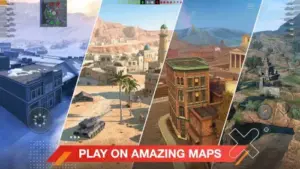
World of Tanks Blitz Maps and Battle Strategy
Understanding Blitz Battle Arenas
World of Tanks Blitz maps are not simply backdrops for tank battles. Their roads, buildings, ridges, open fields, chokepoints, and capture areas determine which vehicles can operate safely and where teams are likely to collide. Learning a map means understanding where your tank has an advantage before the first shell is fired.
A heavy tank may thrive in a narrow urban lane, while a tank destroyer needs enough distance to exploit its gun. Meanwhile, mobile mediums and light tanks can turn open sections of the map into opportunities for flanking and rapid repositioning.
Open Battlefield Maps
Open battlefields create more space between opposing vehicles and give mobility, visibility, and long-range firepower greater importance. A tank crossing open terrain without cover can become an easy target, particularly when several enemy guns have overlapping firing lines.
For mobile vehicles, open areas can provide opportunities to circle slower opponents or move between flanks. For slower tanks, the safest route is usually one that combines terrain protection with access to useful firing positions.
Urban Maps
Urban environments compress combat into streets, corners, buildings, and short firing lanes. These maps are particularly valuable for heavily armored vehicles because solid structures can conceal vulnerable hull sections while allowing controlled corner engagements.
The key is to avoid exposing the entire tank when only a small section needs to be visible. Using a building correctly can turn a straightforward exchange into an armor-management battle where positioning matters as much as gun power.
Hill Based Positions
Hills and ridges can completely change the value of a tank’s armor. Vehicles with strong turrets can often exploit hull down positions, exposing less of the hull while maintaining the ability to fire.
However, a ridge is only useful if it provides protection from the enemy’s other firing lanes. Before settling into a position, check whether tank destroyers or opposing mediums can attack from another angle.
Narrow Corridors
Narrow corridors restrict movement and often create predictable engagements. Heavy tanks can use these areas to establish defensive lines, while faster vehicles may wait for an opening rather than attempting an unsupported attack.
A corridor also magnifies mistakes. Once a tank commits to a narrow route, escaping can be difficult, so checking allied support before pushing becomes particularly important.
Capture Areas
Capture areas introduce another layer of map strategy because teams must consider both vehicle destruction and territorial control. A capture zone can become a powerful pressure point, forcing opponents to expose themselves when attempting to contest it.
Capturing is not automatically the correct decision, though. If the area is surrounded by enemy firing positions, entering it without support can simply turn your tank into an easy target.
Reading the Minimap
The minimap is one of the most valuable tools in a Blitz battle because it shows information that your immediate camera view cannot. Looking at it regularly helps reveal developing flanks, isolated opponents, empty lanes, and opportunities to reinforce teammates.
Players who focus exclusively on the tank directly in front of them can miss the larger battle unfolding around them.
Tracking Enemy Positions
Enemy positions reveal where the opposing team is concentrating its strength. If several heavy tanks appear on one side of the map, that information can influence whether your team should reinforce the same flank or exploit the opposite side.
The minimap therefore helps turn individual encounters into a broader tactical picture.
Identifying Missing Tanks
A missing enemy is not necessarily an irrelevant enemy. An unspotted tank may have moved toward another flank, taken a concealed firing position, or prepared an ambush.
If a tank destroyer disappears from view, for example, charging into open ground without considering its possible position can be a costly mistake.
Watching the Flanks
A flank can collapse surprisingly quickly when several enemy vehicles concentrate on it. Watching the minimap allows you to recognize when teammates are becoming outnumbered before the situation becomes impossible to recover.
Medium and light tanks are particularly valuable here because their mobility allows them to reinforce threatened areas faster than many heavy vehicles.
Finding Rotation Opportunities
A successful push can create an opportunity to rotate toward another section of the map. Instead of remaining in a lane where all nearby enemies have already been defeated, a mobile tank can move toward the next important engagement.
Good rotations maintain pressure. They prevent the enemy from reorganizing comfortably after losing ground.
Choosing the Right Position
Heavy Tank Frontlines
Heavy tanks generally perform best where their armor can influence the battle. Frontline positions allow them to absorb pressure, contest important areas, and create space for supporting vehicles.
That does not mean driving directly into the largest group of enemies. A strong heavy-tank position provides cover, limits incoming angles, and gives teammates opportunities to fire around or behind you.
Medium Tank Flanking Routes
Medium tanks benefit from routes that offer multiple options. They can support the main engagement, rotate toward a weak flank, or attack exposed enemy sides when the opportunity appears.
The strongest flanking route is rarely the longest detour. It is the path that allows a medium tank to reach an advantageous angle without becoming isolated from allied support.
Light Tank Scouting Positions
Light tanks can use elevated ground, open sightlines, and concealed routes to gather information. Their value is not measured solely by damage dealt.
A light tank that reveals enemy movements early can give the entire team time to prepare for an attack or reinforce a threatened flank.
Tank Destroyer Firing Lines
Tank destroyers need positions where their guns can exploit distance and enemy movement. Long firing lanes can allow them to damage opponents before those vehicles reach the frontline.
The position should also provide an escape route. Remaining in the same location after enemies identify the source of fire makes the tank destroyer increasingly vulnerable.
Controlling Map Pressure
Map pressure is the ability to make the enemy react to your team’s positioning. It does not necessarily mean attacking constantly. Sometimes simply controlling a key route forces opponents to take a less favorable path.
This is where World of Tanks Blitz map strategy for beginners starts becoming more sophisticated: the strongest move is often the one that restricts the enemy’s choices.
Holding Key Areas
A strategically important area can control access to multiple routes or provide valuable firing angles. Holding it prevents the enemy from moving freely and can make later attacks easier.
A defensive position becomes especially powerful when several teammates can support it from different angles.
Creating Numerical Advantages
Eliminating one enemy tank creates a temporary numerical advantage. If seven enemy vehicles become six while your team remains at seven, the difference can be converted into pressure elsewhere.
This is why coordinated focus fire is so effective. Destroying one isolated vehicle is often more valuable than spreading small amounts of damage across several targets.
Rotating After a Successful Push
Once a flank has been won, staying there can waste the advantage. Rotating toward another engagement gives your team a chance to apply its numerical advantage before the enemy can regroup.
Fast vehicles are particularly effective at converting successful pushes into wider map control.
Preventing Enemy Flanks
A team that wins the frontline can still lose if an opposing medium or light tank reaches the rear. Watching alternative routes and maintaining enough mobility to respond prevents a successful attack from becoming a counterattack.
Flank protection is especially important during the middle and final stages of a battle, when fewer vehicles remain and every tank has greater influence.
Why Map Knowledge Can Matter More Than Damage
High damage numbers look impressive, but damage alone does not explain why a battle is won. Knowing where to stand can allow a player to survive longer, fire more safely, support teammates, and control routes without constantly exposing the tank.
A player who understands a map can therefore outperform someone with better raw firepower but poor positioning. In Blitz, knowing where to fight is often as important as knowing what to shoot.
World of Tanks Blitz Game Modes, Events, and Competitive Play
Standard 7v7 Battles
The standard 7v7 format is the foundation of World of Tanks Blitz. Seven players on each team creates a battle small enough for individual decisions to matter while still requiring coordinated movement.
Because there are relatively few vehicles on the battlefield, losing your tank early can have a noticeable effect on the team’s remaining firepower.
Team Composition
Team composition determines what tactical options are available. A balanced lineup can combine heavily armored frontline vehicles, mobile mediums and lights, and long-range support.
Players cannot control every aspect of matchmaking, but they can adapt their own role to compensate for what the team lacks.
Battlefield Roles
Every tank contributes differently. Heavy tanks can hold pressure, mediums can rotate and flank, lights can provide mobility and information, while tank destroyers can punish exposed targets from distance.
Understanding these responsibilities prevents the common mistake of expecting every vehicle to fight in exactly the same way.
Destroying Enemy Vehicles
Eliminating enemy tanks reduces their team’s damage potential and creates opportunities to attack other areas. Target selection therefore matters.
A nearly destroyed enemy may be the correct target if removing it immediately eliminates an important gun from the battlefield. In other situations, focusing a healthy but isolated vehicle may create a larger strategic advantage.
Objective Control
When objectives are involved, destroying tanks is not always the fastest route to victory. Controlling an important area can force opponents into unfavorable positions and make them expose their vehicles to attack.
Strong teams recognize when to push for eliminations and when simply controlling the objective is the better play.
Special Battle Modes
Standard battles provide the core experience, but special modes give Blitz a very different personality. These events can change movement, combat rules, vehicle abilities, or victory conditions, preventing the game from becoming completely predictable.
Uprising
Uprising introduces a more unusual combat structure than conventional tank battles, giving players additional mechanics that change how vehicles survive and engage opponents.
It works particularly well as a break from standard 7v7 combat because players cannot rely entirely on the same tactical assumptions.
Gravity Force
Gravity Force changes the physical behavior of tanks and creates battles where movement and positioning can become dramatically different from ordinary matches.
The altered physics make familiar terrain more unpredictable, turning hills and open spaces into opportunities for unusual maneuvers.
Realistic Battles
Realistic Battles move Blitz toward a more demanding interpretation of armored combat by reducing some of the conveniences associated with the standard experience.
For players who want to test their understanding of vehicle behavior, concealment, aiming, and battlefield awareness, this mode provides a useful alternative to conventional matches.
Survival Style Modes
Survival-style modes introduce additional pressure because simply winning individual engagements is not enough. Players must consider how long they can remain effective while dealing with changing threats.
These modes reward players who can adapt rather than repeat the same attack pattern.
Experimental Events
Experimental events are where Blitz can move furthest away from traditional tank combat. Unusual vehicles, special abilities, altered physics, and temporary rules create situations that would not normally occur in standard battles.
They also give long term players something different to learn when the conventional progression loop begins to feel familiar.
Seasonal and Limited-Time Events
Seasonal events provide additional reasons to return beyond the normal technology-tree grind. They can introduce unique missions, temporary objectives, special rewards, and event-specific gameplay.
For players focused on progression, these events can be particularly valuable when their rewards complement the normal vehicle development system.
Special Missions
Special missions create short-term objectives that can be completed alongside ordinary battles. Instead of simply playing matches without a defined goal, players may have specific tasks that encourage different tactical behaviors.
These missions can also push players toward vehicles or modes they might otherwise overlook.
Event Rewards
Event rewards can provide additional progression resources or exclusive items. Their value depends on the specific event, but they give players another reason to remain active beyond simply researching the next tank.
The most efficient approach is to understand the requirements before investing significant time into an event.
Unique Vehicles
Some events place unusual or special vehicles in the spotlight. These machines can offer different gameplay characteristics from the standard progression lines and give experienced players new mechanics to explore.
They can also become attractive collection pieces for players who enjoy building a varied garage.
Limited Time Challenges
Limited-time challenges create urgency because their objectives are available only for a defined period. They can reward consistent play while encouraging experimentation with different vehicles and battle styles.
For casual players, the important thing is to prioritize achievable challenges rather than treating every event as a mandatory grind.
Competitive Progression
World of Tanks Blitz extends beyond casual 7v7 matches with competitive systems that allow players to measure their performance against others. These systems add another layer of progression for players who have already learned the fundamentals of tank combat.
Rating Battles
Rating Battles give players a more competitive environment where individual performance and team results become particularly important. They are suited to players who want their ability to be measured beyond ordinary progression.
Success requires more than knowing how to deal damage. Positioning, survival, target selection, and adapting to teammates all become increasingly important.
Tournaments
Tournaments provide a more organized form of competitive Blitz. Instead of relying solely on ordinary matchmaking, tournament play creates a structured environment where teams can prepare strategies and compete against other organized groups.
For experienced players, this can turn familiar maps into something completely different because predictable tactics become easier for opponents to counter.
Leaderboards
Leaderboards give competitive players a visible way to compare their results and progress. They also create longer-term goals for players who enjoy chasing rankings rather than simply unlocking another vehicle.
The competitive value comes from consistency: one excellent battle is useful, but maintaining strong results over time is considerably harder.
Seasonal Rankings
Seasonal rankings add a time-based competitive layer to Blitz. Players have an opportunity to improve their standing during a defined competitive period rather than relying exclusively on permanent progression.
This structure works particularly well for dedicated players because it creates recurring goals while keeping the competitive side of World of Tanks Blitz active beyond the basic Tier I to Tier X journey.
Beginner Tips for New World of Tanks Blitz Players
Learn Your Tank’s Role Before Chasing Damage
The fastest way to struggle in World of Tanks Blitz is to treat every tank as if it were built for the same job. A light tank is valuable because it can scout, relocate and exploit exposed enemies, while a heavy tank can absorb pressure and force opponents away from important positions. Medium tanks sit between those extremes, using mobility to support pushes and attack vulnerable sides, while tank destroyers usually gain more value from carefully chosen firing positions.
Before worrying about damage numbers, learn what your vehicle is supposed to accomplish. A player who spots targets, holds a flank or forces an enemy to retreat can contribute enormously without topping the damage chart. This tank role first approach is particularly useful for anyone searching for World of Tanks Blitz beginner tips for better battles, because it prevents one of the most common early mistakes: using the right tank in the wrong way.
Use Cover Between Every Reload
Reloading in the open is effectively an invitation for the enemy team to punish you. Once your gun has fired, think about where you will spend the next several seconds rather than immediately looking for another target. Buildings, rocks, ridges, terrain depressions and other obstacles can keep your tank protected while the gun becomes ready again.
The ideal rhythm is simple: fire, retreat behind cover, reload, peek, and fire again. This becomes especially important for slower heavy tanks and tank destroyers whose reload periods can leave them vulnerable for long enough to lose a large portion of their hit points.
Angle Your Armor Against Incoming Fire
Armor works best when you make the opponent work for a penetration. Presenting a flat hull gives an enemy a much easier target, while carefully angling the vehicle can increase the effective protection of the armor and create opportunities for shells to bounce.
Do not blindly turn your entire tank sideways, though. Excessive exposure can reveal weaker side or rear armor. Instead, learn the angles your particular vehicle can safely use and combine them with nearby cover. This is where World of Tanks Blitz armor angling for beginners becomes more than a theoretical mechanic: good positioning can turn an otherwise losing exchange into a favorable one.
Aim for Enemy Weak Points
When an opponent is heavily armored, simply firing at the largest visible surface is rarely the smartest approach. Look for exposed lower plates, side armor, rear sections and other vulnerable areas that provide a more realistic penetration opportunity.
Your target should also influence your ammunition and positioning decisions. If the enemy is presenting an extremely strong angle, waiting for a better shot or changing position can be more effective than repeatedly firing shells that are unlikely to penetrate.
Avoid Rushing the Center of the Map
The center of a Blitz map may look like the fastest route toward the enemy, but it is often exposed to several firing lanes at once. Charging forward without knowing where the opposing team is positioned can leave your vehicle surrounded by guns before your teammates can provide support.
A better opening is to identify the lane that suits your tank and establish a useful position. Once enemy locations become clearer, you can decide whether advancing, retreating or rotating creates the greatest advantage.
Stay Close to Teammates
Seven versus seven combat makes isolated vehicles easy targets. Even a powerful tank can be overwhelmed when several opponents focus on it simultaneously.
Staying near teammates creates opportunities for crossfire and coordinated attacks. If an enemy exposes itself to attack one ally, you may be able to punish it from another angle. Likewise, having nearby support makes it much harder for an opponent to push aggressively against you.
Watch the Minimap Constantly
The minimap is one of the most important sources of information in every battle. It can reveal where your team is concentrated, which enemies have been spotted, where a flank is becoming vulnerable and whether an apparently safe position is about to become surrounded.
Do not wait until an enemy appears beside you. Check the minimap between shots and during reloads. Developing this habit makes the battlefield feel much less unpredictable.
Protect Your Hit Points
Hit points are not simply a number showing how much damage your tank has taken. They are a resource that can determine what options remain available later in the match.
Taking unnecessary damage early can leave you unable to contest an objective or survive an important late game engagement. Sometimes accepting a small loss of position is better than exposing your tank to a large amount of incoming fire.
Learn When Not to Fire
Every shot reveals information about your position and may expose your tank to retaliation. A target that is technically within range is not automatically a good target.
If an enemy is heavily angled, protected by cover or supported by several teammates, holding your fire may be the smarter decision. Wait for the opponent to move, reload or expose a weaker section of armor. Patience can produce a better shot than forcing an immediate attack.
Practice One Tank Line Before Expanding Your Garage
Jumping between dozens of vehicles can make progression feel exciting but can slow down mechanical learning. Spending more time with one tank line helps you understand its strengths, weaknesses, ammunition behavior, mobility and preferred positions.
Once you understand one vehicle class properly, transferring those lessons to other tanks becomes much easier. You will also develop a clearer sense of which playstyle suits you before spending resources across a large garage.
Complete Missions and Events
Missions and events can provide additional progression opportunities beyond ordinary battle earnings. Check the current objectives and consider whether they naturally fit the vehicles you already play.
Rather than changing your entire playstyle for every mission, prioritize objectives that can be completed while improving your normal gameplay. This keeps progression from becoming a distraction.
Learn Hull Down Positions
Hull down play is especially valuable for tanks with strong turrets. By placing terrain between your hull and the enemy while exposing only the turret or gun, you can reduce the amount of vulnerable armor available to opponents.
Ridges and elevation changes can create excellent hull down positions. The key is knowing whether your turret can withstand incoming fire and whether the position provides a safe way to retreat when the enemy changes angle.
Stop Chasing Low Health Enemies Into Traps
A tank with very little health can still be useful as bait. Chasing it around a corner may expose your vehicle to another enemy waiting behind cover.
Before pursuing a damaged opponent, check the minimap, nearby firing lanes and the likely retreat route. If eliminating the target requires sacrificing a strong position, the trade may not be worthwhile.
Advanced World of Tanks Blitz Strategy
Improving Armor and Survival
Survival at higher levels depends less on simply having a heavily armored vehicle and more on understanding how to make that armor difficult to penetrate. Terrain, angles and timing can amplify the protection your tank already has.
Advanced Hull Angling
Advanced hull angling requires you to balance protection with exposure. The objective is to create difficult penetration angles without revealing weaker armor or allowing opponents to hit your tracks and sides freely.
Experienced players adjust their position according to the enemy’s gun and firing angle rather than relying on one fixed hull position.
Hull Down Positioning
A strong hull-down location lets a tank exploit turret protection while hiding the lower hull. Ridge lines are particularly valuable because they allow the vehicle to peek over terrain, fire and retreat.
The best hull down position is not necessarily the highest point. You also need enough room to reverse, relocate and avoid being surrounded.
Side Scraping
Side scraping can allow heavily armored tanks to expose a carefully angled section of their side armor while keeping vulnerable areas protected behind cover. When executed correctly, the technique can make direct attacks extremely difficult.
It requires practice because exposing too much of the side can have the opposite effect and give enemies an easy penetration target.
Using Terrain to Hide Weak Points
Terrain can compensate for armor weaknesses. If your vehicle has a vulnerable lower plate, use a ridge or obstacle to conceal it. If the turret is strong but the hull is weak, choose positions that force opponents to engage the turret.
This approach transforms the map itself into part of your tank’s defensive equipment.
Improving Target Selection
Winning exchanges is not only about accuracy. It is also about deciding which enemy deserves your attention first.
Prioritizing Isolated Enemies
An isolated tank is often more vulnerable than a heavily damaged tank surrounded by allies. Eliminating an unsupported opponent can create a temporary numerical advantage that your team can immediately exploit.
Look for enemies that have moved too far ahead of their teammates or become separated during a failed push.
Tracking Important Targets
Some enemies are more strategically important than others. A fast medium tank threatening your flank may deserve attention before a distant heavy tank that cannot currently influence the battle.
Track vehicles capable of changing the battlefield quickly and adjust your position before they become a serious problem.
Finishing Damaged Vehicles
Removing an enemy vehicle reduces the opposing team’s available guns permanently for the remainder of the battle. However, finishing a low health target should still be done intelligently.
If reaching that target exposes your tank to multiple enemies, consider whether another teammate can eliminate it while you maintain a stronger position.
Creating Numerical Advantages
A destroyed enemy creates more than a damage statistic: it changes the balance of firepower. If your team has six surviving vehicles against four opponents, coordinated pressure becomes much easier.
This is why concentrating fire on achievable targets can be more effective than spreading damage across the entire enemy team.
Mastering Flanking
Flanking is about creating angles the opponent cannot comfortably defend. It does not mean driving around the map as quickly as possible.
Identifying Weak Flanks
Watch where the enemy team has concentrated. If several opponents have committed to one side, another route may become vulnerable.
However, a seemingly empty flank may also be a trap. Confirm enemy positions through the minimap before committing a long rotation.
Rotating Medium Tanks
Medium tanks are particularly effective at exploiting changing battlefield conditions. Their mobility allows them to support a collapsing flank, attack exposed sides or reinforce a push before it becomes a losing engagement.
Good rotation is about timing. Moving too early may abandon your current teammates, while moving too late can leave the vulnerable flank beyond rescue.
Scouting With Light Tanks
Light tanks can provide valuable information by identifying enemy locations and revealing openings. Their speed makes them useful for repositioning, but reckless scouting can quickly turn mobility into an early defeat.
The strongest scout is not necessarily the one that survives the longest without firing; it is the one that provides useful information while remaining available to influence the next phase of the battle.
Supporting Tank Destroyers
Tank destroyers often depend on predictable enemy movement and clear firing lanes. Medium and light tanks can increase their effectiveness by spotting targets, creating distractions or preventing enemy vehicles from reaching their positions.
A tank destroyer should not be left completely isolated simply because its role is long-range damage.
Coordinating Team Pushes
A coordinated push can overwhelm a position that would be difficult to attack individually. The crucial factor is timing.
Waiting for Teammates
Charging before allies are ready often converts a potentially strong attack into several separate defeats. Watch the minimap and wait until enough teammates can participate.
A few seconds of patience can create a much stronger numerical advantage.
Concentrating Fire
When multiple tanks attack the same enemy, the target has fewer opportunities to trade damage effectively. Focus fire can remove opponents quickly and open the next section of the battlefield.
Avoid scattering shots across several enemies unless there is a clear tactical reason to do so.
Managing Health During a Push
Aggression does not mean sacrificing all your hit points. Enter a push with an understanding of how much damage you can afford to take and where you can retreat afterward.
A tank that survives the initial breakthrough can become extremely valuable during the endgame.
Knowing When to Retreat
Retreating is not automatically a failure. If the enemy has overwhelming numbers, your position has become exposed, or your support has disappeared, falling back can preserve your tank and prevent a collapse.
The best retreat is made before the position becomes impossible to escape.
Improving Endgame Decisions
The final minutes of a Blitz battle often reward players who understand risk better than players who simply chase damage.
Preserving Remaining Hit Points
When only a few vehicles remain, every surviving hit point can matter. Avoid trades that do not produce a clear strategic benefit.
A tank with moderate health can often control an objective or defeat a damaged enemy later, whereas an unnecessary early trade may remove that option.
Controlling Capture Zones
If the mode includes an objective, you do not always need to destroy every enemy vehicle. Controlling the relevant area can force opponents to expose themselves or make a desperate attack.
Use capture progress to influence enemy decisions rather than treating the objective as something to ignore until the end.
Hunting Isolated Vehicles
Late-game enemies are often separated from their original formation. This creates opportunities for smaller groups or individual tanks to eliminate them one at a time.
Before engaging, identify the enemy’s likely escape route and determine whether another opponent can support them.
Avoiding Unnecessary Risks
The endgame is where unnecessary confidence can throw away a winning battle. A low-health enemy is tempting, but the objective is to win rather than produce the most dramatic final kill.
If your team already controls the map and the victory condition is secure, force the opponent to take the risk instead.
World of Tanks Blitz Similar Games
If you enjoy World of Tanks Blitz but want a different balance between arcade accessibility, vehicle realism, progression, and match length, several alternatives are worth considering. The closest choices range from Wargaming’s larger-scale tank MMO to mobile games that push further toward simulation or faster arcade combat.
World of Tanks
Larger Scale Wargaming Tank Battles
World of Tanks is the natural alternative for players who enjoy Blitz but want a broader version of Wargaming’s armored combat formula. The larger game provides bigger battlefields, more extensive vehicle systems, and a more traditional PC-focused tank MMO experience.
The biggest difference is pacing. Blitz compresses the experience into short 7v7 encounters, while World of Tanks gives battles and battlefield positioning more room to develop. Players who enjoy the progression and armor mechanics of Blitz but want larger scale World of Tanks battles may find the full game a better fit.
War Thunder Mobile
More Simulation Focused Armored Combat
War Thunder Mobile is one of the strongest alternatives for players who want mobile armored warfare with a stronger simulation flavor. Its vehicle combat places considerable emphasis on realistic damage, armor interaction, ammunition, and historical military equipment.
Compared with Blitz, War Thunder Mobile can feel less forgiving because understanding where to shoot and how different armor sections behave becomes particularly important. It is a compelling choice for players searching for realistic mobile tank combat with detailed damage mechanics rather than Blitz’s faster, more accessible approach.
Tank Company
Team Based Mobile Tank Warfare
Tank Company takes the familiar formula of team based armored combat and adapts it specifically for mobile play. Its emphasis on multiple vehicle classes and coordinated battlefield engagements makes it a straightforward recommendation for players who enjoy the team structure of Blitz.
The comparison becomes especially interesting for players who prefer mobile tank battles where positioning and vehicle roles matter. Tank Company can feel closer to a dedicated mobile alternative, while Blitz benefits from Wargaming’s established progression ecosystem and extensive vehicle roster.
Armored Warfare: Assault
Modern Tank PvP on Mobile
Armored Warfare: Assault offers a different flavor of tank combat by focusing on modern armored vehicles and competitive PvP. Instead of concentrating primarily on the historical vehicle identity associated with many Blitz tanks, it brings contemporary military hardware into the mobile battlefield.
For players searching for modern tank PvP games on mobile, this distinction can make Armored Warfare: Assault more appealing than Blitz. The choice ultimately comes down to whether you prefer Blitz’s broad historical vehicle progression or a more modern military setting.
World of Warships Blitz
Wargaming’s Naval Multiplayer Alternative
If you like Blitz’s short multiplayer matches, progression systems, and Wargaming presentation but want to leave the battlefield behind, World of Warships Blitz provides the obvious alternative.
The fundamentals change from armor angles and penetration to naval positioning, firing solutions, ship classes, and open water maneuvering. Nevertheless, the familiar combination of team combat, vehicle progression, events, and competitive multiplayer makes it an easy transition for existing Blitz players.
Battle Prime
Fast Competitive Shooter Without Tanks
Battle Prime is not a tank game, but it belongs in the comparison because it offers the same basic appeal of quick competitive matches on mobile. Instead of controlling an armored vehicle, players enter battles using character-based third-person shooting mechanics.
For someone whose favorite part of Blitz is the short-session competitive structure rather than the tanks themselves, Battle Prime provides a completely different setting without abandoning fast PvP gameplay.
Other Mobile Tank Games
Arcade Tank Combat and Tactical PvP
The mobile tank category also includes smaller arcade focused titles that simplify armor mechanics and emphasize immediate action. These games can be easier to understand than Blitz because they reduce the importance of penetration angles, tank statistics, and complex progression.
That makes them useful alternatives for players who want easy mobile tank games with quick PvP matches. The trade-off is depth: the more a game simplifies armor, ammunition, positioning, and vehicle roles, the less closely it resembles the tactical tank experience that makes Blitz distinctive.
Conclusion
World of Tanks Blitz still occupies an unusual position in mobile gaming: it looks approachable enough for a quick match, yet its best battles reward players who understand armor, positioning, reload windows, vehicle roles, and the terrain around them. That combination is what gives the game considerably more staying power than a simple arcade tank shooter.
World of Tanks Blitz remains a compelling choice for players who want deep mobile tank combat without sacrificing match speed. Its strongest qualities: armor strategy, diverse vehicles, tactical maps, 7v7 teamwork and long term progression make it far more than a casual tank shooter.

Frequently Asked Questions About World of Tanks Blitz
Where can I get the World of Tanks Blitz downloaded?
If you are looking for a safe World of Tanks Blitz download, the best option is the official Google Play Store.
Download World of Tanks Blitz from the Official Google Play Store
Is World of Tanks Blitz still supported in 2026?
Yes. while Wargaming continues to publish support information, updates, events, and gameplay related resources for Blitz.
For account problems, installation issues, updates, or lost progress, the official Wargaming support center is the most reliable resource.
4. Where can I find World of Tanks Blitz tank information and strategy guides?
The WoT Blitz Wiki on Fandom is a useful community resource covering tanks, maps, mechanics, and other gameplay information. It was created specifically to document the Blitz version because the broader Wargaming wiki has limited Blitz coverage.
For active player discussion, the World of Tanks Blitz Reddit community is another useful place to compare tank builds, discuss balance changes, find strategy advice, and follow current community conversations.