
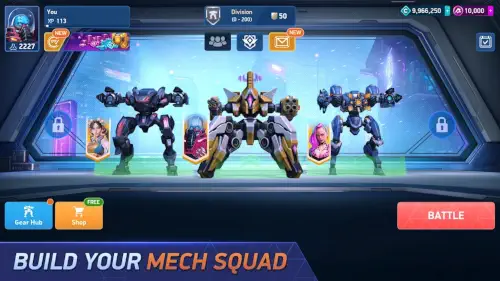
Mech Arena is Plarium’s free to play online mech shooter built around fast 5v5 and 2v2 PvP battles, customizable combat robots, extensive weapon loadouts, pilot progression, and cross platform multiplayer.

At its core, Mech Arena blends accessible third person shooting with a surprisingly detailed mech building system. Players can choose from more than 30 mechs, equip weapons from a collection of over 140 options, manage each mech’s energy capacity, develop Elite Pilots, and create specialized builds for different battlefield situations. That combination makes Mech Arena gameplay more than simply pointing weapons at the nearest opponent; positioning, range management, teamwork, and knowing when to attack or retreat all matter.
The short match format is one of the game’s biggest attractions. A player can jump into a battle without committing to a lengthy session, yet the limited time creates plenty of room for tactical decisions. A poorly timed push can cost a control point, while a well-positioned mech can turn a losing fight into a decisive counterattack.
What Is Mech Arena?
The Story Behind Mech Arena
From Plarium’s Mech Shooter to Mech Arena
Mech Arena is a competitive mech shooter developed and published by Plarium, built around the idea of turning customizable giant robots into compact multiplayer combatants. Rather than focusing on a traditional military setting, the game uses a futuristic sci-fi presentation to frame battles between heavily armed machines.
Its design puts the mech itself at the center of the experience. Movement, weapon capacity, special abilities, Pilot progression, and upgrades all contribute to how a particular machine performs in battle.
The Futuristic Sci-Fi Battlefield
The game’s visual identity is built around futuristic arenas, industrial environments, urban spaces, and advanced combat technology. Bright weapon effects and detailed mech designs give battles an unmistakably sci-fi character.
The environments also serve a gameplay purpose. Buildings, obstacles, lanes, and open spaces influence how different weapons and mech types can be used, making the battlefield itself part of the tactical equation.
Building a Game Around Customizable Mechs
The central appeal of Mech Arena is not simply collecting robots. It is creating combinations that work.
A mech’s abilities and energy capacity establish the foundation, weapons determine its offensive approach, and Pilots and upgrades provide further specialization. This creates a hangar system where experimentation becomes an important part of progression.
For players researching Mech Arena mech builds for beginners, understanding how these systems interact is more valuable than chasing individual pieces of equipment without considering the complete setup.
Mech Arena’s Growth Since Launch
Mech Arena has developed into a cross-platform multiplayer title with a broad collection of mechs, weapons, Pilots, modes, customization options, and competitive features. Its ongoing content and progression systems have helped it maintain a dedicated player community across mobile and PC.
At the same time, the game’s evolution has generated debate around progression speed, monetization, balance, matchmaking, and changes to available modes. Those issues are important when evaluating the modern game rather than judging it solely by its original concept.
What Type of Game Is Mech Arena?
Third Person Mech Shooter
Mech Arena uses a third-person camera that keeps the player’s robot visible while providing a clear view of surrounding enemies, objectives, and terrain.
The perspective works particularly well for mech combat because players need to manage both aiming and positioning. Knowing where an opponent is located is only part of the challenge; knowing whether your current position is safe is equally important.
5v5 Team Based PvP
The 5v5 format is the game’s primary large team combat experience. Ten players share the battlefield, creating opportunities for concentrated attacks, coordinated defenses, flanking maneuvers, and objective-based play.
A player who understands when to support teammates instead of chasing individual eliminations can have a significant influence on the result.
2v2 Competitive Combat
Two-versus-two battles create a much more concentrated form of mech combat. With fewer teammates available, individual positioning and target selection become especially important.
There is less room for mistakes because losing one mech can immediately put the remaining player under significant pressure.
Fast Real Time Multiplayer
Mech Arena emphasizes real time combat rather than slow tactical turns. Players move, aim, fire, capture objectives, and activate abilities continuously throughout each match.
The result is a game where reaction speed matters, but good decisions about positioning and timing can be just as important.
Free to Play Mech Warfare
Mech Arena follows a free-to-play model supported by multiple currencies, progression systems, premium purchases, and optional monetization.
Players can earn resources through gameplay, while spending can accelerate access to certain progression opportunities. This model is an important part of the overall experience and becomes particularly relevant when considering the game’s long-term progression.
Cross Platform Mech Battles
Mech Arena supports multiplayer across mobile and PC through its cross-platform ecosystem. Players can therefore experience the same core mech combat whether they prefer playing on a touchscreen device or a computer.
The cross-platform approach also expands the potential player pool, helping the game maintain its focus on quick matchmaking and short competitive battles.
What Makes Mech Arena Stand Out?
More Than 30 Unique Mechs
A roster of more than 30 mechs gives players enough variety to experiment with different movement characteristics, abilities, durability levels, and battlefield roles.
The practical difference between machines becomes especially noticeable when a player starts building around a specific strategy rather than simply choosing whichever mech has the highest overall statistics.
Over 140 Weapons
The weapon collection gives the hangar considerable depth. With more than 140 weapons available, players have many possible ways to specialize a mech for close combat, ranged attacks, burst damage, support, or other tactical situations.
That variety is one reason Mech Arena weapon loadouts are such an important part of the game’s long term appeal.
Custom Energy Based Loadouts
Energy capacity prevents unlimited weapon combinations and gives every mech a defined loadout ceiling. Players must work within those restrictions when creating their builds.
The system turns equipment selection into a puzzle: the objective is not simply to equip the strongest weapons available, but to create a combination that fits the mech’s role and available energy.
Special Mech Abilities
Mech abilities add another tactical dimension to combat. Depending on the machine, an ability can influence movement, survivability, positioning, or offensive pressure.
Using an ability at the right moment can therefore be more valuable than activating it immediately whenever it becomes available.
Control Point Objectives
Control Point Clash prevents matches from becoming purely elimination-focused. Teams must contest strategic locations and accumulate Victory Points, creating situations where objective control can matter more than individual kill totals.
This gives players a reason to move, rotate, defend, and coordinate rather than simply remaining in one safe position throughout the battle.
Elite Pilot Progression
The Elite Pilot system provides another route for long term customization. Pilots can be developed alongside mechs and weapons, allowing players to build more specialized combinations as their hangar grows.
For players who enjoy progression systems, this creates another layer to optimize beyond simply unlocking the next robot.
Short Competitive Matches
Three to five minute battles are perhaps Mech Arena’s clearest accessibility advantage. The format makes the game easy to pick up for a quick session while still leaving enough time for positioning, team fights, objective captures, and comeback opportunities.
That balance between short Mech Arena matches and deeper progression is what gives the game much of its distinctive mobile shooter appeal.
Mech Arena Gameplay
Mech Arena gameplay is built around a deceptively simple idea: choose a mech, build a weapon loadout, enter a short multiplayer battle, and outplay the opposing team. What gives the game its staying power is how much can happen inside those few minutes. Weapon range, energy capacity, movement speed, cover, mech abilities, and target selection can completely change the outcome of an otherwise straightforward firefight.
Unlike a shooter where accuracy alone can carry a match, Mech Arena rewards players who understand what their mech is designed to do. A fast mech can turn a flank into an instant takedown, while a heavily armored machine can hold a contested position long enough for teammates to capture an objective. Learning that relationship between mech, weapon, and battlefield is the foundation of becoming consistently effective.
Starting Your Mech Combat Career
The opening hours of Mech Arena are designed to get players into combat quickly, but there is still a learning curve hidden beneath the accessible controls. New players need to understand movement, aiming, weapon behavior, and loadout restrictions before they can make reliable decisions in competitive matches.
Creating Your Player Profile
Your player profile becomes the starting point for your Mech Arena progression. As matches accumulate, the profile represents your development through unlocked mechs, weapons, pilots, upgrades, and competitive activity.
For newcomers searching for Mech Arena beginner gameplay tips, the important point is not to worry about building a perfect hangar immediately. Early matches are better treated as a learning period where you discover which combat ranges and mech roles suit you.
Choosing Your First Mech
Choosing a first mech is more important than simply picking the machine with the most appealing design. Mechs differ in speed, durability, energy capacity, and abilities, so the right choice depends heavily on how you prefer to fight.
A fast mech gives you more freedom to reposition and attack exposed enemies, while a heavier machine can survive longer when fighting around contested areas. New players should use their first mech to learn positioning rather than constantly switching between different playstyles.
Learning Movement Controls
Movement is one of the first skills worth mastering because standing still makes even a powerful mech an easy target. The virtual controls allow players to move around the battlefield while simultaneously aiming their weapons.
Good movement is not simply about moving faster. It means knowing when to advance, when to strafe, when to reverse away from danger, and when to use terrain to break an enemy’s line of fire.
Understanding the Third Person Camera
The third-person camera provides a wider view of the battlefield than a traditional first-person perspective and makes positioning particularly important. Players can observe nearby enemies, monitor firing lanes, and judge whether an engagement is becoming too dangerous.
Experienced players use the camera to gather information before committing to a fight. Seeing an enemy mech before it reaches effective weapon range can provide enough time to move behind cover or prepare an ability.
Equipping Your First Weapon Loadout
Weapon selection is where Mech Arena begins to move beyond basic run-and-gun shooting. Each weapon has its own damage profile, range, reload behavior, and energy requirement.
The mech’s energy capacity places a direct limit on what can be equipped. That means the strongest individual weapon is not automatically the best choice. A useful Mech Arena weapon loadout for beginners should complement the mech’s intended role while remaining practical for the distances where that mech performs best.
Entering Your First 5v5 Battle
The first 5v5 battle quickly demonstrates why teamwork matters. Five players may have individual kills and damage totals, but the match is ultimately decided by how effectively the team controls space and objectives.
New players should resist the temptation to rush directly toward the first enemy they see. Staying close enough to teammates to provide support, watching the minimap, and learning where opponents are approaching from creates a much stronger foundation than chasing eliminations.
Understanding Mech Classes
Mech classes create the basic tactical language of Mech Arena. Speed, durability, weapon capacity, and special abilities determine whether a machine is better suited to scouting, flanking, frontline pressure, support, or a specialized combat role.
Light Mechs
Light mechs are built around mobility. Their speed allows them to reach strategic areas quickly, attack from unexpected directions, and escape engagements that would destroy a slower machine.
They are particularly useful for players who enjoy aggressive movement and flanking. Their weakness is that reckless exposure can erase their mobility advantage because lower durability leaves little room for mistakes.
Medium Mechs
Medium mechs occupy the flexible middle ground between speed and survivability. They can participate in frontline engagements without necessarily committing to the heavy, stationary approach of larger machines.
For players still learning which mech to choose in Mech Arena, a balanced medium option can be an effective way to understand several aspects of combat without becoming overly dependent on either speed or armor.
Heavy Mechs
Heavy mechs are designed to absorb punishment and exert pressure in important areas of the map. Their lower mobility makes positioning particularly important because escaping a bad engagement can be considerably harder.
A heavy mech becomes most valuable when it controls a useful position rather than simply charging into the enemy team. Holding an objective, protecting teammates, and forcing opponents to change their approach can create more value than chasing kills.
Specialist Mechs
Specialist mechs introduce more unusual tactical possibilities through distinctive abilities and combat characteristics. Instead of fitting neatly into a basic speed-versus-armor formula, these machines can be designed around specific battlefield functions.
Their effectiveness often depends on understanding the situation rather than simply having stronger statistics. A specialist ability used at the right moment can disrupt an enemy push, create an escape opportunity, or expose a target for teammates.
Choosing a Mech Class for Your Playstyle
The best mech class is ultimately the one that matches the way you naturally make decisions during a battle. Players who constantly look for side routes and isolated targets will generally get more value from mobility, while players who prefer holding contested areas may be better suited to durable machines.
The important lesson is to learn one role thoroughly before trying to master every mech in the hangar. Understanding why a particular machine succeeds or fails will improve your decision-making when you eventually move to more complicated builds.
Mastering Mech Combat
Winning fights in Mech Arena is rarely about pressing the fire button first. Players need to understand range, reload timing, weapon combinations, abilities, and the importance of choosing the correct target.
Aiming at Enemy Mechs
Accuracy matters, but effective aiming also requires anticipating where an enemy mech is moving. A target crossing open ground may be easier to hit than one constantly moving between cover, while a close-range opponent can become dangerous even if it has less health.
Players should also avoid tunnel vision. Focusing exclusively on one damaged enemy can leave your mech exposed to another opponent approaching from the side.
Managing Weapon Range
Every weapon has a practical range where it becomes most effective. Long range weapons can punish exposed enemies, while close range options can deliver substantial damage when the distance collapses.
Understanding Mech Arena weapon range and combat positioning prevents players from forcing the wrong weapon into the wrong situation. A weapon that dominates at close distance may become inefficient when the enemy controls a long firing lane.
Understanding Reload Times
Reloading creates one of the most vulnerable moments in a firefight. Once a weapon has been emptied, continuing to stand in the open gives the enemy an easy opportunity to punish you.
Smart players use reload windows to move behind cover, change position, or let teammates take the pressure. Reload management therefore becomes part of movement strategy rather than simply waiting for a weapon to become available again.
Combining Weapon Types
Weapon combinations should make sense as a complete fighting system rather than a collection of individually powerful items. A mech with a strong close range weapon may benefit from another option that covers medium distance, while a ranged build may need enough mobility or defensive capability to survive when enemies close the gap.
The energy capacity system makes these decisions more meaningful because players cannot simply equip everything they want. Building an effective loadout means deciding which capabilities matter most for the mech and intended role.
Using Special Mech Abilities
Special abilities can change the tempo of an engagement. Depending on the mech, an ability may help initiate an attack, escape danger, disrupt an opponent, or create an advantage for teammates.
The biggest mistake is using an ability simply because it is available. Saving it for the moment when an enemy commits to an attack or when an objective becomes contested can produce considerably more value.
Choosing Targets During Team Fights
Target selection becomes critical when several enemy mechs are visible. The nearest enemy is not always the most important target.
A damaged opponent who is about to escape, a mech threatening a control point, or an enemy supporting a powerful frontline unit may deserve immediate attention. Coordinated fire can also remove dangerous targets much faster than several players independently attacking different enemies.
Movement and Positioning
Positioning is one of the clearest differences between a beginner and an experienced Mech Arena player. A strong weapon cannot compensate indefinitely for standing in the wrong location.
Using Speed to Reposition
Fast mechs should use their mobility to change the angle of an engagement rather than simply travel directly toward the enemy. Repositioning can expose a weaker side of an opponent’s formation or allow a player to reach an objective before the opposing team.
Speed is also an escape tool. When a fight becomes unfavorable, leaving early can preserve a mech that may still be valuable later in the match.
Using Cover During Reloads
Cover provides a simple but powerful advantage: it prevents the enemy from freely damaging you while your weapons are unavailable.
Moving behind buildings, structures, or other battlefield obstacles during reloads can preserve health while maintaining pressure. Players who repeatedly remain exposed during reloads often lose fights they could otherwise have survived.
Flanking Enemy Mechs
Flanking works because it changes the direction from which an enemy must defend itself. A mech concentrating on opponents ahead may have limited time to respond to an attack arriving from the side.
The strongest flank is usually not a reckless solo charge. It is a timed attack that coincides with pressure from teammates, forcing the opponent to divide attention.
Escaping Dangerous Engagements
Knowing when to disengage is just as important as knowing when to attack. If multiple enemy mechs converge on your position, continuing to fight can turn a manageable loss of health into the destruction of an entire mech.
Retreating behind cover, changing lanes, or moving toward teammates can reset the engagement. Preserving your mech also preserves your future ability to contest objectives.
Holding Strong Battlefield Positions
A strong position gives a mech useful visibility, protection, and access to important routes. The ideal location is rarely the most exposed high point; it is usually somewhere that allows you to attack while limiting the number of directions from which enemies can reach you.
Holding such positions becomes particularly important around control points. A player who can defend an objective without constantly exposing the mech creates pressure that forces the enemy to spend resources attacking.
Managing Damage and Survival
Mech Arena rewards aggression, but uncontrolled aggression quickly becomes self-defeating. Health should be treated as a limited resource because surviving into the later stages of a battle can matter more than securing one additional elimination.
Protecting Mech Health
Avoiding unnecessary damage is a core part of efficient gameplay. Taking hits simply because an enemy is visible often leaves a mech weakened before the most important fight begins.
Players should consider whether an exchange is actually necessary. If an opponent has a better position, waiting for support or changing the angle can be more valuable than trading health for minor damage.
Understanding Armor
Armor determines how much punishment a mech can withstand, but durability does not make positioning irrelevant. Even a heavily armored machine can be overwhelmed when exposed to several opponents simultaneously.
Understanding the durability of your chosen mech helps determine when you can safely hold a position and when you need to retreat. It also changes how aggressively you can trade damage during objective fights.
Using Shields
Shields can provide a temporary defensive window that changes the rhythm of combat. When available, they can help absorb incoming damage while a player repositions, reloads, or waits for an opportunity to counterattack.
The key is not to treat a shield as permission to remain permanently exposed. Its value is highest when it helps you survive a specific dangerous moment and transition into a better position.
Managing Defensive Modules
Defensive modules can strengthen a mech’s ability to survive difficult engagements and complement weaknesses in a particular build. Their usefulness depends on the role of the mech and the situations it is expected to face.
A defensive setup can be especially valuable for players who repeatedly find themselves losing health before reaching an objective. Rather than adding more offensive power automatically, improving survivability can allow a player to remain active long enough to make a larger impact.
Knowing When to Retreat
Retreating is not the same as abandoning the team. A well timed retreat can prevent the enemy from gaining an easy elimination while allowing your mech to return after recovering or repositioning.
The strongest Mech Arena survival strategy for new players is to recognize danger before the health bar reaches its final stage. When multiple enemies have a positional advantage, moving away, regrouping, and returning with support can turn an unfavorable fight into a winnable one.
Mech Arena Weapons and Loadouts
Understanding the Weapon System
Weapon Damage
In Mech Arena, weapon damage is only one part of a successful build. A weapon that looks powerful on paper can perform poorly if its effective range, reload cycle, or energy requirement clashes with the mech carrying it. For players searching for a Mech Arena weapon loadout for beginners, understanding how these attributes interact is far more useful than simply choosing the weapon with the largest damage number.
Weapon Range
Range determines where a weapon becomes useful and, just as importantly, where it starts losing effectiveness. Close-range weapons reward aggressive pushes around corners, while longer-range options allow players to pressure enemies without exposing their mech to unnecessary return fire.
Reload Speed
Reload timing changes how aggressively you can play. A weapon with heavy burst damage but a long reload creates vulnerable moments, making cover and positioning essential. Faster firing weapons can maintain pressure but may require more sustained exposure to deal comparable damage.
Accuracy
Accuracy becomes increasingly important when attacking moving mechs or trying to finish damaged targets. Weapons that demand precise aim reward players who understand enemy movement patterns and can maintain a good firing angle rather than simply holding the trigger.
Special Weapon Effects
Some weapons add effects that change how an engagement develops, including mechanics associated with freezing, disruption, or other battlefield control. These effects can make a lower damage weapon valuable when its utility complements the mech’s ability.
Energy Cost
Energy cost is one of the defining mechanics of Mech Arena loadout building. Every weapon consumes a specific amount of the mech’s available energy, so players must balance firepower against the capacity of the mech they are upgrading.
Understanding Mech Energy Capacity
How Energy Limits Weapon Choices
Energy capacity acts as a loadout ceiling. A mech cannot simply equip any combination of weapons because the total energy cost must remain within its available capacity. This forces meaningful decisions when building a competitive hangar.
A player might have access to a high damage weapon but still prefer a different combination because two complementary weapons fit the mech’s energy budget more effectively. This is where Mech Arena moves beyond straightforward arcade shooting and into build optimization.
Two Energy Weapons
Two-energy weapons are useful when building around lower-capacity mechs or when preserving spare capacity for another weapon. They can also help create flexible combinations where weapon coverage matters more than maximum individual damage.
Four Energy Weapons
Four-energy weapons provide another step toward stronger specialized builds without consuming a large portion of the available capacity. They can be useful for players experimenting with mixed-range combinations.
Six Energy Weapons
Six energy weapons occupy a middle ground between compact loadouts and heavier firepower. Their value depends heavily on the mech’s remaining capacity and whether the weapon complements its movement and ability.
Eight Energy Weapons
Eight-energy weapons demand more deliberate planning. Equipping one can significantly restrict the remaining choices, so players should consider the complete build rather than evaluating the weapon in isolation.
Ten Energy Weapons
Ten-energy weapons are better suited to mechs with enough capacity to support them without sacrificing the rest of the build. They can form the centerpiece of a specialized setup when their range and combat role match the mech.
Twelve Energy Weapons
Twelve-energy weapons require substantial capacity and usually encourage a focused approach to combat. Instead of trying to cover every range, players can build around a specific engagement distance and use positioning to compensate for its limitations.
Fourteen Energy Weapons
Fourteen-energy weapons sit toward the upper end of the energy system and can dramatically shape a mech’s role. Using one effectively means understanding what the remaining capacity allows and avoiding a loadout that leaves major weaknesses elsewhere.
Sixteen Energy Weapons
Sixteen energy weapons represent the highest energy category described in the supplied research. They can define an entire build, making the choice of mech, pilot, positioning, and combat distance particularly important.
Building Effective Weapon Loadouts
Matching Weapons to Mech Abilities
The strongest loadout is rarely the one containing the strongest weapons individually. A mech with mobility, defensive utility, or a specialized ability should carry weapons that amplify that advantage.
A fast mech can turn a close-range weapon into a serious threat by controlling engagement distance, while a slower frontline mech may benefit from weapons that allow it to apply pressure without constantly chasing targets.
Creating Close Range Builds
Close-range builds are designed around aggressive engagements where the mech can exploit corners, cover, and short distances. They work particularly well when a mech can close the gap quickly or has an ability that helps it survive the initial exchange.
Creating Mid Range Builds
Mid-range builds offer a practical balance between damage and safety. They allow players to participate in team fights without committing completely to close combat, making them useful when battlefield positions change frequently.
Creating Long Range Builds
Long-range builds reward patience and map awareness. Instead of constantly moving toward the enemy, the player searches for clear firing lanes and uses distance to reduce incoming pressure. The trade-off is that poor positioning can leave a long-range mech vulnerable to fast flankers.
Balancing Damage and Energy Capacity
A high-damage weapon is not automatically a good investment if it consumes so much energy that the rest of the build becomes ineffective. The better approach is to consider the mech, weapons, pilot, and intended combat role as one system.
Why Weapon Synergy Matters More Than Raw Damage
Weapon synergy matters because combat rarely happens under ideal conditions. A build may need to engage enemies at different distances, survive reload windows, or exploit a mech ability before the enemy can respond. Two weapons that complement one another can therefore outperform a pair selected purely because both have high damage statistics.
Weapon Categories
Ballistic Weapons
Ballistic weapons provide traditional projectile-based firepower and can include machine guns, autocannons, and shotguns. Their effectiveness varies according to range, accuracy, damage profile, and the mech carrying them.
Energy Weapons
Energy weapons use futuristic technology such as plasma or laser-based attacks. They add variety to the arsenal and can be particularly effective when matched to the correct engagement distance.
Missile Systems
Missile systems give players another way to pressure opponents, particularly when direct line-of-sight shooting is difficult. Their value depends on the weapon’s targeting characteristics, range, and the player’s ability to predict enemy movement.
Special Weapons
Special weapons introduce additional battlefield effects beyond straightforward damage. Freeze or EMP-style mechanics can create opportunities for teammates and make coordinated attacks more effective.
Melee Weapons
Melee weapons turn close-range positioning into a major advantage. They require commitment, but a successful approach can produce devastating results against an exposed enemy mech.
Mech Arena Pilots and Customization
Understanding the Pilot System
More Than 30 Elite Pilots
The supplied research describes a roster of more than 30 Elite Pilots, giving players another layer of progression beyond the mech itself. Pilots can influence how effectively a particular build performs and encourage players to specialize their hangars.
Pilot Stats
Pilot statistics contribute to the overall effectiveness of a mech build. Instead of treating the pilot as a purely cosmetic character, players should consider how the pilot’s strengths interact with the selected weapons and mech.
Pilot Personalities and Backstories
Each pilot has a distinct personality and backstory, giving the progression system a character-driven layer alongside the competitive mechanics. These details help differentiate pilots beyond their numerical benefits.
Matching Pilots to Mechs
A good pilot should complement the mech rather than simply fill an empty slot. A build focused on aggressive close-range combat benefits from different priorities than a long-range support setup.
Improving Pilot Performance
Cybernetic Implants
Cybernetic implants provide another method of improving pilot performance. They can be used to reinforce the strengths of a specialized build and make the pilot mech combination more cohesive.
Pilot Perks
Pilot perks add additional bonuses that can influence how a mech and its weapons perform. Choosing perks around a specific combat role creates a more focused build than mixing unrelated bonuses.
Pilot Progression
Investing in pilot progression gives players another long-term upgrade path. As the hangar becomes more advanced, pilot development can become just as important as improving the mech and weapons themselves.
Building Pilot and Weapon Synergy
The strongest setups connect three elements: the mech’s ability, the pilot’s bonuses, and the weapon loadout. When all three point toward the same combat range and role, the build becomes easier to use effectively.
Customizing Your Mechs
Weapon Loadouts
Weapon loadouts determine the basic combat identity of each mech. Players can create aggressive shotgun style configurations, balanced mid-range setups, or long-range builds depending on the weapons available and the mech’s capacity.
Energy Capacity
Energy capacity restricts which weapons can be equipped together and therefore influences every serious loadout decision. Upgrading a mech can increase its capacity, opening possibilities that were unavailable at lower levels.
Modules
Modules provide another customization layer, allowing players to improve particular aspects of their mech and reinforce its intended role.
Mech Upgrades
Upgrades improve the performance of individual mechs and help players transition from early-game equipment toward stronger hangar configurations. Spending resources carefully matters because upgrading everything at once can slow broader progression.
Skins and Cosmetic Customization
Mech Arena also offers extensive cosmetic customization, including more than 1,000 skin options according to the supplied research. These cosmetics allow players to personalize their hangars without changing the fundamental combat role of the mech.
Managing Different Hangar Builds
A strong hangar should not rely on one universal setup. Different mechs and loadouts can prepare players for different maps, enemy compositions, and combat situations. Building several complementary configurations is more useful than repeatedly investing every resource into a single playstyle.
Mech Arena Game Modes and Objectives
Control Point Clash
Capturing Strategic Control Points
Control Point Clash revolves around controlling important areas of the battlefield rather than simply chasing eliminations. Moving onto an objective at the right moment can create more value for the team than pursuing an enemy that has already retreated.
Holding Points to Generate Victory Points
Captured points generate victory points over time, turning territorial control into a constant source of pressure. Teams that maintain control can force opponents into predictable attacks.
Fighting Around Objectives
The most important fights often happen around the control points. Players need to balance securing the objective with surviving the incoming attack instead of treating the capture area as an invitation to stand exposed.
Coordinating Control Point Attacks
A coordinated push is far more effective than several players attacking independently. One mech can pressure defenders while another approaches from a different angle, creating openings for the team to take the objective.
5v5 Deathmatch
Competing for the Highest Kill Count
5v5 Deathmatch shifts attention from territorial control to eliminations. Every engagement becomes a calculation involving damage, positioning, and the number of teammates still able to fight.
Managing Team Lives
Because losing mechs reduces the team’s available fighting strength, reckless trades can create problems even when they produce an elimination.
Protecting Your Team’s Advantage
Once a team establishes a lead, the objective changes from taking unnecessary fights to maintaining that advantage. Players should make the enemy come into unfavorable positions rather than giving away easy eliminations.
Choosing When to Attack
Timing separates effective Deathmatch players from players who simply chase targets. An enemy isolated from teammates is a much safer target than a damaged mech protected by several opponents.
2v2 Deathmatch
Smaller Team Battles
2v2 places much more responsibility on each player because there are fewer teammates available to compensate for mistakes. Positioning and target selection become especially important.
Coordinating With One Teammate
Communication between two players can turn a simple engagement into a coordinated attack. One mech can draw attention while the other exploits the opening.
Managing Limited Support
There is little room for reckless play when only one teammate remains. Keeping both mechs operational can be more valuable than trading one for an isolated elimination.
Punishing Isolated Enemies
A separated enemy has fewer ways to escape or receive assistance. Recognizing these moments can quickly swing a 2v2 engagement.
Free for All
Fighting Without Team Support
Free-for-All removes the safety net of teammates and forces every player to manage threats independently. Awareness becomes critical because an enemy who is not currently attacking you may still be preparing to enter the fight.
Choosing Safe Engagements
The best engagement is not always the closest enemy. Players should consider health, weapon range, available cover, and the likelihood of another opponent joining the fight.
Managing Multiple Enemy Threats
Several enemies can create crossfire from different directions. Staying mobile and avoiding predictable movement can prevent one fight from becoming an easy opportunity for another player.
Maximizing Eliminations
Success in Free-for-All requires aggression, but uncontrolled aggression can expose a mech to multiple attackers. The ideal approach is to attack weakened or distracted opponents while minimizing unnecessary exposure.
Onslaught PvE
Fighting AI Controlled Enemies
Onslaught provides a PvE environment where players face AI-controlled opponents rather than human competitors. This changes the pace of combat and provides space to become familiar with different builds.
Practicing Mech Builds
Players can use PvE combat to test weapons, abilities, and positioning before relying on them in competitive matches.
Learning Weapons Without PvP Pressure
Trying an unfamiliar weapon against AI opponents is less punishing than experimenting in a competitive battle. This makes Onslaught useful for understanding reload timing, range, and damage behavior.
Cooperative PvE Combat
The cooperative structure also gives players an opportunity to practice team coordination while dealing with predictable enemy behavior.
Hangar Clash
Understanding the Alternative Battle Format
Hangar Clash provides an alternative battle format that changes how players approach mech selection and combat. Rather than relying exclusively on the familiar structure of standard matches, players must adapt to the rules of the mode.
How Hangar Clash Differs From 2v2
According to the supplied research, Hangar Clash replaced 2v2 Deathmatch in some updates. Its presence means players should pay attention to the current mode rotation instead of assuming older battle formats remain permanently available.
Adjusting Your Mech Selection
Alternative modes can reward different hangar compositions. A mech that performs exceptionally well in a standard team battle may not provide the same value when the format changes.
Custom Matches
Creating Private Battles
Custom Matches allow players to create private battles without the normal reward structure. This makes them useful for testing builds and organizing community games.
Playing With Friends
Friends can use private matches to practice together, experiment with unusual loadouts, or simply compete without the pressure of normal progression.
Choosing Maps and Modes
The ability to select maps and modes gives custom games a practical training purpose. Players can repeatedly practice a particular engagement area or test how a new build performs under controlled conditions.
Community Match Strategies
Custom matches can also become useful for organized communities, allowing players to develop team strategies, compare builds, and experiment with tactics before taking them into competitive battles.
Mech Arena Progression and In-Game Economy
Building Your Mech Hangar
Unlocking New Mechs
Progress in Mech Arena is closely tied to building a versatile hangar rather than simply owning the newest mech available. Unlocking new mechs expands the tactical options available to you, particularly when different battle situations reward speed, durability, range, or specialized abilities.
For players researching Mech Arena progression for beginners, the important question is not how quickly you can fill every hangar slot, but whether each new mech gives you a genuinely useful role. A fast mech can open flanking opportunities, while a heavier platform may give your team a reliable frontline presence around control points.
Expanding Your Weapon Collection
A larger weapon collection gives your hangar considerably more flexibility. Because Mech Arena uses an energy capacity system, acquiring weapons is only part of the process; you also need mechs capable of carrying and using them effectively.
A weapon that looks powerful on paper may be a poor investment if none of your current mechs can build an efficient loadout around it. Building a collection gradually allows you to experiment with different ranges and combat roles without wasting resources on equipment that rarely leaves the inventory.
Improving Existing Builds
Upgrading a proven mech can often be more valuable than constantly replacing it. If a particular build already fits your preferred combat style, improving its weapons, abilities, modules, and pilot can turn it into a dependable part of your main hangar.
This is especially important for new players because spreading resources across too many unfinished builds can leave every mech underpowered. A smaller collection of well-developed machines is generally easier to manage than a large hangar filled with partially upgraded equipment.
Choosing Which Mechs to Upgrade
Before committing valuable resources, consider how often a mech actually contributes to your battles. A machine that consistently helps you capture objectives, survive difficult engagements, or eliminate priority targets deserves more attention than one that simply looks impressive.
The strongest long-term Mech Arena hangar strategy is usually built around complementary roles rather than five nearly identical mechs.
Understanding Mech Arena Currencies
Credits
Credits form an important part of the regular progression economy and are earned through normal gameplay. They are particularly useful for developing equipment without relying entirely on premium purchases.
Managing Credits becomes increasingly important as upgrade costs rise. Spending them immediately whenever something becomes available can leave you short when a genuinely useful upgrade appears.
A-Coins
A-Coins function as the game’s premium currency and can be considerably more valuable than ordinary Credits. They can influence how quickly players access certain progression opportunities, making careful spending particularly important for free to play users.
Instead of treating every limited offer as something that must be purchased, it is better to consider whether the expenditure improves a build you expect to keep using.
Blueprints
Blueprints are connected to unlocking and developing equipment within the progression system. Their value becomes more apparent when players begin targeting specific mechs or weapons instead of simply collecting whatever becomes available first.
Understanding where your Blueprints are going can prevent your progression from becoming scattered across too many unrelated items.
Combat Points
Combat Points reward participation in battles and contribute to the broader progression loop. They encourage consistent play rather than relying entirely on individual purchases to advance.
Players who regularly complete matches can therefore make meaningful progress even when they are not spending money.
Victory Points
Victory Points add another layer to the competitive progression structure by rewarding successful performances. Winning consistently can therefore contribute more than simply increasing a player’s match count.
For players focused on improving their Mech Arena progression, understanding which activities generate useful rewards helps turn individual matches into meaningful long-term progress.
Managing Resources Efficiently
Saving Credits for Important Upgrades
One of the easiest mistakes for a new player is spending Credits whenever an upgrade becomes available. That approach can feel rewarding in the short term but may leave your primary build underdeveloped when a much more important improvement becomes accessible.
Prioritize equipment that you use regularly and that directly improves your strongest mech builds.
Spending A-Coins Carefully
A-Coins deserve even more caution because premium currency can disappear quickly through impulse purchases. Before spending them, consider whether the item solves a real weakness in your current hangar.
A cosmetic upgrade may look attractive, but improving a frequently used mech or securing an important progression unlock can have a much greater gameplay impact.
Unlocking Higher Tier Equipment
Moving toward higher-tier mechs and weapons should be treated as a progression goal rather than a race. Unlocking stronger equipment without having enough supporting weapons, pilots, or resources can produce a hangar that looks advanced but performs inconsistently.
A balanced upgrade path makes the transition between tiers considerably smoother.
Avoiding Unnecessary Early Upgrades
Early equipment can become obsolete as your hangar develops. Pouring large amounts of resources into every beginner mech is therefore rarely efficient.
Instead, identify which machines you actually enjoy using and reserve major investments for builds with long term potential.
Why Saving Resources Can Improve Long Term Progression
Resource management becomes particularly important once upgrade prices begin competing with the cost of new equipment. Saving does not mean refusing to spend; it means keeping enough resources available to make meaningful upgrades when they matter.
For anyone looking for how to progress in Mech Arena without wasting resources, this distinction can make the difference between steady hangar development and a progression system that constantly feels expensive.
Free to Play Progression
Earning Resources Through Battles
Regular matches provide the foundation for free-to-play progression. Playing consistently allows players to accumulate resources while learning maps, improving aim, testing builds, and understanding different mech roles.
The most efficient progression therefore comes from combining gameplay improvement with resource accumulation rather than treating battles purely as a way to earn currency.
Daily Missions
Daily missions provide another reason to return regularly. Completing them can add useful resources to your normal battle rewards and make short play sessions more productive.
For players with limited time, focusing on achievable daily objectives can be more efficient than playing random matches without a progression target.
Event Rewards
Events can introduce additional opportunities to earn equipment and resources. Their value depends on the rewards available and the effort required to obtain them, so players should evaluate each event rather than assuming every limited-time activity is equally worthwhile.
Premium Purchases
Premium purchases can accelerate progression, but they are not the only route through the game. Players who spend should still consider whether a purchase strengthens a coherent hangar or simply adds another item to an already crowded collection.
This distinction is particularly important in a free to play game where frequent offers can make short-term upgrades appear more important than they actually are.
Loot Boxes and Crate Systems
Crates and randomized reward systems can provide desirable equipment, but they also introduce uncertainty into progression. Players should understand that spending resources on a randomized reward does not guarantee the exact mech, weapon, or upgrade they want.
A measured approach helps prevent the progression system from turning into repeated impulse spending.
Understanding the Grind
The grind becomes more noticeable as players pursue higher-level equipment and more developed hangars. Progress can feel considerably slower when several mechs, weapons, pilots, and upgrades compete for the same resources.
The best response is not necessarily to upgrade everything. Concentrating resources on a few dependable builds creates clearer progression and gives players stronger tools for earning future rewards.
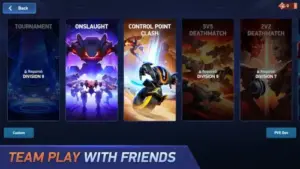
Mech Arena Maps and Battlefield Strategy
Understanding Mech Arena Battlefields
Open Combat Areas
Open areas reward players who can manage distance and exposure. Remaining in the open for too long can make a mech an easy target, particularly against opponents equipped for long-range attacks.
These spaces are therefore best approached with deliberate movement rather than simply pushing forward toward the nearest enemy.
Urban Environments
Urban maps create a very different rhythm. Buildings, corners, and narrow passages reduce sightlines and can allow close range mechs to approach enemies before they can fully respond.
Players who understand how to move between pieces of cover can turn an apparently dangerous area into a strong defensive position.
Industrial Arenas
Industrial environments often combine open sections with structures, elevated positions, and restricted routes. This creates multiple opportunities for ambushes and rotations.
Reading the transition between open and enclosed areas is particularly important because a mech that dominates one section of the map may become vulnerable immediately after crossing into another.
Narrow Combat Routes
Narrow routes naturally concentrate fighting. These areas can become excellent defensive positions because enemies have fewer ways to approach, but they can also become dangerous if your team loses control of the surrounding area.
Before committing to a narrow corridor, check whether an enemy flank can reach your position from another route.
Control Point Locations
Control points are more than locations that generate victory progress. They shape where players are forced to fight.
A strong control point position gives your team an objective to defend while limiting the enemy’s available routes. However, abandoning a safe position simply to chase an opponent away from the objective can sometimes create a bigger strategic problem.
Reading the Battlefield
Tracking Enemy Mechs
The minimap and battlefield movement provide clues about where enemy mechs are concentrating. If several opponents disappear from one side of the map, assume they may be rotating rather than simply ignoring that area.
Good players constantly update their understanding of enemy positions instead of reacting only after an opponent appears directly in front of them.
Watching Control Points
Control points should influence your movement decisions throughout the match. A team that wins several fights but ignores the objective can still lose because the enemy controls the scoring areas.
Watch which points are contested, which are vulnerable, and which can be reached quickly from your current position.
Identifying Weak Flanks
A weak flank usually appears when an enemy side has fewer defenders, damaged mechs, or poor positioning. This creates an opportunity to attack from an unexpected direction.
However, a seemingly empty flank can also be bait. Check the minimap and enemy movement before committing your mech.
Finding Rotation Routes
Rotation routes allow you to move from one important area to another without taking the most predictable path. Learning these routes can dramatically improve your ability to reinforce teammates, defend objectives, or escape unfavorable fights.
Map knowledge becomes increasingly valuable as opponents become better at predicting standard movements.
Choosing the Right Position
Heavy Mech Frontline Positions
Heavy mechs are generally most effective when they can use their durability to contest important areas without becoming surrounded. A good frontline position gives them enough cover to survive incoming fire while allowing them to threaten enemies approaching the objective.
The goal is not simply to stand in front of everyone. It is to create space that teammates can safely use.
Light Mech Flanking Routes
Light mechs benefit from routes that allow them to approach enemies from the side or rear. Their speed can also make them useful for rapidly changing pressure between objectives.
A successful flank should create a tactical advantage, not leave the light mech stranded behind enemy lines.
Long Range Firing Positions
Long range builds require visibility without excessive exposure. Elevated or protected firing positions can provide a clear view of enemy movements while giving the mech an escape route when opponents close the distance.
Remaining in the same firing position for too long can make the player predictable, so repositioning after major engagements is often essential.
Defensive Control Point Positions
A defensive position near a control point should allow you to influence the objective without unnecessarily exposing your mech. Cover, escape routes, and nearby teammate support are often more valuable than having the perfect firing angle.
The strongest defensive positions make enemies work to remove you.
Controlling Battlefield Pressure
Holding Key Areas
Map control is ultimately about controlling where the battle happens. Holding a strategically important area can force opponents to approach through predictable routes while giving your team more freedom to rotate.
This is why Mech Arena map strategy for Control Point Clash cannot be reduced to simply capturing the nearest objective. The location of your team matters just as much as the number of points currently controlled.
Creating Numerical Advantages
Eliminating one enemy while keeping all nearby teammates alive can create a temporary numerical advantage. That advantage should immediately influence your next decision.
Rather than scattering after a successful fight, coordinated players can use the extra numbers to capture an objective, eliminate another isolated mech, or reinforce a threatened flank.
Rotating After Winning an Engagement
Winning a fight does not mean the job is finished. Once an enemy is eliminated or forced away, staying in the same location may waste the advantage.
Rotate toward the next important objective or threatened teammate before the opposing team has time to regroup.
Preventing Enemy Flanks
Flanking works both ways. While looking for opportunities to attack the enemy from the side, you must also prevent opponents from reaching your vulnerable backline.
Monitoring alternative routes and responding quickly to missing enemy mechs can stop a small flank from becoming a complete collapse.
Why Positioning Can Matter More Than Damage
High damage numbers are satisfying, but damage alone does not determine whether a battle is being won. A mech that holds a control point, blocks a rotation route, protects a teammate, or forces several enemies to reposition can provide enormous value without topping the damage chart.
That is the key lesson behind effective Mech Arena strategy: the best position can create opportunities that raw firepower cannot.
Beginner Tips for New Mech Arena Players
Starting strong in Mech Arena is less about collecting the most powerful mech immediately and more about learning how movement, weapon range, positioning, and objectives interact. A player who understands when to attack, when to reposition, and when to protect a control point can consistently outperform someone who simply chases eliminations.
Learn Your Mech’s Role Before Chasing Kills
Every mech has a job on the battlefield. Fast mechs can pressure exposed targets and rotate between objectives, while heavier machines are better suited to absorbing pressure and holding contested areas. Before worrying about your elimination count, understand what your chosen mech is actually designed to do.
If you are using a fragile damage-focused build, charging directly into the enemy formation usually turns your strongest weapon into a very short-lived advantage. Learning your mech’s role is one of the most important Mech Arena beginner tips for winning more matches.
Use Cover Between Weapon Reloads
A loaded weapon creates an opportunity; an empty magazine creates a vulnerability. Once you have fired your available weapons, move behind terrain, buildings, or other cover instead of standing in the open waiting for the reload cycle.
This becomes particularly important with burst-damage weapons. Deal your damage, break line of sight, reload, and return when you can fire again.
Prioritize Control Points
Kills look impressive on the scoreboard, but Control Point Clash is ultimately about controlling the objectives. A player who spends the entire match hunting enemies while abandoning an uncontested control point can unintentionally throw away a winning position.
Watch the score and the status of each objective. If your team already has a strong advantage, defending the right control points may be more valuable than searching for another elimination.
Stay Near Teammates
A lone mech is an attractive target because several enemies can concentrate fire without worrying about immediate retaliation. Staying within supporting distance gives you more opportunities to combine firepower and punish enemies who overextend.
This does not mean moving as one giant group everywhere. Good teamwork means maintaining enough spacing to avoid being trapped while remaining close enough to support an engagement.
Watch the Battlefield Constantly
Do not focus exclusively on the mech directly in front of your crosshair. The wider battlefield determines whether your current fight is actually safe.
Pay attention to enemy movements, control point pressure, disappearing teammates, and open routes around your position. A fight that looks favorable can become dangerous within seconds if another enemy mech reaches your flank.
Protect Your Mech’s Health
Health is a resource, not simply a number that disappears while you play aggressively. A heavily damaged mech has fewer options when the battle reaches its decisive stage.
Avoid trading large amounts of health for insignificant damage. If an engagement is no longer favorable, disengage and look for a better angle rather than continuing simply because you have already committed.
Avoid Unnecessary Early Fights
The opening seconds of a match should not automatically become a race to see who can take the first shot. Rushing into an exposed lane can leave your mech damaged before your team has established control of the battlefield.
Use the opening phase to identify enemy positions, understand which control points are contested, and determine where your mech can have the greatest impact.
Learn One Mech Build Before Expanding
Constantly switching between unfamiliar mechs makes it harder to understand what is actually causing your successes and failures. Choose one reliable build and learn its movement speed, weapon range, damage window, reload behavior, and ability timing.
Once that build feels natural, experimenting with another mech becomes much easier because you already understand the fundamentals of positioning and target selection.
Practice in Onslaught Mode
Onslaught provides a useful environment for learning mech movement, weapon behavior, ability timing, and enemy pressure without the same PvP uncertainty.
Use it deliberately rather than simply playing it for rewards. Test how quickly your weapons eliminate targets, learn how your mech handles under pressure, and experiment with positioning before taking the build into competitive matches.
Complete Daily Missions
Daily missions can provide useful progression resources while encouraging you to play different parts of Mech Arena. Instead of ignoring them because a particular objective does not match your preferred playstyle, consider using them as controlled practice.
A mission requiring a particular weapon, mode, or combat behavior can also expose weaknesses in your current understanding of the game.
Save Credits and A-Coins
Early progression can tempt new players into spending every available resource as soon as something becomes purchasable. That approach can leave your hangar with several partially developed builds rather than one genuinely useful setup.
Save Credits and A-Coins for upgrades and equipment that have a meaningful long term role in your hangar. Before spending premium currency, consider whether the purchase improves a build you expect to keep using.
Avoid Over Upgrading Lower-Tier Mechs
Not every early mech deserves unlimited investment. A common progression mistake is spending heavily on equipment that will quickly be replaced as stronger options become available.
Upgrade enough to remain competitive, but keep your longer term hangar plans in mind. Resource discipline becomes increasingly important once multiple mechs, weapons, pilots, and upgrades compete for the same economy.
Learn Your Weapon’s Effective Range
A weapon’s maximum range is not necessarily its ideal combat range. Some weapons become much more dangerous at close distance, while others are designed to punish enemies from farther away.
Learn where your weapon delivers reliable damage and position your mech accordingly. Trying to force a short-range weapon into a long range duel is usually a positioning mistake rather than a damage problem.
Choose Pilots That Match Your Build
Pilots should complement the mech and weapons you are actually using. A pilot whose bonuses reinforce your preferred combat range or weapon setup can turn a familiar build into a much more coherent one.
Do not choose a pilot simply because the character looks powerful on paper. Think about the complete combination of mech, weapons, energy capacity, abilities, and pilot bonuses.
Advanced Mech Arena Strategy
Once the basic controls become automatic, Mech Arena strategy becomes increasingly focused on information, positioning, timing, and resource management. The strongest plays often happen before a weapon is fired because a favorable position can determine the outcome of an engagement.
Improving Battlefield Positioning
Positioning determines which enemies can attack you, which targets you can reach, and how quickly you can respond when an objective changes hands.
Holding Defensive Positions
A strong defensive position should give your mech access to an important route or objective while limiting the number of directions from which enemies can attack.
Do not confuse defensive positioning with inactivity. A good position lets you threaten enemies when they approach while giving you an escape route when the fight turns against you.
Using Cover to Reduce Incoming Damage
Cover is especially valuable when your weapon is reloading or your ability is unavailable. Instead of absorbing every incoming shot, break the enemy’s line of sight and force them to reposition.
The best cover is not necessarily the largest object on the map. A small piece of terrain that protects your mech’s vulnerable angle while preserving your firing lane can be far more useful.
Rotating Between Control Points
Holding one control point for the entire match can become a trap if the rest of the battlefield collapses. Experienced players constantly evaluate whether their current position is still strategically important.
If another control point becomes vulnerable, rotate before the enemy completely establishes control. Fast mechs are particularly valuable here because their mobility allows them to influence several areas of the map.
Escaping Bad Engagements
One of the biggest differences between beginner and advanced play is knowing when a fight is already lost.
If multiple enemy mechs are closing around you, your escape route is disappearing, or your weapons are unavailable, retreat before the situation becomes unrecoverable. Surviving with reduced health can still be strategically valuable; being destroyed for no objective gain is not.
Mastering Flanking
Flanking works because it attacks the enemy from an angle they may not be prepared to defend. It becomes particularly effective when opposing mechs are focused on your frontline.
Identifying Exposed Enemy Mechs
Look for enemies that have moved too far away from their teammates, turned their weapons toward another fight, or positioned themselves where they cannot retreat safely.
An exposed target is usually more valuable than a heavily defended enemy with higher apparent damage potential.
Using Fast Mechs for Side Attacks
Fast mechs can exploit gaps in enemy formations more effectively than slow frontline machines. Rather than charging directly toward the strongest enemy, use speed to reach their side or rear.
The objective is not simply to attack from behind. Your real advantage comes from forcing the enemy to divide its attention.
Attacking Isolated Targets
An isolated enemy gives your team an opportunity to create a temporary numerical advantage. Focus fire quickly, secure the elimination, and then reconsider the battlefield instead of immediately searching for another target.
Repeatedly eliminating isolated mechs can gradually dismantle an otherwise coordinated enemy formation.
Returning to Objective Defense
A successful flank does not automatically mean you should remain behind enemy lines. Once the opportunity disappears, return toward your team’s objectives.
One of the most common advanced-play mistakes is turning a successful flank into an unnecessary solo adventure.
Building Better Weapon Synergy
Effective builds are combinations rather than collections of individually powerful weapons. The best loadout is one where the mech, weapon range, energy capacity, ability, and pilot bonuses all support the same combat plan.
Matching Weapons to Energy Capacity
Energy capacity determines which weapon combinations are practical. Rather than selecting weapons first and trying to force them onto a mech, start with the role you want the build to perform and work within its available energy.
A technically powerful weapon becomes a poor choice if it leaves the rest of your loadout unable to function effectively.
Combining Different Ranges
Mixed-range loadouts can provide flexibility, but only when the ranges complement one another. Pairing weapons with compatible engagement windows allows your mech to remain dangerous while changing distance.
Avoid creating a build where half of your weapons are useful at one range and the other half become ineffective whenever you reach that distance.
Matching Weapons to Mech Abilities
A mech’s ability can create a specific combat opportunity. Your weapons should capitalize on that opportunity rather than working independently from it.
For example, an ability that helps you close distance becomes more valuable when paired with weapons capable of delivering meaningful damage immediately after you reach close range.
Creating Burst-Damage Builds
Burst builds are designed around delivering substantial damage during a short engagement window. They are particularly effective when the mech can surprise an isolated target or safely disengage after firing.
The important part is timing. If the enemy survives your burst and you remain exposed during the recovery period, the build’s initial advantage can quickly disappear.
Creating Long Range Support Builds
Long-range builds can influence fights before enemies reach the main engagement, but distance should never become an excuse to ignore objectives.
A strong support player constantly changes firing positions, watches the battlefield, and helps teammates pressure targets rather than sitting in one location throughout the match.
Coordinating Team Attacks
Individual mechanical skill becomes much more dangerous when several players attack the same target at the same time.
Concentrating Fire
When multiple enemies are available, focus fire can remove one mech before it has time to retreat or receive meaningful support.
Spreading damage across several targets may look productive on the scoreboard, but concentrated damage creates actual numerical advantages.
Supporting Heavy Mechs
Heavy mechs can absorb pressure and occupy valuable space, but they become far more effective when teammates exploit the attention they attract.
Use their frontline presence as an opportunity to attack exposed enemies rather than allowing your heavy mech to absorb damage without support.
Protecting Control Point Captures
Capturing an objective is only half the job. Your team must also make the position difficult for the enemy to reclaim.
When an ally is capturing a control point, pressure approaching enemies, cover vulnerable teammates, and maintain awareness of alternate routes rather than abandoning the objective immediately after it changes color.
Rotating as a Team
Team rotations become powerful when several players move together toward the next important area. A coordinated rotation can overwhelm an isolated enemy group before it has time to respond.
The key is timing. Rotate too early and you may surrender a valuable objective; rotate too late and the enemy may already have established a defensive position.
Managing the Endgame
The final stage of a Mech Arena battle rewards discipline. With fewer mechs remaining, every elimination and every remaining health point can dramatically affect the result.
Preserving Remaining Health
Do not treat your final available mech as disposable. If your team has a narrow advantage, unnecessary aggression can turn a winning position into a losing one.
Use cover, favorable ranges, and defensive positions to make your remaining health difficult for the enemy to remove.
Defending Critical Control Points
When the match approaches its conclusion, control points can become more important than individual kills. Identify which objectives determine the outcome and position your remaining strength around them.
A defensive player who prevents a last-second capture can contribute more to victory than someone chasing an enemy far away from the scoring area.
Hunting Isolated Enemies
When the enemy formation begins to break apart, look for isolated mechs that can be eliminated without exposing your own position.
A safe elimination can remove an important source of damage while reducing the enemy’s ability to contest the final objectives.
Avoiding Unnecessary Risks
The endgame is where impatience becomes especially expensive. If your team has the advantage, there is often no reason to take a low-probability fight.
Play the objective, protect your remaining mechs, deny the enemy easy opportunities, and force them to take the risks required to recover the match.
What Players Like and Dislike About Mech Arena
What Players Enjoy
Fast Three to Five Minute Battles
One of Mech Arena’s biggest strengths is its short match format. Battles can deliver a complete competitive experience in roughly three to five minutes, making the game particularly appealing to players who want quick mech combat without committing to a long session. The compact format also keeps the action moving: there is little downtime between spawning, taking a position, contesting an objective, and choosing the next target.
For players searching for fast mech shooter matches on mobile, this pacing is one of Mech Arena’s clearest advantages. A short battle can still involve several tactical decisions, especially when teams are fighting over control points or trying to protect a narrow lead.
Large Mech Selection
The roster of more than 30 mechs gives players plenty of room to experiment with different combat roles. Faster machines can pressure exposed targets and rotate around the battlefield, while heavier designs can absorb punishment and contest important areas.
That variety also makes the hangar feel more personal. Instead of simply upgrading one character, players can build a collection around different situations, maps, weapons, and preferred playstyles.
More Than 140 Weapons
The extensive weapon selection is another major attraction. With more than 140 weapons available in the research provided, Mech Arena gives players considerable freedom when experimenting with damage types, ranges, reload patterns, and energy requirements.
The appeal is not simply having a large arsenal. The interesting part comes from discovering which weapon actually works with a particular mech. A powerful weapon can still be a poor choice if its range, energy cost, or firing pattern conflicts with the mech’s abilities.
Extensive Loadout Customization
Mech Arena makes customization central to its combat loop. Players have to consider the mech’s energy capacity, available weapons, modules, upgrades, and overall battlefield role before settling on a build.
This creates a useful layer of experimentation. Two players using the same mech can approach a match very differently depending on whether they prioritize burst damage, sustained fire, mobility, survivability, or long range pressure.
For anyone looking for Mech Arena weapon loadout tips, this flexibility is arguably one of the game’s most rewarding systems because effective builds depend on synergy rather than simply equipping the highest-damage weapon available.
Pilot Progression
The pilot system adds another layer to mech customization. More than 30 Elite Pilots can be developed, with pilot stats, perks, cybernetic implants, and progression affecting how a build performs.
This gives players another reason to refine their hangar instead of treating mech upgrades as the only form of progression. Matching the right pilot with the right weapon and mech can turn a familiar build into something considerably more specialized.
Multiple Game Modes
Mech Arena avoids relying on a single PvP format. Control Point Clash emphasizes territorial control, Deathmatch focuses on eliminations, Free for All removes team support, while Onslaught provides a PvE alternative against AI opponents.
That variety matters because different modes reward different skills. A player who excels at controlling objectives may need to rethink their approach in Free for All, while Onslaught offers a lower-pressure environment for testing unfamiliar weapons and mechs.
Strategic Team Combat
Although Mech Arena is accessible enough to pick up quickly, the strongest matches reward players who understand positioning and teamwork. Focusing the same enemy, protecting a teammate during an engagement, rotating toward a threatened control point, or refusing to overextend can have more impact than simply chasing individual kills.
The result is a game that sits between arcade shooter accessibility and tactical team combat. The controls are approachable, but consistently winning requires players to understand what is happening around them.
Cross Platform Multiplayer
Cross-platform support across mobile and PC makes Mech Arena more flexible than a game restricted to one device ecosystem. Players can maintain unified progression while switching between supported platforms, which is particularly useful for those who prefer touch controls on mobile but want a larger-screen experience on PC.
It also broadens the multiplayer environment, giving the game a larger potential pool of opponents and teammates.
Smooth Mobile Performance
The research provided indicates that players frequently praise Mech Arena’s graphical quality and performance, including reports of smooth gameplay on older phones. The futuristic arenas, detailed mechs, projectile effects, explosions, and third person camera provide a visually polished presentation without abandoning the game’s mobile first accessibility.
That balance is important. A mech shooter can look impressive in screenshots but become frustrating if performance interferes with aiming or movement. Mech Arena’s reported smoothness is therefore a meaningful part of its appeal.
Quick Matchmaking
Fast matchmaking complements the game’s short-match design. Players generally do not need to spend a long time waiting before getting into a battle, which reinforces Mech Arena’s pick-up-and-play character.
For mobile players who have only a few minutes available, the combination of quick matchmaking and short matches creates a particularly convenient multiplayer loop.
Common Criticisms
Pay to Win Concerns
The most significant criticism surrounding Mech Arena is its free to play economy. Players can obtain premium advantages through spending, and newer or stronger mechs and weapons can create concerns about whether competitive success is too closely connected to investment.
This does not mean every match is automatically decided by spending, but it does affect how some players perceive progression and balance. For free to play users, the gap between patiently developing a hangar and purchasing powerful equipment can become an important consideration.
Grind Heavy Progression
Progression can also feel slow when players attempt to build a competitive hangar without spending money. Unlocking mechs, collecting weapons, improving pilots, and upgrading existing equipment requires resources, meaning that expanding a roster can take considerable time.
The grind becomes more noticeable when players want to maintain several viable builds rather than concentrating their resources on one primary mech.
Mech and Weapon Balance
A large roster creates a difficult balancing problem. Every new mech, weapon, ability, pilot interaction, and upgrade has the potential to change the competitive environment.
Players can therefore become frustrated when certain combinations feel substantially stronger than others. Balance concerns are especially noticeable in competitive matches, where a small difference in equipment can have a large effect on an engagement.
Matchmaking Problems
Matchmaking is another recurring concern. Differences in player experience, equipment strength, and mech progression can make some battles feel uneven.
A close match where both teams have opportunities to recover can be extremely satisfying. The opposite experience, being placed into a battle where the equipment gap is immediately obvious, can make progression feel less rewarding.
Server and Maintenance Issues
Like any online multiplayer title, Mech Arena depends heavily on stable servers and regular maintenance. Connection problems, downtime, or unexpected technical issues can interrupt matches and progression.
These problems are particularly frustrating in competitive modes because players have little control over technical interruptions once a battle has begun.
Energy Capacity Restrictions
The energy system is both one of Mech Arena’s more interesting mechanics and one of its potential frustrations. Each mech has a defined energy capacity, while weapons consume different amounts of that capacity.
This prevents players from simply combining any weapons they want, which adds strategic depth. At the same time, players can find the system restrictive when a preferred combination exceeds their mech’s available capacity.
For players researching Mech Arena energy capacity weapon builds, understanding this restriction is essential because weapon selection is never completely independent of the mech itself.
Monetization Pressure
Frequent offers, premium currencies, crates, and purchasable progression can make the free-to-play model difficult to ignore. Even players who are happy with the core combat may find repeated purchase opportunities distracting.
The issue is less about the existence of optional purchases and more about how strongly monetization becomes part of the overall progression experience.
Loot Box and Crate Concerns
Crates and randomized rewards can add excitement, but they can also make progression feel unpredictable. Players who prefer transparent progression may dislike having important resources or equipment tied to chance-based systems.
This is particularly relevant for long-term free-to-play users who need to carefully decide where every resource goes.
Removal or Replacement of Game Modes
Changes to the game mode lineup have also generated criticism. The research notes that some players disliked the removal or replacement of modes such as 2v2 Deathmatch, with Hangar Clash taking its place in some updates.
For veteran players, these changes can be more than a simple menu adjustment. A favorite mode may have influenced how they built their hangar, selected weapons, or played with friends, so replacing it can alter the overall feel of the game.
Overall Community Opinion
First Time Player Experience
New players can find Mech Arena immediately accessible because the basic shooting and movement systems are straightforward. The real learning curve begins afterward, when players discover how energy capacity, weapon range, mech abilities, pilots, positioning, and control points interact.
The early experience is strongest when newcomers focus on learning one dependable build rather than trying to unlock everything simultaneously.
Casual Mobile Players
Casual players are likely to appreciate the game’s combination of quick matchmaking and short battles. A three to five minute match fits naturally into shorter gaming sessions, while the range of modes provides enough variety to prevent every session from feeling identical.
The main drawback for casual users is progression. Someone who plays only occasionally may find that dedicated players advance through the equipment system considerably faster.
Competitive Mech Players
Competitive players have much more to analyze. Energy capacity, weapon synergy, pilot selection, positioning, control-point timing, target selection, and team composition can all influence a match.
For these players, Mech Arena offers substantially more depth than its simple controls initially suggest. The challenge is that competitive enjoyment depends heavily on how well the current balance and matchmaking systems maintain a fair environment.
Free to Play Players
Free-to-play players face the toughest progression decision: where should limited resources be spent? Building everything at once is inefficient, so successful long term progression requires patience and selective upgrading.
Players willing to concentrate on a small number of strong mechs and weapons can get considerably more value from their resources than those constantly chasing every new release.
Long Term Progression Fans
Players who enjoy collecting and upgrading equipment have plenty to work toward. Mechs, weapons, pilots, implants, perks, modules, cosmetics, and hangar configurations provide multiple progression layers.
However, the same depth that appeals to collectors can become overwhelming when combined with grind and monetization. Long-term enjoyment therefore depends heavily on whether a player enjoys gradual optimization rather than expecting rapid access to everything.
Veteran Community Perspective
Veteran players tend to judge Mech Arena differently from newcomers. They have experienced changes to mechs, weapons, game modes, progression systems, matchmaking, and the wider meta, so their opinions are often shaped by how the game has evolved rather than by its current feature list alone.
That explains why community sentiment can be mixed even when players agree that the core combat remains enjoyable. Mech Arena still has a compelling foundation: fast mech battles, deep loadout customization, diverse weapons, and objective focused team play. The bigger question for long term players is whether balance, progression, and monetization continue to support that foundation rather than overshadow it.
Games Like Mech Arena
War Robots
Larger Scale 6v6 Mech Combat
War Robots is one of the most obvious alternatives for players who enjoy Mech Arena but want larger team battles and a heavier emphasis on battlefield control. Its 6v6 format creates more room for coordinated pushes, defensive positioning, beacon control, and specialized robot roles. Compared with Mech Arena’s shorter 5v5 encounters, War Robots can feel more like a sustained battle where managing your robot’s survival and choosing the right moment to commit matter enormously.
For players searching for mobile mech games like Mech Arena with 6v6 battles, War Robots is particularly relevant because both games combine third-person shooting, customizable machines, team objectives, and long-term vehicle progression. The major difference is the feel: Mech Arena leans toward compact, fast-moving arena combat, while War Robots gives its larger teams more space to create layered engagements.
War Machines
Fast Mobile Armored Warfare
War Machines moves away from futuristic mechs and puts players behind armored military vehicles. Its fast multiplayer battles retain the accessibility that makes Mech Arena attractive on mobile, but the combat revolves around tanks rather than agile robots with specialized abilities.
The comparison becomes interesting for players who enjoy the competitive structure of Mech Arena but do not specifically need a sci-fi setting. War Machines offers a more traditional armored-warfare fantasy, while Mech Arena provides considerably more room for experimenting with futuristic mech abilities, weapon combinations, and pilot builds.
Titanfall Style Mech Shooters
Faster Movement and Pilot Based Combat
Games inspired by the Titanfall formula offer a different interpretation of mech warfare, emphasizing rapid movement, verticality, pilot abilities, and transitions between infantry and giant machines. That makes them appealing to players who find Mech Arena’s arena-based movement enjoyable but want a more kinetic combat experience.
The distinction is important: Mech Arena keeps the player inside the mech throughout the battle, allowing the machine itself to define the character build. Titanfall-style combat traditionally places greater emphasis on the relationship between the pilot and the mech, creating faster movement and more aggressive traversal.
Armored Warfare: Assault
Modern Armored Vehicle PvP
Armored Warfare: Assault is another alternative for players who enjoy the tactical side of Mech Arena but would rather command modern military vehicles. Instead of combining futuristic robots with specialized abilities, it focuses on armored vehicle combat and traditional battlefield positioning.
The appeal for Mech Arena players comes from the shared emphasis on team based PvP, positioning, weapon effectiveness, and vehicle progression. The atmosphere, however, is completely different: Mech Arena offers futuristic arenas and customizable robots, whereas Armored Warfare: Assault is rooted in modern armored warfare.
World of Tanks Blitz
Tactical Vehicle Combat and Progression
World of Tanks Blitz is a strong choice for players who enjoy Mech Arena’s competitive vehicle combat but want a more traditional tank experience. Its battles revolve around armor, penetration, positioning, vehicle classes, and technology-tree progression rather than mech abilities and energy based weapon builds.
The difference becomes especially noticeable when building a vehicle. In Mech Arena, players can experiment with mech abilities, weapon energy limits, pilots, and specialized loadouts. World of Tanks Blitz instead places greater emphasis on choosing the right tank, understanding armor interactions, exploiting terrain, and progressing through vehicle technology trees.
Battle Prime
Competitive Third Person Shooting Without Mechs
Battle Prime removes the giant robot element entirely while retaining the competitive third-person shooting foundation. It is therefore a useful alternative for players who enjoy Mech Arena primarily because of its quick PvP matches, shooting mechanics, positioning, and team competition.
The biggest difference is customization philosophy. Mech Arena makes the machine itself the center of progression, whereas Battle Prime focuses more directly on the combatant and shooter mechanics. Players who care most about mech collecting and elaborate weapon combinations will find Mech Arena substantially more specialized.
Other Mobile Mech Games
Arcade Robot Combat and Customization
The mobile mech-shooter category includes several smaller or less directly comparable titles that experiment with robot customization, arena combat, PvP progression, and futuristic weapons. These games can appeal to players looking beyond the most established names, particularly when the priority is finding an arcade mech shooter for Android rather than replicating every aspect of Mech Arena.
What separates Mech Arena from many alternatives is the combination of short matches, a large weapon catalogue, numerous mech options, pilot progression, energy-based loadout restrictions, and cross-platform play. That combination gives the game a fairly specific identity within mobile mech combat.
Conclusion
Mech Arena has developed from a straightforward mobile mech shooter into a broader competitive ecosystem built around customizable machines, weapons, pilots, multiple modes and cross-platform play. Its evolution also explains some of the community criticism: as more systems and monetized content are introduced, the game becomes more ambitious but also more complicated for players who prefer a simpler progression path.

Frequently Asked Questions
Is Mech Arena free to play?
Yes. Mech Arena is a free to play multiplayer mech shooter from Plarium, built around fast PvP battles, customizable Mechs, weapons, pilots and several competitive and PvE modes. Players can access the game on supported mobile and PC platforms, with optional in-game purchases. The official Google Play listing also confirms that paid items are available.
Where can I get the Mech Arena download?
The safest option is to download Mech Arena from the official Google Play Store or Plarium’s official Mech Arena page for supported platforms. Searching for a Mech Arena download from unofficial APK sites can expose players to outdated or modified files, so the official store and publisher channels are the better choice.
Does Mech Arena support cross platform multiplayer?
Yes. Mech Arena supports cross platform play, allowing players to battle across supported mobile and PC platforms. Plarium also provides Mech Arena through Plarium Play, allowing players to continue their progression between supported devices when their accounts are connected correctly.
Where can I find Mech Arena updates, patch notes and community discussions?
The official Mech Arena community forum is the best place to follow developer announcements, release notes, guides, feedback, technical discussions and player conversations. The forum is actively updated with new announcements and release notes, making it useful for checking changes before committing to a particular Mech or weapon build.