
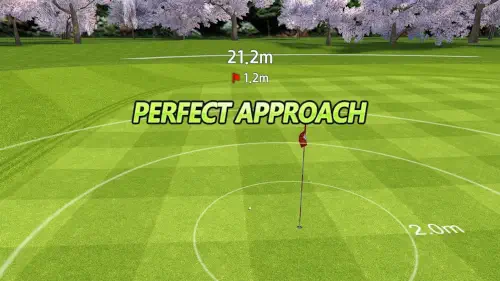
Golf Star is Com2uS’s original free to play mobile golf simulation, built for players who want more than quick arcade matches.
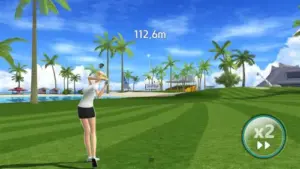

Golf Star game combines realistic golf physics, RPG style golfer progression, career missions, advanced shot techniques, equipment upgrades, character customization, and real-time multiplayer competition into a surprisingly deep mobile golf experience.
Unlike faster golf titles that reduce each hole to a short head to head battle, Golf Star puts greater emphasis on the details that determine how a real golf shot behaves. Wind, elevation, terrain, ball impact angle, temperature, humidity, club selection, and swing timing all contribute to the outcome, giving every shot more variables to consider.
That simulation approach becomes even more interesting when combined with an MMORPG inspired progression system. Your golfer is not simply a character you use from one match to another. You develop statistics, improve equipment, complete career objectives, customize your appearance, learn specialized techniques, and gradually build a play style suited to the way you approach the course.
What Is Golf Star?
The Story Behind Golf Star
Com2uS and the Original Golf Star
Com2uS positioned Golf Star as a mobile golf experience that went beyond basic arcade mechanics. Its combination of simulation elements, character development, career content, and multiplayer competition gave it a distinctive identity during the early growth of mobile sports gaming.
Golf Star’s Early Mobile Golf Ambitions
Golf Star arrived with ambitions that were unusually broad for a mobile golf title. Instead of focusing exclusively on short matches, it attempted to reproduce a more complete golfing experience with different modes, technical shot mechanics, progression systems, and competitive events.
Bringing Realistic Golf Physics to Mobile
One of Golf Star’s defining ideas was the number of environmental factors influencing a shot. Wind, elevation, terrain, temperature, humidity, and impact conditions were incorporated into its simulation, encouraging players to think about why a ball might travel differently from one shot to the next.
The MMORPG-Style Golf Progression System
The game’s RPG influence is visible throughout its progression structure. Players develop a golfer, improve statistics, collect equipment, customize their character, complete objectives, and invest resources into becoming more competitive.
Why Golf Star Should Not Be Confused With Golf Star 2
The distinction between Golf Star and Golf Star 2 is important when researching or downloading the game. Golf Star is the original title, while Golf Star 2 is a later Com2uS golf release with a different design and progression structure. Older reviews, screenshots, and gameplay discussions can therefore refer specifically to the original Golf Star rather than its successor.
What Type of Game Is Golf Star?
Realistic Mobile Golf Simulation
At its core, Golf Star is a golf simulation designed around timing, shot selection, environmental conditions, and course management. Its emphasis on physics makes it a better fit for players seeking a technical golf experience than those looking exclusively for instant arcade matches.
RPG Style Golf Progression
The game adds character statistics, equipment development, clothing, resources, and progression objectives to its golf foundation. This creates a hybrid experience in which improving your golfer is almost as important as improving your own swing technique.
Career Based Sports Game
Career Mode gives Golf Star a structured single-player component. Missions and computer-controlled competitions introduce players to different aspects of the game while providing goals to work toward between multiplayer sessions.
Real Time Multiplayer Golf
Golf Star also supports real-time competition, bringing its simulation mechanics into direct player-versus-player matches. Timing mistakes and poor strategic decisions become more costly when competing against another golfer.
Competitive Online Golf Experience
Tournaments, rankings, friend competitions, and multiplayer events transform Golf Star from a standalone golf simulator into a competitive online sports game. Players can use their progression, equipment, and technical knowledge to measure themselves against a wider community.
What Made Golf Star Different?
Environmental Golf Physics
The original Golf Star stood out because its shot system attempted to account for more than basic direction and power. Environmental conditions could influence the ball, requiring players to consider the course and weather before committing to a shot.
Character Statistics and Equipment
Golf Star connected golfer development with equipment progression. Attributes such as power, impact, control, strength, and accuracy gave players reasons to think carefully about which equipment improvements would benefit their preferred style.
Advanced Shot Techniques
Draws, fades, chips, pitches, and other specialized techniques allowed players to approach difficult situations in different ways. These mechanics gave experienced golfers additional options when trees, hazards, awkward lies, or challenging pin positions blocked the most direct route.
Career and Training Modes
Career missions provide structured progression, while Training Mode allows players to refine their technique without the same competitive pressure. Together, they create a useful learning path for players who want to understand Golf Star before committing heavily to multiplayer competition.
Multiplayer and Tournament Competition
Real-time matches and larger tournaments add the competitive layer that keeps the simulation from becoming purely a solo experience. With friend competitions, global multiplayer, and events involving multiple players, Golf Star combines traditional golf decision-making with the pressure of online competition.
Golf Star Gameplay
Beginning Your Golf Career
Creating Your Golfer
Starting Golf Star is less about jumping straight into multiplayer and more about developing a golfer who can eventually handle increasingly demanding courses. Your golfer becomes the center of the game’s progression system, with equipment, statistics, clothing, and performance improvements shaping how effectively you can approach different situations on the course.
The RPG-inspired structure gives the original Golf Star a different feel from straightforward mobile golf games. Instead of treating every round as an isolated match, the game encourages players to build their golfer over time while learning the mechanics behind each shot.
Customizing Your Character
Character customization goes beyond choosing a basic appearance. Golf Star allows players to personalize their golfer with clothing, accessories, and equipment, while certain items can also influence performance-related statistics.
This creates an important connection between appearance and progression. A new outfit or piece of equipment is not necessarily just cosmetic, so players should pay attention to the attributes attached to items when deciding where to spend valuable resources.
Learning the Basic Swing
The first major skill to learn is the timing-based swing. Golf Star’s swing system asks players to control power and then execute the impact accurately, making timing just as important as selecting the correct club.
New players should resist the temptation to chase maximum distance immediately. Learning how the swing meter behaves gives you a much stronger foundation for later techniques, especially when wind, elevation, terrain, and hazards begin making ordinary shots more complicated.
Playing Your First Career Matches
Career matches provide a practical introduction to Golf Star’s broader mechanics. Rather than throwing beginners immediately into demanding competitive situations, career activities give players opportunities to learn club selection, course positioning, shot power, hazards, and basic strategy.
Career progression is particularly useful for understanding how the game’s RPG elements connect with traditional golf. Completing objectives can provide resources and progression opportunities while gradually exposing players to more demanding golf situations.
Understanding Golf Star Swing Mechanics
Mastering the Swing Meter
The Golf Star swing meter is the foundation of the game’s shot system. Players initiate the swing, determine their desired power, and then time the impact as the marker moves back toward the target area.
A strong swing is therefore not simply a matter of holding for longer. Players need to understand the relationship between power and accuracy, because an incorrectly timed impact can turn an otherwise well-planned shot into a serious miss.
Timing the Impact
Impact timing determines how accurately the ball follows the intended shot. When the timing is clean, players have greater control over where the ball travels; when the timing is poor, even a carefully selected club and target can produce an unwanted result.
This becomes particularly important when playing around hazards. A technically difficult shot is rarely the right moment to gamble on an inconsistent swing, especially when a safer landing area is available.
Controlling Shot Power
Power should be treated as a strategic tool rather than a simple measurement of how far you want the ball to travel. A maximum-power shot may appear attractive from the tee, but controlled power can be more valuable when approaching a narrow fairway, bunker, water hazard, or difficult green.
Golf Star rewards players who understand the difference between reaching a target and reaching it with a playable next shot.
Improving Swing Accuracy
Accuracy improves through repetition. Training Mode is especially useful because it allows players to experiment with swing timing, power, clubs, and shot techniques without putting the same pressure on a competitive match.
As players become more comfortable with the meter, they can begin combining reliable timing with wind and elevation adjustments. That combination is where Golf Star’s traditional golf mechanics become considerably more demanding.
Why Timing Matters More Than Maximum Power
Distance cannot rescue a badly timed shot. A powerful swing that misses its impact point can leave the ball in a bunker, rough, or completely different part of the course, while a controlled swing can place the ball exactly where the next shot becomes easier.
For players learning how to improve Golf Star swing accuracy, the priority should therefore be repeatable timing before maximum power. Once the swing becomes consistent, additional power becomes much easier to use effectively.
Reading the Golf Course
Understanding Elevation
Elevation is one of the mechanics that gives Golf Star more depth than a basic point-and-shoot golf game. An uphill target can require additional power, while a downhill shot can travel farther than expected.
Players should look beyond the distance displayed to them and consider how the height difference will influence the ball’s flight and landing. On technical holes, elevation can be the difference between landing safely on the green and watching the ball run beyond the intended target.
Reading Wind Direction
Wind changes the line and behavior of a shot, making it one of the first environmental factors players should check before swinging.
A crosswind can push the ball away from its intended landing point, while a headwind or tailwind can alter the effective distance. The correct response is not always to aim directly at the hole with a simple adjustment. Players should consider where the ball needs to finish after the wind has affected its flight.
Studying the Terrain
Golf Star’s courses are designed around more than flat fairways and greens. Slopes, rough, bunkers, water, and changes in elevation can all influence how a player should approach a shot.
Terrain becomes particularly important when choosing between an aggressive route and a safer alternative. A slightly longer approach from a clean fairway can often be more useful than a shorter shot that leaves the golfer trapped behind an obstacle.
Checking the Ball Lie
The ball’s lie determines how confidently a player can execute the next shot. A fairway position generally provides a better starting point than rough or sand, while uneven terrain can make otherwise familiar distances more difficult to judge.
Before selecting a club, players should therefore look at both the distance and the position of the ball. Treating every lie as though it were identical is an easy way to make unnecessary mistakes.
Planning the Landing Position
Strong Golf Star players do not simply aim at the hole. They think about where the ball should land and where it will finish afterward.
This is especially useful around greens and hazards. A landing position that leaves a comfortable second shot can be preferable to a direct line toward the pin if the aggressive option introduces unnecessary risk.
Choosing the Right Club
Drivers
Drivers are designed for situations where maximum distance from a relatively favorable lie is the priority. They are particularly useful from the tee when the fairway provides enough room to accommodate a powerful opening shot.
However, the longest possible drive is not automatically the best drive. When hazards or narrow landing areas are positioned ahead, controlled power can produce a better overall result.
Woods
Woods provide an alternative for longer shots when players need distance but want a different balance of control and trajectory. They can become useful when approaching long holes or attempting to reach a distant target without relying exclusively on the driver.
The decision should depend on the landing area, wind, elevation, and distance rather than simply choosing the club with the highest range.
Irons
Irons become increasingly important as players move toward approach shots. Their role is less about raw distance and more about reaching a specific area with enough control to set up the next shot.
When the green is surrounded by hazards, selecting an iron that comfortably reaches the intended landing zone can be safer than attempting a maximum-distance club.
Wedges
Wedges are essential around the green and in situations where precision matters more than distance. They can be used for shorter approaches, chips, pitches, and recovery situations where the player needs to control how the ball reaches the putting surface.
Learning wedge distances is one of the most practical steps for players looking for Golf Star shot techniques for better scores, because short-game mistakes can quickly turn promising holes into difficult recoveries.
Putters
Putters take over once the player reaches the green and require a completely different approach from full swings. Distance becomes much more controlled, while the line and speed of the putt determine whether the ball finishes close to or inside the hole.
A player who consistently reaches the green but struggles with putting can still lose several strokes over a full round, making the putter one of the most important clubs in the bag.
Distance Versus Accuracy
Club selection should always balance distance against control. The club capable of reaching the target is not necessarily the club capable of producing the best score.
A useful decision is to ask where the ball will probably finish if the shot is slightly imperfect. If a longer club brings a bunker or water hazard into play, a shorter and more accurate option may offer a much better scoring opportunity.
Playing Different Golf Shots
Draw Shots
Draw shots allow players to deliberately curve the ball in one direction rather than following a straightforward flight path. This can become valuable when the direct route is blocked or when the shape of the fairway makes a curved approach more effective.
Mastering the draw takes practice because the player needs to understand both the intended curve and the amount of space available for the ball to work back toward the target.
Fade Shots
Fade shots provide the opposite type of controlled curve and can help players approach targets from angles that would be awkward with a straight shot.
They are particularly useful when obstacles or course geometry make a direct line impractical. The best players use the technique because the hole demands it, not simply because the shot looks impressive.
Chip Shots
Chip shots are designed for situations close to the green where a full swing would create unnecessary distance. The objective is to get the ball onto the putting surface and allow it to roll toward the target.
Good chip selection depends on the available green, the position of the pin, and the amount of space between the ball and the hole.
Pitch Shots
Pitch shots provide additional height and control for short approaches where the player needs the ball to travel through the air before landing closer to the target.
They become particularly useful when a simple chip cannot comfortably clear an obstacle or when the player needs a softer landing around the green.
Recovery Shots
Recovery shots are about limiting damage after an imperfect drive or approach. A player stuck in rough, behind an obstacle, or in an awkward position should first look for the safest route back into a playable position.
Trying to recover directly toward the hole can sometimes turn one bad shot into two or three. A controlled recovery can instead restore a favorable position and keep the hole alive.
Using Shot Techniques to Avoid Obstacles
Draws, fades, chips, pitches, and recovery shots become most valuable when the normal line to the target is unavailable. Instead of forcing a straight shot through trees or around a hazard, players can use a specialized technique to create a more suitable trajectory.
The important principle is to choose the technique according to the course situation. Advanced shots should solve a specific problem rather than become risky tricks used on every hole.
Mastering Putting
Reading the Green
Putting requires players to judge both the intended line and the amount of power needed to reach the hole. A putt that looks straight can still finish away from the cup if the green’s slope is not properly accounted for.
Players should therefore focus on where the ball needs to start rolling rather than simply pointing the putter directly at the hole.
Controlling Putting Power
Putting power needs to match the distance and slope of the green. Too much power can send the ball beyond the cup, while too little can leave an otherwise accurate line short.
Consistent speed is especially valuable because it makes the player’s putting decisions more predictable from one hole to the next.
Managing Short Putts
Short putts look simple but can be costly when rushed. Once the player has worked hard to reach the green, missing a short finishing putt can erase the advantage created by earlier shots.
For reliable Golf Star putting tips, players should prioritize a controlled stroke and carefully check the line before committing rather than treating short putts as automatic conversions.
Handling Long Putts
Long putts demand greater judgment because even a small error in speed can leave the ball several feet from the hole. The objective should not always be to sink the first putt; getting close enough to create a manageable second putt is often the smarter target.
Learning distance control also helps players avoid turning a long putt into a difficult three-putt.
Turning Better Putting Into Lower Scores
Putting is where careful course management finally becomes measurable on the scorecard. A well-positioned drive and accurate approach mean little if repeated three-putts add unnecessary strokes.
The strongest Golf Star players treat putting as its own skill rather than simply the final step of a hole. Better green reading, controlled power, and patience around short putts can gradually transform good approach play into consistently lower scores.
Golf Star Career Mode and Training
Golf Star’s career and training systems give the original Com2uS golf game a stronger progression structure than a simple round based simulator. Instead of immediately throwing players into competitive multiplayer, the game gives them opportunities to learn its swing meter, understand course conditions, develop shot techniques, and improve their golfer through structured activities.
For players looking for a Golf Star career mode and training strategy, these systems are especially important because they connect practice directly to long-term character and equipment progression.
Building Progress Through Career Mode
Career Mode provides a practical introduction to the systems that make Golf Star different from faster arcade golf titles. Players work through single-player activities and career quests while facing computer-controlled opponents, allowing them to learn the fundamentals without the same pressure found in real-time competition.
Career Quests
Career quests provide structured objectives that encourage players to learn specific aspects of Golf Star rather than simply chasing the lowest possible score. Completing these activities can expose new players to different courses, shot situations, equipment requirements, and progression goals.
For a beginner, career quests are more useful when treated as practical golf lessons. A mission requiring a particular type of shot, for example, can encourage players to experiment with techniques they might otherwise ignore during ordinary matches.
Single Player Competitions
Single player competitions give players room to develop their skills before moving into multiplayer. The controlled environment makes it easier to concentrate on swing timing, club selection, wind adjustments, and putting without worrying about another human player exploiting every mistake.
This makes career competition a useful part of a Golf Star beginner progression strategy, particularly for players who are still learning how much environmental conditions can change a shot.
Computer Controlled Opponents
Computer controlled opponents provide a predictable competitive environment where players can concentrate on their own decisions. Rather than treating every career match as a race to overpower the opponent, players can use these rounds to test different approaches to fairway positioning, approach shots, hazards, and green play.
The value is particularly noticeable when learning advanced techniques. A player can experiment with a draw, fade, chip, or pitch without risking the outcome of a ranked multiplayer match.
Unlocking New Challenges
Progressing through career activities gradually introduces new situations and objectives. This gives the single-player component a purpose beyond simply filling time between multiplayer matches.
Players who complete career content systematically can use each new challenge as an opportunity to identify weaknesses. If elevation adjustments repeatedly cause problems, for example, those situations become useful practice rather than frustrating failures.
Learning Through Training Mode
Training Mode is one of the most useful systems for players who want to understand Golf Star’s more technical mechanics. The original game places considerable emphasis on timing, environmental conditions, and specialized shot techniques, so repeatedly practicing a mechanic can be more valuable than learning it for the first time during a tournament.
Practicing Swing Timing
The swing meter is central to Golf Star’s shot system. Players must control the sequence of the swing and time the impact accurately rather than simply selecting maximum power.
Training Mode allows players to repeat this process until the timing becomes more predictable. That repetition matters because a player who understands the swing conceptually can still lose accuracy if the final impact timing is inconsistent.
Testing Shot Power
Power should be treated as a controllable variable rather than an instruction to hit every shot as hard as possible. Training gives players an opportunity to compare stronger and more controlled swings while observing how the ball reacts.
This is particularly useful when approaching greens, where excessive power can turn a promising shot into an awkward recovery.
Learning Wind Adjustments
Wind is one of the environmental factors that separates Golf Star from basic arcade golf. Training Mode provides a safer environment for learning how wind can alter the ball’s intended path.
Instead of memorizing one universal adjustment, players should compare shots from different directions and strengths. This helps develop the judgment needed to compensate before entering real-time competition.
Practicing Curved Shots
Golf Star’s draw and fade techniques are valuable when a direct line toward the target is blocked or when the player needs to shape an approach around the course.
Training Mode is the right place to experiment with these shots because the player can focus on trajectory and positioning without sacrificing a competitive round. Once the technique becomes reliable, curved shots can become a practical part of normal course strategy rather than a risky trick.
Improving Putting
Putting deserves dedicated practice because small errors on the green can erase the advantage created by an excellent drive or approach shot. Players need to become comfortable with putting power, green direction, and the amount of adjustment required for different distances.
For anyone searching for Golf Star putting tips for beginners, the most useful starting point is repetition. Practice short putts first, then gradually work toward longer attempts where judging power becomes more demanding.
Career Progression Strategy
Career Mode works best when players use it as preparation for the broader Golf Star progression system rather than rushing through it simply to unlock multiplayer activities. The combination of quests, training, equipment improvements, and competitive play makes gradual development more effective than relying exclusively on upgraded gear.
Completing Missions Efficiently
Players should prioritize career missions that teach mechanics they still struggle with. Completing objectives while deliberately practicing weak areas produces more value than mechanically finishing every mission without learning from it.
A player who consistently misses because of poor impact timing, for instance, should treat swing-focused missions as practice opportunities instead of concentrating only on the reward at the end.
Improving Weak Areas
Golf Star rewards players who develop a balanced skill set. Distance alone cannot compensate for poor accuracy, while strong driving does not solve problems around the green.
Career Mode can therefore be used to identify weaknesses in swing timing, wind compensation, shot selection, curved shots, or putting. Improving the weakest part of the game often produces a larger competitive improvement than repeatedly practicing an already reliable skill.
Preparing for Multiplayer
Before entering serious real-time matches, players should be comfortable with the basic swing sequence, club selection, environmental adjustments, and at least several useful shot techniques.
Career and Training Mode together provide a low-pressure way to build that foundation. Once players can reproduce accurate shots consistently against computer-controlled opponents, the transition to human competition becomes considerably less punishing.
Using Career Mode Before Tournaments
Tournament play rewards consistency, making Career Mode valuable preparation before entering larger competitions. Players can use career rounds to refresh their understanding of course conditions, test equipment choices, and practice techniques that may be required during competitive play.
The strongest approach is not to treat Career Mode as something to abandon once multiplayer becomes available. Instead, it can remain a practical training ground for improving specific mechanics before returning to tournaments, weekly rankings, and other competitive activities.
Beginner Tips for New Golf Star Players
Starting the original Golf Star can feel more demanding than playing a modern arcade golf game because success depends on timing, course conditions, equipment, and resource management. The best approach is to learn the underlying mechanics first and then build your golfer around the areas that suit your preferred style.
Practice the Swing Meter Before Multiplayer
The swing meter should be the first mechanic a new Golf Star player learns properly. The game requires players to control power and then time the impact accurately, so simply understanding where the ball should go is not enough.
Before entering real-time matches, spend time repeating the swing sequence until accurate impacts become consistent. A reliable swing gives you a much stronger foundation than trying to compensate for poor timing with better equipment.
Learn Wind and Elevation Adjustments Early
Wind and elevation can significantly change how a shot behaves. A target that appears to be a straightforward distance away may require a different power or aiming decision because of its position relative to the golfer.
For players looking for Golf Star wind and elevation tips, the key is to check these factors before selecting the final power level. Treating every shot as though it were played on flat ground with no wind is one of the fastest ways to lose control.
Choose Clubs for Accuracy as Well as Distance
A club with greater distance is not automatically the best choice. Golf Star’s equipment and physics systems reward players who consider the entire shot, including accuracy, terrain, wind, elevation, and the position of the next shot.
When a fairway narrows near a hazard, a more controlled club can be the smarter option. Reaching the target safely is often more valuable than gaining a few extra yards and creating a difficult recovery.
Learn Draw and Fade Shots
Draw and fade shots are among the most useful advanced techniques in Golf Star because they give players greater control over the shape of the ball’s flight.
These shots become especially valuable when trees, hazards, or awkward course layouts prevent a clean straight-line approach. Beginners should first learn the basic curve mechanics in a low-pressure environment before relying on them during multiplayer competition.
Use Training Mode to Test Difficult Shots
Training Mode is the safest place to experiment with techniques that you cannot yet execute consistently. Instead of discovering during a tournament that a particular shot is beyond your current skill level, use practice sessions to test power, timing, wind compensation, and curved trajectories.
It is also useful for comparing different clubs and identifying how much control you actually have over a shot before committing valuable resources to competitive play.
Study the Lie Before Every Swing
The ball’s lie should influence your club selection and shot strategy. A fairway shot, rough shot, bunker recovery, and uneven approach should not be treated as identical situations.
Before swinging, look at where the ball is positioned and consider how that position affects your intended trajectory. This small habit can prevent players from choosing a technically strong shot that is simply unsuitable for the current terrain.
Manage Hearts Carefully
The original Golf Star used Hearts as an energy resource for entering matches, making resource management an important part of the free-to-play experience.
Because Hearts can limit how much you can play during a session, avoid wasting them on careless matches when you are still learning a mechanic. Use available playtime productively by entering matches when you are focused on progressing rather than repeatedly experimenting with shots that you could practice elsewhere.
Save GP and Stars for Important Upgrades
GP and Stars have a meaningful role in Golf Star’s progression and equipment economy. Beginners can easily weaken their long-term progression by spending resources on upgrades that provide only a minor practical improvement.
Before purchasing or upgrading equipment, consider whether it improves a weakness in your current setup. An upgrade that directly improves the attributes you rely on during most rounds is generally more valuable than an item chosen simply because it looks stronger on paper.
Use Career Mode to Learn the Game
Career Mode is one of the best starting points for understanding how Golf Star combines traditional golf with RPG-style progression. Career missions introduce different situations while giving players a structured environment in which to practice.
Rather than rushing through the missions for rewards, use them to improve specific weaknesses. If wind adjustment, putting, elevation, or swing timing causes repeated problems, career matches provide an opportunity to work on those mechanics before taking them into multiplayer.
Play Conservatively in Tournaments
Golf Star tournaments can punish unnecessary risks because one poor decision can affect your position against several competitors. A spectacular shot is tempting, but consistency is usually the more dependable route to a strong result.
When deciding between a difficult shortcut and a safer landing area, consider the potential consequence of failure. If a missed shot could lead to a bunker, water hazard, or difficult recovery, the conservative option may produce the better tournament score.
Upgrade Equipment Around Your Play Style
Golf Star’s equipment system allows progression to influence the way your golfer performs. Instead of upgrading everything equally, identify the type of player you are becoming.
A golfer who relies on controlled approaches may value accuracy and impact more than raw power, while an aggressive long-drive player may prioritize distance-related attributes. Building equipment around your actual strengths creates a more coherent setup than constantly chasing the newest item.
Track Weekly Rankings to Measure Progress
Weekly rankings provide a useful way to judge whether your skills are actually improving. A better ranking is more meaningful when it comes from stronger swing timing, smarter club selection, and improved course management rather than equipment upgrades alone.
Pay attention to recurring mistakes as well as your position. If you regularly lose strokes through poor putting or failed recovery shots, use that information to determine what you should practice next. Over time, weekly rankings can become a practical measure of whether your Golf Star beginner strategy is producing better results.
What Players Like and Dislike About Golf Star
Golf Star has a very different identity from many newer mobile golf games. Its strongest appeal comes from combining detailed golf mechanics with RPG-style progression, while its biggest frustrations are tied to the original game’s age and free to play structure. For anyone researching the original Golf Star mobile golf experience, that distinction is important because the game’s strengths are closely connected to the systems that can also make progression feel restrictive.
What Players Enjoy
Realistic Golf Physics
The original Golf Star earned attention for attempting to model far more than basic shot distance. Wind, elevation, terrain, impact angle, temperature, humidity, and other environmental factors were incorporated into its golf simulation, giving individual shots more variables than a simple arcade golf game.
That depth makes a good shot feel earned. Players who enjoy calculating conditions before swinging can spend considerable time learning how different situations affect ball behavior.
Detailed Shot Mechanics
Golf Star’s swing meter and shot techniques give players meaningful control over how they approach a hole. Power is only one part of the equation; impact timing and shot selection can determine whether an otherwise promising attempt lands accurately.
Draws, fades, chips, pitches, and recovery techniques also give experienced players options when a direct shot is not practical.
Career Mode
Career Mode gives the original game a stronger single-player identity than many multiplayer-focused golf titles. Instead of immediately throwing beginners into competitive matches, career missions provide structured situations where players can develop their golfer and become familiar with the mechanics.
For players searching for a Golf Star career mode progression guide, this is one of the game’s most useful features because the mode naturally connects practice, rewards, equipment, and increasingly demanding golf situations.
Training Mode
Training Mode gives players somewhere to experiment without the pressure of a tournament or real-time opponent. It is particularly useful for testing swing timing, power control, wind adjustments, putting, and curved shots.
That makes it valuable for players who want to understand why a shot failed instead of simply repeating the same mistake during competitive matches.
Real Time Multiplayer
Golf Star extends its traditional golf mechanics into real-time competition. One on one matches let players test their swing consistency and course decisions against opponents rather than relying exclusively on computer controlled competition.
The multiplayer component also gives equipment progression a practical purpose: improving your golfer can directly affect how confidently you approach competitive rounds.
Ten Player Tournaments
The ten-player tournament format is one of the more distinctive elements associated with the original Golf Star. Competing against a larger field changes the pressure compared with a single opponent because every shot can influence your position relative to several golfers.
It rewards consistency and sensible course management rather than relying entirely on one spectacular shot.
Character Progression
Golf Star does not treat the golfer as merely a visual avatar. Character development is integrated into the progression system, giving the game an MMORPG-inspired layer unusual for a traditional mobile golf simulator.
Experience, statistics, clothing, equipment, and progression goals help create a sense that your golfer is developing over time rather than simply unlocking isolated courses.
Golf Equipment Customization
Equipment customization adds another strategic layer. Clubs, clothing, accessories, and performance-related items can influence attributes such as power, impact, control, strength, and accuracy.
This creates an interesting connection between golf strategy and RPG progression: the equipment you choose can complement the way you prefer to play.
Common Criticisms
Hearts Energy System
The Hearts system is one of the most frequently cited frustrations in historical coverage of the original Golf Star. Matches consume Hearts, meaning players cannot necessarily continue playing indefinitely whenever they want.
For someone who enjoys long golf sessions, this can make the free-to-play structure feel more restrictive than the actual golf mechanics.
Free to Play Restrictions
Golf Star’s core game was free to play, but progression was built around resource limitations and monetization. Players could encounter restrictions that affected how quickly they could continue playing or improve their golfer.
This matters when evaluating the game today because the quality of the golf simulation and the convenience of the progression system are two separate questions.
Equipment Advantages
Because equipment can influence player attributes, progression can create noticeable differences between developing golfers. Better equipment can make certain shots easier or provide stronger statistical advantages.
For competitive players, this can make equipment progression feel less satisfying when success appears connected to resources as much as execution.
In-App Purchase Pressure
Historical reviews also criticized the game’s emphasis on in-app purchases. The combination of Hearts, progression resources, and equipment creates several opportunities for monetization.
Players who prefer a straightforward golf simulator without resource restrictions may therefore find the original free to play model less appealing than its underlying gameplay.
Older Graphics
Golf Star’s 3D presentation was impressive in the context of its original release, but modern players should not expect the visual fidelity of newer games.
Compared with contemporary titles such as WGT Golf or Golf Star 2, the character models, environments, lighting, and overall presentation can feel dated. The older visuals are easier to accept when the game is judged as a product of its era rather than against today’s mobile graphics standards.
Familiar Swing Mechanics
Although the swing system is functional and requires timing, its fundamental structure was not considered radically innovative. Golf Star refined familiar mobile golf mechanics rather than completely reinventing them.
That is not necessarily a problem for players who prefer predictable controls, but users searching for an experimental golf system may find the core swing less surprising than the game’s deeper physics and progression features.
Uncertain Original Game Support
The biggest modern question is not necessarily gameplay quality but availability and ongoing support. The original Golf Star is an older Com2uS title, while Golf Star 2 now receives much more attention in current mobile golf searches and listings.
Anyone interested in playing the original should verify its current availability, regional compatibility, and server support before treating older reviews or download information as proof that the game remains fully supported.
Overall Community Opinion
First Time Player Experience
A first-time player can find Golf Star surprisingly deep because the game introduces traditional golf mechanics alongside character and equipment progression. The learning curve is manageable when career and training content are used properly, but the number of systems can make the game feel more complicated than a quick-play golf title.
The biggest early lesson is that power alone does not produce good scores. Timing, club selection, terrain, elevation, and shot technique all matter.
Traditional Golf Fans
Traditional golf fans are likely to appreciate Golf Star’s focus on environmental conditions and shot planning. The game asks players to think about how a real golf shot might behave instead of reducing every hole to a simple target-and-release challenge.
Its strongest appeal therefore lies with players who enjoy the process of planning a shot as much as watching the ball reach the hole.
Original Golf Star Versus Golf Star 2
Why the Two Games Are Often Confused
Golf Star and Golf Star 2 share the Com2uS name and golf-focused identity, but they are separate titles. Search results can easily mix information from the two, particularly because newer store listings and current discussions often prioritize Golf Star 2.
Anyone researching the original game should therefore check the exact title and app listing before relying on screenshots, features, reviews, or download information.
Original Golf Star’s Traditional Simulation Approach
The original Golf Star emphasizes environmental golf physics, career progression, character development, equipment statistics, advanced shot techniques, and longer-form competitive systems.
Its identity is closer to a golf simulator combined with an RPG than to a purely arcade multiplayer game.
Golf Star 2’s Newer Mobile Design
Golf Star 2 represents a newer direction for the Com2uS golf brand, with a design better suited to contemporary mobile gaming expectations.
Its presence can make comparisons difficult because players looking for the original Golf Star may encounter Golf Star 2 content first. The two should therefore be evaluated as separate experiences rather than treating the sequel as a simple updated version of every original mechanic.
Which Golf Star Experience Fits Different Players?
The original Golf Star is the more interesting choice for players specifically attracted to realistic Golf Star physics, career progression, RPG-style golfer development, and traditional shot techniques.
Players who want a newer mobile presentation and a more contemporary golf experience may prefer Golf Star 2. Meanwhile, anyone primarily interested in quick arcade competition may be better served by games such as Golf Clash or Golf Rival.
The important takeaway is that the original Golf Star still has a distinct gameplay identity. Its combination of environmental simulation, character progression, training, career missions, and multiplayer competition explains why it remains relevant in searches for older realistic mobile golf games, even though its age and current support status deserve careful consideration.
Games Like Golf Star
If you enjoy the original Golf Star because of its combination of realistic golf physics, character progression, shot techniques, and multiplayer competition, several modern golf games offer different ways to continue that experience. The best alternative depends on whether you value realistic mobile golf physics, career progression, full-round simulation, or fast competitive matches.
Golf Star 2
The Modern Com2uS Golf Experience
Golf Star 2 is the most obvious comparison because it carries the Com2uS golf identity into a newer mobile experience. However, it should not be treated as simply the original Golf Star with updated graphics. Its design reflects a more modern approach to mobile golf, with faster competitive gameplay and systems built around contemporary mobile progression.
For players searching for a Golf Star alternative with modern mobile gameplay, Golf Star 2 is the natural starting point. It preserves the connection to Com2uS while offering an experience that is more relevant to players who prefer newer interfaces and current mobile design conventions.
WGT Golf
Realistic Courses and Full Round Golf Simulation
WGT Golf is one of the strongest alternatives for players who enjoyed Golf Star’s emphasis on realistic golf rather than purely arcade mechanics. Its biggest advantage is the recreation of recognizable real-world courses, including locations associated with professional golf.
Instead of concentrating on extremely short matches, WGT Golf allows players to experience full 18-hole rounds, stroke play, tournaments, online competition, equipment progression, and Country Club activities. That makes it particularly attractive to traditional golf fans who want course strategy to remain central to the experience.
Golf Clash
Fast Real Time Competitive Golf
Golf Clash takes the opposite approach from Golf Star’s more simulation-oriented structure. Its matches are designed around fast competitive encounters, with swipe-based controls, club progression, tournaments, and strategic wind adjustments.
For players who like Golf Star’s competitive side but want to spend less time completing traditional rounds, Golf Clash provides a much faster alternative. The trade-off is that its arcade-oriented presentation and short match structure do not offer the same RPG style character development associated with the original Golf Star.
Golf Rival
Swipe Based Multiplayer Golf Battles
Golf Rival combines accessible swipe controls with real-time 1v1 matches, collectible clubs, special golf balls, themed courses, tournaments, and equipment progression.
It is a good choice for players who find Golf Star’s mechanics interesting but prefer a more immediate mobile experience. Golf Rival reduces the complexity of traditional golf simulation while retaining enough wind, terrain, equipment, and shot strategy to keep competitive matches engaging.
World Golf Tour
Online Golf Simulation and Competitive Play
World Golf Tour is closely connected to WGT Golf’s broader identity and is worth considering when searching for an online golf simulator with realistic course recreation and competitive multiplayer.
Its appeal comes from treating golf as a complete sport rather than simply a quick mobile challenge. Players interested in recognizable courses, equipment selection, stroke play, tournaments, and online competition will find more similarities with Golf Star here than in heavily arcade-focused alternatives.
Other Mobile Golf Simulators
Realistic Golf Physics and Equipment Progression
Other mobile golf simulators occupy the space between Golf Star’s traditional mechanics and newer arcade games. These titles typically focus on club selection, wind, terrain, shot accuracy, equipment upgrades, and competitive progression.
When choosing an alternative, look beyond screenshots and graphics. Players specifically searching for mobile golf games with realistic physics and club upgrades should check whether a title actually models environmental conditions or simply uses golf as the theme for a quick competitive format.
Ultimately, the right Golf Star alternative depends on what you want to preserve. Golf Star 2 makes the most sense for players who want a newer Com2uS experience, WGT Golf is stronger for realistic courses and full rounds, while Golf Clash and Golf Rival are better suited to players who prioritize quick real time mobile competition.
Conclusion
What Makes Golf Star Stand Out?
Realistic Golf Physics
Golf Star stands apart from many mobile golf games because its original design was built around a surprisingly detailed physics model. Wind, elevation, terrain, ball impact angle, temperature, humidity, and the golfer’s lie can all influence how a shot behaves. That makes the game feel closer to a traditional golf simulation than a simple tap to win sports game.
For players searching for a realistic mobile golf game with advanced shot physics, this remains one of Golf Star’s most distinctive qualities. The challenge is not simply choosing the strongest club and hitting at maximum power. Good results depend on understanding the conditions around the ball and adjusting the shot accordingly.
Environmental Shot Factors
Environmental conditions give Golf Star much of its strategic personality. An uphill approach can require a different power calculation from a downhill shot, while wind can push the ball away from the intended target. Terrain and lie conditions further complicate club selection.
This creates a useful difference between Golf Star and faster arcade golf titles. The best shot is often the one that accounts for what happens after the ball lands, rather than simply targeting the flag.
Advanced Golf Techniques
Draws, fades, chips, pitches, and other specialized techniques give experienced players more control over difficult situations. A curved shot can help bypass an obstacle, while a carefully controlled chip can turn an awkward position near the green into a scoring opportunity.
These techniques also give the original game a higher skill ceiling. Players who take time to understand shot shaping can approach the same hole in very different ways.
RPG Style Character Progression
Golf Star does something unusual with its progression by combining golf simulation with RPG-style character development. Your golfer is more than a visual avatar: equipment, clothing, statistics, and upgrades contribute to the broader progression system.
That structure gives players another reason to return beyond improving their golf score. Building a stronger golfer becomes part of the long-term experience.
Real Time Multiplayer
The competitive side of Golf Star adds another layer to the simulation. Real-time matches, friend competitions, rankings, and larger tournaments allow players to test their skills against other golfers instead of relying entirely on career opponents.
The multiplayer experience is particularly interesting because the same wind reading, club decision, or swing-timing mistake that matters in Career Mode becomes even more important when another player is competing for the same result.
Golf Star remains a fascinating example of how mobile golf can combine realistic shot physics with RPG progression. Its age and uncertain current support prevent it from being an automatic recommendation in 2026, but for players who can still access the original game, its blend of technical golf, character development, and competitive play is still unusually distinctive.
![[Golf Star] Google Market Video](https://i.ytimg.com/vi/n0zMNQjOXFc/hqdefault.jpg)
Frequently Asked Questions
What is Golf Star and is it still available to download?
Golf Star is Com2uS’s original free to play mobile golf game, built around realistic physics, environmental shot factors, career missions, advanced techniques, character progression, and real-time multiplayer. The current Google Play listing still identifies the game as Golf Star™ by Com2uS and shows recent updates, so players looking for a Golf Star download should use the official store listing rather than unofficial APK websites.
Is Golf Star the same game as Golf Star 2?
No. Golf Star and Golf Star 2 are separate Com2uS golf games. The original Golf Star focuses heavily on detailed golf physics, environmental factors, career progression, specialized shot techniques, and its long-running multiplayer structure. Golf Star 2 is a newer title built around streamlined controls and real-time 1v1 stroke matches.
If you specifically want the original Golf Star download, check the developer name and package listing carefully before installing because search results can easily lead to Golf Star 2.
Does Golf Star have realistic golf physics?
Yes. Realistic physics is one of the original game’s defining features. Com2uS describes Golf Star as using terrain height, ball impact angle, wind, temperature, humidity, and more than 70 other factors to simulate the behavior of a golf shot. It also includes techniques such as draw, fade, and chip shots.
For players searching for a mobile golf game with realistic wind and elevation, Golf Star is considerably more technical than many quick arcade golf titles.
Official game information: Golf Star official Google Play listing
Where can I find Golf Star support, FAQs, and community discussions?
The safest first stop is the official Com2uS Customer Support system, which currently has a dedicated Golf Star FAQ page. The official App Store listing also references the historical Com2uS forum for player feedback and discussion.
Support: Com2uS Golf Star FAQ
Community reference: Golf Star on Wikipedia
Because Golf Star is an older title, current support information is more useful than relying exclusively on launch-era walkthroughs or reviews.
Is Golf Star worth playing?
Golf Star can still be worth trying if you specifically want realistic mobile golf physics, career progression, advanced shot techniques, and RPG style golfer development rather than a purely fast arcade golf experience. The current Google Play listing remains available and shows the game receiving updates, while its large review base provides additional evidence of continued visibility on Android.
However, new players should check the current store listing, device compatibility, regional availability, and support information before committing to the game. If you want a newer Com2uS golf experience with streamlined 1v1 gameplay, Golf Star 2 is the separate title to investigate.