
Pokémon HOME serves as a cloud based Pokémon management platform designed to solve this growing complexity.

Rather than functioning as a traditional Pokémon game, it acts as a centralized storage and transfer system that connects multiple Pokémon experiences together. It allows players to store Pokémon securely in the cloud, organize them into searchable collections, transfer creatures between compatible games, and trade globally through integrated systems.
The platform works across both Nintendo Switch and mobile devices, creating a connected ecosystem that supports access from different environments. Through a linked Nintendo Account, users can maintain synchronized collections regardless of which device they use. Pokémon HOME also expands beyond storage by offering Pokédex tracking, Pokémon detail viewing, stat analysis, and collection progression features.
Instead of replacing gameplay, Pokémon HOME supports it. It becomes the bridge between games, helping players carry favorite Pokémon forward while preserving years of progress in a single location.
What is Pokémon HOME?
Pokémon HOME is a cloud-based Pokémon storage and transfer application developed to support the broader Pokémon ecosystem rather than function as a standalone game. It operates as a companion service that allows users to manage Pokémon collections across multiple compatible titles while maintaining centralized organization.
Unlike traditional Pokémon experiences that focus on exploration, battles, and progression, Pokémon HOME prioritizes collection management. It serves as a digital archive where Pokémon can be stored, categorized, traded, and moved between supported games.
The application works through linked Nintendo Accounts and is available on both Nintendo Switch and mobile devices. This dual-platform design allows players to access their collection from multiple environments while maintaining synchronized data.
Pokémon HOME is best understood as a long-term management tool. It creates continuity between Pokémon games, ensuring that collections remain connected even as new titles release.
Core Purpose
The primary purpose of Pokémon HOME is to centralize Pokémon ownership. Instead of forcing players to manage creatures separately within individual games, HOME provides one unified storage environment.
It exists to simplify collection management by enabling transfers between compatible Pokémon titles while supporting safe cloud storage. Players can preserve Pokémon across generations, organize boxes efficiently, and maintain a single source of truth for their collection.
Another major purpose is accessibility. Pokémon HOME removes many limitations tied to hardware transitions or game-specific storage systems. This makes it easier to continue building a collection over many years without losing progress.
The platform also supports Pokédex tracking, helping players monitor which Pokémon they have captured and which remain missing.
Who It’s For
Long Time Pokémon Collectors
Players who have built collections over multiple generations benefit significantly from centralized storage. Pokémon HOME protects legacy Pokémon while reducing fragmentation across older save files.
Multi Game Pokémon Players
Many fans actively play several Pokémon titles simultaneously. HOME allows these players to transfer Pokémon between supported games without rebuilding teams repeatedly.
Competitive Battlers
Competitive users rely on carefully trained Pokémon with optimized stats, abilities, and movesets. Pokémon HOME makes organizing battle-ready teams far easier.
Living Pokédex Completionists
Collectors focused on obtaining every Pokémon species, form, or variation can use HOME to monitor completion progress through integrated Pokédex systems.
Frequent Traders
Players who regularly exchange Pokémon with friends or the global community gain access to several built-in trade systems.
Primary Use Case
Storing Pokémon Securely
Pokémon HOME functions first as a secure cloud storage solution. Pokémon deposited into HOME remain accessible even if players switch games or devices.
Transferring Pokémon Between Games
Compatible titles can exchange Pokémon through HOME, allowing users to continue using favorite creatures across supported releases.
Collection Management
Users can organize Pokémon by category, region, rarity, or purpose. This makes large collections easier to browse and maintain.
Trading with Global Players
Integrated trade systems allow users to exchange Pokémon worldwide, improving collection completion and social interaction.
Pokédex Tracking
Pokémon HOME provides an ongoing record of collection progress, helping users identify missing entries and monitor completion goals.
Pokémon HOME Key Features
Central Pokémon Storage
At its core, Pokémon HOME functions as a cloud based storage platform. Players can deposit Pokémon into organized boxes that remain accessible through linked devices.
This centralized storage reduces clutter across multiple game saves and creates a single management hub for the entire Pokémon collection.
Sorting tools allow users to organize by species, type, Pokédex number, or custom preferences.
Cross Game Pokémon Transfers
One of Pokémon HOME’s most valuable features is compatibility between supported Pokémon games. Transfers allow users to carry Pokémon between titles while preserving ownership continuity.
This system supports modern Pokémon ecosystems by reducing separation between releases.
Shared Nintendo Account integration ensures that all connected devices access the same storage library.
Trading Systems
Friend Trades
Players can exchange Pokémon directly with trusted contacts.
Wonder Box
Pokémon are deposited into randomized global trades, creating surprise exchanges.
Global Trade System (GTS)
Users request specific Pokémon and browse worldwide offers.
Room Trades
Groups of players can participate in shared trading sessions.
These options create flexibility depending on how users prefer to trade.
National Pokédex Tracking
Pokémon HOME includes a National Pokédex that records registered Pokémon automatically.
This feature supports completion-focused players by tracking missing entries and encouraging long term collection goals.
It also helps users monitor progress toward Living Dex completion.
Mobile Companion Features
The mobile version expands functionality beyond storage access.
Users can browse Pokédex entries, inspect Pokémon abilities, review stats, and examine move sets from anywhere.
Mobile access also enables trading systems unavailable on Switch.
Premium Plan Benefits
Premium membership unlocks expanded functionality for advanced users.
Benefits include:
- Larger storage capacity
- Advanced transfer flexibility
- Judge Function for stat evaluation
- Improved organization capabilities
- Greater collection scalability
These upgrades mainly benefit dedicated collectors and competitive players.
Multi Device Access
Pokémon HOME supports both Nintendo Switch and mobile devices.
Linked account syncing allows users to transition seamlessly between platforms without losing organization or progress.
This flexibility improves convenience for players who manage collections regularly.
Collection Viewing Tools
Search filters allow players to locate Pokémon quickly.
Users can sort by:
- Species
- Region
- Type
- Pokédex number
- Forms
- Game origin
- Abilities
- Language
These tools become increasingly valuable as collections grow larger.
Pokémon HOME Core Workflow and Mechanics
Main Workflow
The Pokémon HOME experience follows a clear organizational loop:
Deposit Pokémon → Organize Storage → Transfer to Compatible Game → Trade → Track Pokédex → Repeat
This cycle encourages long-term collection management rather than traditional gameplay progression.
Storage Management
Pokémon are stored in organized boxes that users can customize.
Sorting tools make large collections easier to navigate while category management supports specialized organization.
Players may create boxes for competitive teams, shinies, events, regional collections, or breeding projects.
Transfer System
Transfers allow Pokémon to move between supported games.
Compatibility restrictions apply, meaning not every Pokémon can enter every title.
Transfer warnings help prevent unsupported movements.
Trading Mechanics
Trading options include direct exchanges, randomized trades, and global requests.
These systems support collection expansion while encouraging community interaction.
Pokédex Integration
Pokémon registered in HOME contribute to a unified Pokédex.
Forms, alternate variants, and collection milestones become easier to track.
HOME Tracker System
Each Pokémon stored in HOME receives a unique tracker value.
This system helps verify authenticity while supporting clone detection and collection integrity.
Cross Platform Synchronization
Shared Nintendo Account integration ensures synchronized access across devices.
Collections remain consistent regardless of whether users access HOME from mobile or Switch.
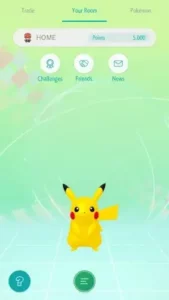
Pokémon HOME Graphics and Design
Visual Style
Pokémon HOME uses a clean and utility-focused design language.
Bright colors, Pokémon-themed visuals, and simple layouts create a welcoming environment without overwhelming users.
The visual identity remains consistent with the broader Pokémon brand.
User Interface
Menus prioritize organization and browsing.
Players can navigate storage boxes, Pokémon details, and Pokédex views with minimal complexity.
The interface avoids unnecessary clutter.
Accessibility Design
Controls are simple and intuitive.
Both mobile and Switch versions support efficient navigation without requiring advanced technical knowledge.
Information Presentation
Pokémon details remain highly readable.
Users can view:
- Stats
- Abilities
- Moves
- Origins
- Forms
- Pokédex information
This data-focused presentation supports collectors and competitive players alike.
Design Philosophy
Pokémon HOME prioritizes clarity and efficiency.
Rather than emphasizing flashy visuals, the platform focuses on helping users manage collections quickly and comfortably.
Pokémon HOME User Reviews and Feedback
Positive Feedback
Many users praise Pokémon HOME for solving long-standing storage problems.
Convenient cloud access, cross-game transfers, and centralized management make it valuable for long-term Pokémon fans.
Collectors especially appreciate Pokédex tracking and preservation features.
Criticism
Common complaints include:
- Limited free storage
- Premium subscription dependency
- Slow trade systems
- Technical frustrations
- Transfer restrictions
These criticisms often focus on monetization rather than core utility.
Overall
Pokémon HOME is generally viewed as essential for dedicated Pokémon players.
Although some monetization concerns exist, most collectors consider its benefits worthwhile.
Its long term usefulness outweighs many limitations.
Pokémon HOME Practical Use Cases
Long Term Pokémon Storage
HOME protects collections across console generations and game releases.
Players avoid losing access to important Pokémon over time.
Cross Game Team Transfers
Teams can move between supported titles, reducing repetitive rebuilding.
Favorite Pokémon remain usable.
Pokédex Completion
Players track missing entries while monitoring progress.
Completion becomes more organized and measurable.
Trading Hub
Global exchanges allow access to rare Pokémon.
Trading accelerates collection growth.
Competitive Preparation
Battle-ready Pokémon can remain categorized for faster team building.
Stat evaluation tools support optimization.
Collection Organization
Users may organize by:
- Game origin
- Shinies
- Legendaries
- Event Pokémon
- Competitive builds
- Regional groups
This flexibility turns Pokémon HOME into a true collection management ecosystem.
Pokémon HOME Tips and Tricks
Link the Same Nintendo Account Across Devices
One of the most important steps when using Pokémon HOME is connecting the same Nintendo Account across both mobile and Nintendo Switch versions. This ensures that your storage, trades, Pokédex progress, and transfers remain synchronized without creating duplicate or disconnected libraries. Many users overlook this early setup step, which can lead to confusion when Pokémon appear on one device but not another. Maintaining account consistency creates a seamless cloud-based management experience.
Organize Boxes Early
Large Pokémon collections can quickly become difficult to navigate if organization is ignored. Creating labeled storage boxes early allows players to manage thousands of Pokémon more efficiently over time. Many collectors sort Pokémon by region, game generation, typing, rarity, shininess, or competitive use. Organized boxes make transfers faster, simplify trading, and reduce the time spent searching for specific Pokémon later.
Verify Game Compatibility Before Transfers
Not every Pokémon can move freely between all supported Pokémon titles. Before transferring creatures into a game, it is important to confirm compatibility restrictions. Certain species, movesets, forms, or mechanics may not exist in every title. Checking compatibility first prevents accidental lock-ins where Pokémon become stored in HOME without immediate access to a desired destination game. Planning transfers carefully protects long-term collection flexibility.
Use Search Filters Frequently
Pokémon HOME includes extensive filtering tools that help users locate Pokémon quickly inside large collections. Search functions allow sorting by Pokédex number, type, region, ability, nature, game origin, moves, language, and special forms. For collectors managing hundreds or thousands of entries, filters become essential for efficient navigation. Instead of scrolling manually through storage boxes, players can instantly narrow results to specific categories.
Take Advantage of Mobile Trading Features
The mobile version of Pokémon HOME offers expanded trading tools that are not fully mirrored on Nintendo Switch. Wonder Box, Global Trade System (GTS), Room Trades, and Friend Trades create multiple opportunities to expand collections and obtain hard-to-find Pokémon. Players who regularly trade should use the mobile app as their primary trading hub because it offers greater flexibility and accessibility while away from a console.
Use the National Pokédex as a Collection Goal
The integrated National Pokédex is more than just a visual checklist. It acts as a progression tracker that encourages long-term collecting across multiple generations. By monitoring missing species, alternate forms, and regional entries, players gain a clear roadmap for completing a Living Dex or expanding collection goals. This system adds purpose to storage management and turns Pokémon HOME into a progression tool rather than simple cloud storage.
Consider Premium for Large Collections
The free version of Pokémon HOME offers limited storage, which works well for casual users or newer collectors. However, long-term Pokémon fans who manage multiple games often benefit significantly from the Premium Plan. Expanded storage capacity, advanced transfer tools, the Judge Function, and improved organizational flexibility make Premium valuable for users with extensive collections or competitive teams.
Keep Competitive Pokémon Separated
Competitive battlers benefit from creating dedicated storage boxes for tournament-ready Pokémon. Separating battle-ready teams from casual collections reduces confusion and allows faster preparation when building lineups. Categorizing by roles, stats, breeding projects, or meta relevance creates a cleaner workflow for players actively involved in ranked or competitive gameplay.
Pokémon HOME Similar Apps and Services
| App | Main Similarity |
|---|---|
| Pokémon Bank | Pokémon storage and transfer system across generations |
| Google Photos | Cloud based organization and multi device syncing |
| iCloud Storage | Centralized account linked cloud management |
| Microsoft OneDrive | Cross device storage and access |
| Box Cloud Storage | Organized cloud-based file management |
Pokémon Bank
Before Pokémon HOME, Pokémon Bank served as Nintendo’s primary storage solution for transferring Pokémon between earlier generations. Pokémon HOME expands on this concept by supporting newer games, mobile integration, trading systems, and National Pokédex tracking.
Cloud Storage Platforms
Applications like Google Photos, OneDrive, and iCloud mirror Pokémon HOME’s core philosophy: preserving important digital assets in one centralized environment. While these services manage files rather than Pokémon, the same convenience of accessibility, organization, and synchronization applies.
Collection Management Similarity
Unlike traditional games, Pokémon HOME functions more like a personal archive. Its closest comparisons come from utility-focused apps that prioritize long term organization and accessibility rather than direct gameplay loops.
Pokémon HOME Community
Global Trading Community
Pokémon HOME supports a worldwide trading ecosystem that allows players to exchange Pokémon with users across different regions. Through Wonder Box, GTS, Room Trades, and Friend Trades, collectors gain access to species that may otherwise be difficult to obtain. This trading network makes the application feel alive and continuously active.
Friend Based Trading
Direct trading with friends allows safer and more predictable exchanges compared to randomized trading systems. This feature is especially useful for completing Pokédex entries, evolving trade exclusive Pokémon, or exchanging competitively bred creatures between trusted players.
Living Dex Communities
A large portion of the Pokémon HOME community focuses on Living Dex completion. These players aim to collect every Pokémon species, form, regional variant, shiny, and event distribution. Online forums and social groups often organize trades specifically around collection completion goals.
Competitive Team Building Discussions
Competitive players frequently use Pokémon HOME as a team management companion. Communities discuss ideal storage layouts, stat evaluation, IV breeding projects, and transfer strategies between competitive Pokémon titles. HOME becomes part of the preparation process rather than simply a storage location.
Reddit and Fan Communities
Pokémon HOME maintains strong activity across fan driven communities where users share organization methods, troubleshooting advice, trade requests, and storage strategies. These communities often provide faster solutions than official documentation because of the large number of experienced collectors.
Cross Generational Pokémon Preservation
One of Pokémon HOME’s strongest social values comes from preservation. Players frequently share stories about carrying Pokémon across generations, sometimes preserving companions that originated many years ago. This emotional continuity creates a strong community identity centered around collection history.
Community Trading Networks
Dedicated trading hubs allow users to search for rare Pokémon, event distributions, shinies, or regional exclusives. Organized communities often create trade rules, request systems, and exchange etiquette that improve trust between users.
Long Term Franchise Engagement
Pokémon HOME strengthens engagement across the wider Pokémon ecosystem because it connects multiple games into a single collection journey. Players remain invested over years because their Pokémon library continues growing instead of resetting with every new release.
Conclusion
Pokémon HOME functions as a centralized cloud-based ecosystem designed to simplify Pokémon storage, transfers, trading, and collection tracking. Rather than focusing on gameplay mechanics, the application serves as an organizational hub that connects multiple Pokémon titles across Nintendo Switch and mobile devices. It creates continuity between generations, making long-term collecting easier and more accessible.
One of Pokémon HOME’s greatest strengths is convenience. Players can maintain a single collection regardless of how many Pokémon games they play. The ability to move Pokémon between supported titles, manage storage boxes, track Pokédex completion, and participate in global trading transforms the app into a valuable companion for dedicated fans.
Another major advantage comes from preservation. Pokémon collected years ago can remain part of a player’s journey rather than being left behind in older hardware generations. This continuity adds emotional value that few companion apps can replicate.
Pokémon HOME is not designed to replace traditional Pokémon gameplay, but instead to strengthen the entire franchise ecosystem. It provides collectors, traders, and competitive players with tools that make long-term Pokémon management practical and efficient. While subscription limitations may frustrate some users, the utility offered by the platform makes it difficult to ignore for anyone invested in Pokémon across multiple games.
For players who value organization, collection tracking, trading flexibility, and preserving Pokémon across generations, Pokémon HOME stands as one of the most useful companion applications in the franchise. It transforms storage into a meaningful part of the Pokémon experience rather than a background feature hidden behind menus.
FAQ
What is Pokémon HOME and what is it used for?
Pokémon HOME is a cloud based companion app designed to help players store, organize, transfer, and trade Pokémon across compatible games. Instead of functioning as a traditional Pokémon game, it acts as a centralized hub where collections can be preserved and managed between Nintendo Switch and mobile devices.
Where can I find a Pokémon HOME download for mobile devices?
Download Pokémon HOME from the Official Play Store.
Can Pokémon HOME transfer Pokémon between games?
Yes. Pokémon HOME allows transfers between supported Pokémon titles, depending on compatibility rules. Pokémon can move between selected Nintendo Switch games while remaining linked to the same Nintendo Account, making cross-generation collection management easier.
Does Pokémon HOME require a subscription?
The app offers both a free version and a Premium Plan. Free users receive limited cloud storage, while Premium subscribers unlock expanded storage capacity, advanced transfer options, and stat evaluation tools. Casual collectors may find the free plan sufficient, while long-term players often benefit from Premium features.