Word Geek takes the familiar pleasure of building words from scattered letters and turns it into a straightforward mobile puzzle experience designed for players who prefer solving over spectacle.
Word Geek is developed by Giantix Studios in Mannheim, Germany, the game focuses on letter recognition, word formation, progressive difficulty, hints, and the freedom to play without an internet connection.
What Is Word Geek?
Word Geek is a mobile word puzzle game from Giantix Studios that revolves around forming valid words from supplied letters. The formula is immediately recognizable, but its strength lies in making the interaction fast and uncomplicated rather than forcing players through unnecessary layers before they can start solving.
Giantix Studios and the Developer Behind Word Geek
Giantix Studios, based in Mannheim, Germany, is the developer behind Word Geek. The studio’s presence in the puzzle space is also associated with titles such as Canfield Solitaire, giving Word Geek a connection to a developer whose games emphasize traditional puzzle mechanics and accessible presentation.
Giantix Studios’ Puzzle Game Approach
The development approach visible in Word Geek is deliberately restrained. Rather than relying on complex systems, the game puts the interaction between player and puzzle at the center. Clear controls, readable presentation, progressive challenge, and straightforward feedback are all designed to make the actual act of solving words feel immediate.
That philosophy is especially noticeable when comparing Word Geek with larger word-game experiences that place greater emphasis on multiplayer competition, social systems, elaborate rewards, or constant online engagement. Word Geek instead works as a more self-contained puzzle experience.
The Core Idea Behind Word Geek
The central idea is deliberately easy to grasp: letters are presented to the player, and the goal is to discover valid words that can be created from them. The challenge comes from seeing possibilities that are not immediately obvious and recognizing useful combinations before resorting to assistance.
Forming Words From Scrambled Letters
The letter-selection system gives players two straightforward ways to build their answers. Letters can be dragged into position or selected through taps, allowing the interaction to suit different playing preferences.
As the available letters become more demanding, solving becomes less about simply knowing words and more about recognizing patterns. Common combinations, prefixes, suffixes, and shorter words can become valuable stepping stones when a longer solution is difficult to spot.
Dictionary Based Word Validation
Word Geek uses dictionary validation to determine whether the words players create are accepted. This gives the puzzle a clear boundary: experimenting with unusual letter combinations is possible, but the game ultimately decides whether the resulting word belongs in its accepted vocabulary.
The feedback system also makes mistakes useful rather than confusing. Players can quickly determine whether their attempted word works and adjust their thinking accordingly, keeping the focus on experimentation and discovery.
Who Is Word Geek Designed For?
Word Geek is particularly well suited to players who enjoy traditional word formation without needing a large collection of secondary systems around it. Its straightforward controls and progressive challenge make the game accessible to newcomers while still giving experienced word puzzle players a reason to test their vocabulary.
Casual Word Puzzle Players
For casual players, the attraction is the low barrier to entry. There is no complicated control scheme to learn and no elaborate tutorial structure required to understand what the game wants you to do. The basic loop can be picked up almost immediately: examine the letters, form a word, receive feedback, and continue solving.
Vocabulary Builders
Players interested in vocabulary-building games may find Word Geek especially appealing because the core activity naturally encourages recognition of spelling patterns and unfamiliar word combinations. Repeated sessions can expose players to words they may not normally use, while progressively harder puzzles push them to search beyond the most obvious answers.
Players Looking for Offline Games
The ability to play without an internet connection is one of Word Geek’s most practical advantages. For players searching specifically for an offline word puzzle game on Android, that feature makes it useful for travel, waiting rooms, commutes, or any situation where connectivity cannot be guaranteed.
Ultimately, Word Geek works best when treated as a focused vocabulary puzzle rather than a feature heavy gaming platform. Its identity comes from combining accessible word formation, clean presentation, progressive difficulty, hints, and offline play into an experience that can be started and enjoyed with very little friction.
Word Geek Gameplay
Word Geek keeps its gameplay focused on one deceptively simple idea: take a collection of letters, experiment with different combinations, and turn them into valid words. Instead of overwhelming the player with complicated systems, the game builds its challenge around recognition, vocabulary and the satisfaction of finding a word that fits.
For anyone searching for Word Geek gameplay, the appeal is in how quickly a puzzle can go from obvious to surprisingly tricky. A familiar group of letters may reveal several short words before a more difficult combination finally clicks, making each puzzle feel like a small vocabulary challenge rather than a race through menus and distractions.
How the Letter Based Puzzles Work
Each puzzle presents players with a set of letters that can be rearranged into valid words. The objective is to identify possible combinations and submit them through the game’s straightforward letter-selection controls.
The simplicity matters because the challenge comes from the letters themselves. You are not learning a complicated control scheme before solving a puzzle; your attention stays on recognizing patterns, remembering words, and testing combinations that could satisfy the puzzle.
Selecting Letters to Build Words
Word formation begins by selecting the available letters and arranging them into a potential word. This makes the basic interaction immediately understandable, even for someone opening a word puzzle game for the first time.
The system also gives players room to experiment. Rather than relying on a single rigid input method, Word Geek supports both drag-and-drop interaction and tap-based selection, letting players build words in the way that feels most natural on their device.
Drag and Drop Controls
The drag-and-drop controls make word creation feel physical and direct. Players can move letters into position while constructing a possible answer, creating a simple interaction that works particularly well on touchscreen devices.
This approach suits the game’s classic puzzle identity because there is little between the player and the letters. The interface does not need elaborate gestures; the important action is simply finding the right combination.
Tap to Select Letter Mechanics
Players can also use tap to select mechanics when they prefer a quicker method of building words. Tapping letters reduces the amount of movement required and makes experimenting with different combinations feel more immediate.
That flexibility is useful during longer sessions because players can switch between interaction styles depending on how they prefer to approach a particular puzzle.
Word Formation and Dictionary Validation
The central test in Word Geek comes after a potential word has been created. The game checks the combination against its built-in dictionary and determines whether the submitted word is valid.
This creates a useful rhythm: identify a pattern, form a word, submit it, and learn from the result. Successful combinations move the puzzle forward, while incorrect attempts tell the player that another arrangement is needed.
Testing Possible Word Combinations
The most interesting part of a letter puzzle is often the experimentation between obvious answers. A set of letters can suggest one word immediately, but the player may need to think beyond the first possibility to discover additional combinations.
That makes Word Geek particularly suitable for players who enjoy vocabulary-focused mobile games. The challenge is not based purely on speed; it also rewards recognizing prefixes, suffixes, familiar letter patterns, and less obvious word structures.
Correct and Incorrect Word Feedback
Dictionary validation gives each attempt a clear purpose. When a submitted combination is accepted, the player knows the word fits the puzzle. When it is rejected, the feedback encourages another attempt rather than leaving the player uncertain about whether the input worked.
This immediate response keeps the gameplay loop compact and makes repeated experimentation feel natural, especially when a difficult letter set leaves several possible combinations unexplored.
Multiple Difficulty Levels
Word Geek gameplay becomes more demanding through its multiple difficulty levels. Rather than keeping every puzzle at the same complexity, the progression gives players an opportunity to become comfortable with the mechanics before facing more challenging letter arrangements.
For casual players, that gradual structure makes the game approachable. For experienced word-game fans, increasingly difficult puzzles provide a reason to continue testing vocabulary and pattern-recognition skills.
Starting With Easier Word Puzzles
The earlier puzzles provide a natural place to learn how Word Geek handles letter selection, word submission, and dictionary validation. Starting with easier challenges also lets players develop their own solving habits before the letter combinations become less obvious.
A player who quickly recognizes common words can move through these stages comfortably, while someone less familiar with word puzzles gets time to understand how the game’s letter system works.
Progressing Toward More Challenging Letter Sets
As the difficulty increases, solving becomes less about spotting the first obvious word and more about examining the available letters from different angles. Players have to consider combinations they might initially overlook and rely more heavily on vocabulary and pattern recognition.
This is where the game’s simple design becomes more engaging. The controls remain familiar while the mental challenge changes, so increasing difficulty does not require learning another gameplay system.
Daily Challenges and Progressive Levels
The combination of progressive levels and daily-style challenges gives Word Geek a reason to become part of a regular puzzle routine. Instead of treating the game as a one-session experience, players can return to work through additional challenges and continue improving their ability to recognize word patterns.
For people specifically looking for a Word Geek word puzzle game for offline play, this progression also fits the game’s casual nature. Short sessions can focus on solving a few puzzles, while longer sessions allow players to continue through increasingly demanding challenges.
Building a Regular Puzzle Routine
Daily challenges can turn the basic word-formation mechanic into a repeatable habit. A player can open the game, work through the available challenge, and then return later without needing to relearn complicated mechanics.
That structure is especially appealing to vocabulary builders who enjoy using word games as a small mental exercise during spare moments rather than committing to long gaming sessions.
Long Term Progression Through New Challenges
Progression gives the core letter mechanic more longevity. Once players become comfortable identifying common combinations, new and harder puzzles provide additional opportunities to test those skills.
The result is a gameplay loop that remains deliberately focused: select letters, form words, receive dictionary feedback, solve the puzzle, and move toward the next challenge. Word Geek does not need elaborate systems to make that loop work. Its appeal comes from refining a familiar word puzzle formula into an accessible mobile experience where the difficulty comes from the vocabulary rather than complicated controls.
Word Geek Similar Games
If you enjoy Word Geek but want to compare its straightforward word solving formula with other casual puzzle experiences, there are several directions worth exploring. The biggest difference is that Word Geek keeps its attention on forming words from available letters, while similar games may add larger dictionaries, competitive modes, themed boards, or more elaborate progression.
Canfield Solitaire
Canfield Solitaire is the closest comparison from Giantix Studios, particularly because both games emphasize a clean interface, simple controls, and traditional puzzle mechanics rather than flashy social systems.
The gameplay itself is completely different: Canfield Solitaire is based on classic card solitaire rules, while Word Geek revolves around recognizing and constructing valid words. Still, players who appreciate Giantix Studios’ minimalist presentation may find the two games appealing for similar reasons.
Word Geek vs Canfield Solitaire
The choice comes down to the type of puzzle you want to solve. Word Geek tests vocabulary, spelling, and letter recognition, whereas Canfield Solitaire focuses on card sequencing and strategic moves. If you specifically want a Giantix Studios word puzzle with offline play, Word Geek is the more relevant choice.
Other Classic Word Puzzle Games
Word Geek also belongs to the broader category of traditional word games where the satisfaction comes from discovering possible combinations rather than managing complicated game systems.
Word Formation Games
Games based around scrambled letters, anagram solving, or building words from a limited selection can feel immediately familiar to Word Geek players. The main distinction comes from how each title handles scoring, available letters, hints, timers, and progression.
Word Geek’s appeal is its uncomplicated approach. Instead of turning word formation into a heavily layered system, it keeps the basic interaction easy to understand.
Vocabulary Building Games
Players interested in word puzzles for vocabulary building may also find alternatives that put greater emphasis on learning unfamiliar words, definitions, spelling, or language practice.
Word Geek is more entertainment-focused. Its dictionary validation confirms whether a proposed word is accepted, while the player’s main objective remains solving the puzzle rather than completing structured vocabulary lessons.
Word Geek for Mental Exercise
This makes Word Geek an interesting middle ground for players who want a casual mental workout without opening a dedicated educational application. Repeatedly searching letter combinations can encourage pattern recognition and recall while keeping the experience firmly within the puzzle genre.
Casual Offline Puzzle Games
Another useful comparison is with casual games designed specifically for offline sessions. Word Geek fits this category particularly well because its central puzzle mechanics do not require real-time interaction with other players.
Why Word Geek Works Well Offline
For someone searching for an offline word puzzle game for Android, the advantage is straightforward: the game can be used during travel, commuting, or periods without reliable connectivity. This gives it a different appeal from online word games built around multiplayer matches or constant social interaction.
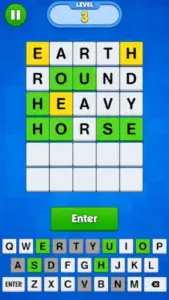
Which Similar Game Is Best for Word Geek Players?
There is no single alternative that is automatically better because the choice depends on what you want from your next puzzle game. Canfield Solitaire makes sense if you like Giantix Studios’ clean approach but want card based strategy. Vocabulary focused titles are better if learning new words is the primary goal, while multiplayer word games are more suitable when competition and social interaction matter.
Word Geek remains the stronger fit for players who want a simple letter based puzzle, progressive challenges, hints, and offline accessibility without a crowded feature set. Its closest similarity to other casual puzzle games is therefore not a particular mechanic, but its ability to deliver a focused challenge in short, accessible sessions.
Conclusion
Word Geek is worth considering if you want a straightforward word puzzle that rewards vocabulary, attention, and patience without burying the core gameplay under complicated systems. The appeal comes from its simple premise: find words from the available letters, solve the puzzle in front of you, and keep progressing as the challenges become less predictable. these elements are worth considering before committing to longer sessions.
Word Geek is worth playing if your idea of a good mobile game is a clean, uncomplicated word challenge that you can pick up whenever you have a few spare minutes. Its greatest strength is not innovation; it is the satisfying simplicity of searching for words, solving puzzles, and gradually pushing your vocabulary further.
Ultimately, Word Geek succeeds because it understands what makes word games enjoyable: a handful of letters, one stubborn puzzle, and the satisfaction of finding the word you were missing.
FAQ
Where can I get the Word Geek download for Android?
You can Download Word Geek from the official Google Play Store listing from Giantix Studios. The game is free to install and currently contains ads. It can also be played offline, making it a convenient choice when you want a five letter word puzzle without an internet connection.
Does Word Geek work offline?
Yes. Word Geek is designed to work completely offline, so you can continue solving its five-letter puzzles without Wi-Fi or a mobile data connection. It also supports tablets, which makes it suitable for playing on both Android phones and larger screens.
Is there an official Word Geek website, wiki, or forum?
The official source for Word Geek is Giantix Studios, the developer behind the game. There does not appear to be a dedicated official Word Geek wiki or forum at the moment, so the Google Play listing is the most useful place for the latest app information, reviews, updates, and developer support. Giantix Studios also provides its official website and privacy information online.
Is Word Geek worth downloading for casual word puzzle fans?
Yes, especially if you enjoy five letter guessing games where every attempt gives you useful information about the hidden answer. Word Geek keeps the rules easy to understand while adding more than 1,000 levels, hints, offline play, and support for both British and American spelling. It is a particularly good fit for players searching for a simple offline word puzzle game for Android rather than a word game overloaded with complicated features.