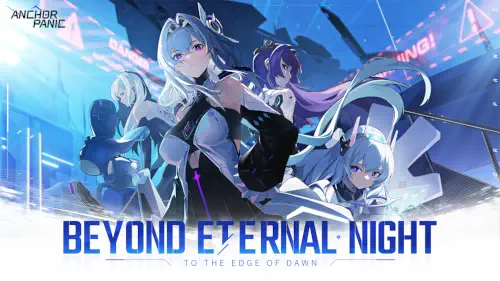
Anchor Panic brings together familiar JRPG ideas and mobile friendly systems, giving players a way to build a team, discover character stories and progress through battles without having to fight every encounter manually.

Anchor Panic is developed by LEIYAN Games and published under HOWLYO GAME.
What Is Anchor Panic?
Anchor Panic is a f2p anime inspired RPG for Android and iOS that uses turn based combat, gacha recruitment and character progression to structure its gameplay. Players take the role of a leader associated with the Anchor, assembling a team of Agents to fight the Hollows and advance through story stages, events and dungeons. Its design combines a science fiction fantasy setting with familiar role playing systems such as elemental matchups, class based abilities, equipment upgrades and limited time character banners.
A typical session can involve progressing through the campaign, strengthening an Agent, recruiting a new character or farming materials for future upgrades. The game’s collection system gives players a reason to experiment with different team compositions, while its progression systems encourage them to invest in selected characters instead of relying on recruitment alone. Gear and artifacts provide further opportunities to improve stats and customize an Agent’s contribution to the team.
Anchor Panic also tries to reduce the repetitive side of mobile RPG progression. Auto battle can handle encounters once players are comfortable with a stage, and sweep allows previously cleared content to be completed without replaying the full battle. The Link system helps newly acquired Agents enter the lineup more quickly, making it easier to experiment with fresh recruits.
These conveniences help define the game’s identity. Anchor Panic is not built exclusively around complex tactical encounters; it is also a character-collection RPG intended to make regular progression manageable. Its success depends on how well that convenience works alongside the combat, story, and technical performance.
HOWLYO GAME and LEIYAN Games
Anchor Panic is associated with HOWLYO GAME and is developed by LEIYAN Games, according to the supplied game research. The title’s presentation and progression systems place it firmly within the mobile gacha RPG category, where character recruitment, regular events and ongoing upgrades form the foundation of the experience.
Its approach emphasizes attractive character designs, animated skills and an accessible combat structure. Rather than requiring players to manually control every repeated encounter, the game includes systems that let them automate familiar battles and collect materials more efficiently. This makes the game easier to fit into shorter play sessions, although convenience alone cannot compensate for technical problems or combat that feels too simple.
Platforms, Availability and System Requirements
Anchor Panic is available on Android and iOS. The supplied research lists a minimum Android hardware baseline of a Snapdragon 845 class processor, 4GB of RAM, and approximately 10GB of available storage. These figures are useful for estimating whether a device meets the stated requirements, but meeting them does not guarantee that every player will experience stable performance.
That distinction is important because some player reviews report unusually high device temperatures, crashes and connection problems. A phone may meet the listed specifications and still struggle because of software optimization, network conditions, background activity, or other device specific factors. Players experiencing overheating should avoid prolonged sessions while the device is hot and check the available graphics and performance settings.
The game supports several languages, including English, Korean, Japanese, Simplified Chinese, Traditional Chinese, Thai, Vietnamese and Indonesian, according to the provided research. This range makes the game accessible to a broad audience, although language availability should not be confused with a guarantee that every story or interface element has identical localization quality.
Before downloading, players should check the current store listing for compatibility, installation size, and supported devices. Requirements and app details can change over time, so the official listing is more reliable for current installation information than an older review.
Who Should Play Anchor Panic?
Anchor Panic is likely to appeal most to players who enjoy collecting anime style characters and gradually improving a favorite team. If recruiting Agents, exploring their backstories, combining elemental strengths, and unlocking stronger skills are the parts of a gacha RPG you enjoy most, the game offers several systems built around those interests.
It may also suit players who prefer convenient progression. Auto battle reduces the need to manage every action during familiar encounters, while sweep cuts down the time spent farming stages that have already been cleared. The Link system further lowers the friction involved in trying newly recruited Agents, making collection feel more flexible.
Players seeking deep tactical combat may have a different experience. Although team composition, elemental advantages, Break effects, and Burst Chance add some decision making, feedback suggests that the combat can feel relatively shallow. Players who are particularly sensitive to mobile performance problems should also take the reported overheating and server instability into account.
Ultimately, Anchor Panic is a stronger fit for fans of colorful character driven gacha RPGs than for those searching primarily for demanding strategy. Its art, collection loop, and convenience features provide the main reasons to try it, while its technical stability and combat depth are the areas to watch.
Anchor Panic Story and Worldbuilding
The Magic Explosion and a World Divided by Chaos
The story of Anchor Panic is shaped by the Magic Explosion, a catastrophic event that shattered reality and left the world divided. This disaster provides the central mystery behind the setting, giving the narrative a foundation that extends beyond the routine of defeating enemies and upgrading characters. The world players explore is one in which familiar boundaries have been broken, dangerous forces threaten what remains, and the search for answers is tied to the discovery of powerful Heirlooms.
Rather than presenting its conflict as a simple struggle between two armies, Anchor Panic connects its worldbuilding to the Agents and the missions they undertake. The battle against the Hollows gives the player an immediate objective, while the wider mystery of the Magic Explosion and the Heirlooms offers a broader reason to continue through the story.
This setup works alongside the game’s colorful anime fantasy aesthetic. Its visual style may look bright and polished, but the underlying premise is a world disrupted by a major catastrophe. That contrast helps give the setting its own character, even as the game follows familiar conventions of mobile RPG storytelling.
The supplied information does not establish every detail about the origin or consequences of the Magic Explosion, so its deeper mysteries are best treated as part of the narrative to discover rather than explained through unsupported assumptions.
The Anchor, Its Agents and the Fight Against the Hollows
The Anchor is the group at the center of the player’s struggle against the Hollows. As its leader, the player assembles and develops a roster of Agents, bringing together individuals with different abilities, elemental affinities, classes and personal stories. This makes team building part of the fiction as well as a practical requirement for combat: the characters recruited along the way become the force through which the player confronts the world’s threats.
The Hollows serve as the opposition that drives the game’s missions and battles. Facing them gives players opportunities to test their lineups, make use of class roles and exploit elemental advantages. As stages become more demanding, a team built around complementary skills can be more useful than a collection of characters selected only for rarity or appearance.
The relationship between the Anchor and its Agents also supports the game’s collection focused design. Each recruit adds another set of skills to consider and another backstory to explore. Players who enjoy learning about their characters may find that the roster becomes one of the main reasons to continue playing beyond the initial story stages.
The central appeal is straightforward: the Agents are both the player’s combat resources and the characters through whom the world of Anchor Panic is presented. Their designs and abilities attract attention, while their roles in the wider conflict give the collection system a narrative purpose.
The Search for Heirlooms
The search for Heirlooms is another important part of Anchor Panic’s story premise. Alongside the fight against the Hollows, this objective gives the narrative a thread of discovery. It suggests that the world holds more than immediate battlefield threats and that understanding its fractured state involves uncovering significant objects connected to the larger mystery.
Heirlooms also help connect the game’s story driven progression with the broader fantasy elements of its setting. Players move through stages and missions while gradually encountering more of the world, creating a structure in which combat and narrative advancement work together. The supplied research identifies the search for Heirlooms as a central theme, although it does not specify their complete history, exact powers, or the full sequence of discoveries.
For readers interested in the story, this is best approached as one of the questions that motivates the adventure. The Heirlooms provide a reason to look beyond individual battles, while the Magic Explosion establishes why uncovering the world’s secrets matters in the first place.
Agent Backstories, Special Dialogues and Character Interactions
Anchor Panic does not rely entirely on its main conflict to give its cast personality. Special dialogues and character interactions allow players to learn more about individual Agents, adding personal moments to a game otherwise structured around recruitment, combat, and progression. These scenes give the roster a narrative dimension beyond its practical value in battle.
This feature is particularly relevant to players who enjoy character driven gacha RPGs. Recruiting an Agent can be appealing because of the character’s appearance or combat skills, but additional dialogue creates another reason to engage with that character. As players build their collections, the interactions can help make the roster feel more distinctive than a list of stats and abilities.
The visual novel style presentation supports these moments by giving story scenes room to focus on characters and conversations. Combined with the game’s anime-inspired designs, this approach reinforces its emphasis on personality and presentation.
The available research does not detail every Agent’s biography or the full dialogue system, so individual character arcs are best explored in the game itself. What is clear is that Anchor Panic uses special interactions to connect character collection with its wider story experience.
The Game’s Sci-Fi and Fairytale Inspired Setting
One of Anchor Panic’s defining characteristics is the combination of a science fiction premise with a colorful, fairytale inspired visual style. The Magic Explosion introduces a world where reality has been disrupted, while the character art leans toward polished anime designs and expressive fantasy imagery. Rather than presenting a uniformly dark or realistic setting, the game uses this contrast to create a more vibrant identity.
Artist Coax is credited in the supplied research for the game’s hand drawn, fairytale like artistic direction. Character designs can be distinctive and deliberately extravagant, supported by animated recruitment sequences and elaborate skill effects. These visual elements make collecting Agents an important part of the experience, even for players who approach the game primarily for its combat systems.
The interface follows familiar mobile gacha conventions, with screens for the home hub, banners, character collection, inventory and events. Story scenes and Agent interactions provide a change of pace from those menus and the repeated rhythm of turn based battles.
For players searching for an anime RPG with colorful character art, flashy skill animations and a fantasy story built around a shattered world, Anchor Panic’s presentation is one of its clearest selling points. The art direction gives the game a recognizable personality, although the long-term appeal still depends on whether its combat, progression, and technical performance live up to that first impression.
Anchor Panic Gameplay and Combat Mechanics
How Turn Based Team Battles Work
Anchor Panic uses turn based combat, giving players a structured way to deploy their Agents and confront the Hollows. Instead of relying on continuous real time control, battles revolve around taking actions in sequence, using character skills and choosing how to respond to the enemies in each encounter. Players can control battles manually or use auto-battle once they are comfortable with the stage.
The central challenge is to build a team that can deal damage, withstand incoming attacks, and make effective use of the available abilities. Elemental advantages and class roles influence how well a lineup performs, while skill synergies can improve the value of individual actions. A team that works comfortably against one group of enemies may need adjustments for another, particularly when a stage rewards a specific elemental matchup or role combination.
Anchor Panic also includes Break effects and Burst Chance, which add mechanics beyond ordinary turn based attacks. Break weakens enemy defenses, creating an opportunity to improve damage output. Burst Chance is a quick time event finisher that allows accumulated buffs to be released in a powerful attack when its conditions are met.
These mechanics give combat some timing and team building considerations, but the experience remains accessible by design. Players who want to manage every encounter can focus on manual decisions, while those more interested in collection and progression can rely on auto battle for suitable content.
Building a Squad of Up to Five Agents
Players can assemble a squad of up to five Agents, making team composition one of the main decisions in Anchor Panic. Each character contributes a particular class, element, skill set and role in combat. The goal is not simply to fill every available position with the rarest characters, but to create a lineup whose members can support one another and handle the enemies encountered in each stage.
Damage dealers provide the main offensive pressure, while defensive and support oriented roles can help a team survive and maintain its effectiveness. Elemental advantages add another consideration, encouraging players to pay attention to enemy compositions instead of taking the same lineup into every battle. Skills that complement one another can also create stronger combinations than isolated abilities used without a plan.
For new players, focusing resources on a dependable core team is a practical way to avoid spreading upgrades too thinly. Developing one or two main damage dealers and building a useful supporting lineup can provide a clearer progression path than attempting to raise every recruited Agent at once. The supplied research also notes that lower-rarity Agents can be useful in early and mid-game content when they receive suitable investment.
The Link system makes experimentation easier by helping newly recruited Agents become usable without requiring the same lengthy leveling process from scratch. This is valuable in a collection driven game, where a new character may inspire players to reconsider their team. Even so, trying every recruit at once can consume resources quickly, so team changes are most effective when they address a specific weakness or offer a useful new synergy.
Elemental Advantages and Class Roles
Elemental matchups and class roles provide two of the main ways to improve a team in Anchor Panic. Elements influence how Agents perform against particular enemies, while classes help define what each character contributes to the squad. Understanding these systems makes it easier to adapt a lineup to a stage rather than relying on the same five Agents regardless of the opposition.
Elemental advantages can help players increase their effectiveness against suitable targets. The research gives examples of elemental interactions, but it does not provide a complete, verified matchup chart. Players should therefore check the in-game information to confirm the precise relationships between elements instead of assuming every matchup follows a universal rule.
Class roles are just as important. A lineup built entirely around damage may struggle to survive difficult encounters, while a team that invests too heavily in defense may take too long to defeat enemies. Balancing offensive pressure with useful defensive and support options creates more flexibility, particularly when battles require players to break enemy defenses or capitalize on a short damage opportunity.
These systems are also central to team experimentation. When a stage becomes difficult, changing an Agent’s element or role may be more effective than simply increasing everyone’s level. For players seeking practical Anchor Panic team building advice, the key is to consider the enemy, identify what the current lineup lacks and make targeted adjustments.
Agent Skills and Team Synergies
Every Agent brings individual skills that contribute to the team’s overall performance. These abilities are part of what distinguishes one recruit from another, alongside class, element, rarity, and character design. A useful lineup considers not only how much damage each Agent can deal independently, but also how their abilities complement the rest of the squad.
Skill synergy can make a team more effective by helping its members fulfill different roles. Offensive abilities can provide damage, while other skills may support survival or improve the team’s ability to exploit an opening. The exact value of a skill depends on the character and encounter, so players benefit from learning what each Agent actually does instead of choosing characters on appearance or rarity alone.
This is where the collection system connects most directly with combat. Recruiting a new Agent expands the possible combinations, but a larger roster does not automatically create a stronger team. Upgrading a smaller group of complementary characters can be more practical than distributing resources among many Agents who do not fit the same strategy.
Anchor Panic’s skill system is designed to be approachable, but players who pay attention to abilities and team interactions can still make more informed choices. Understanding the role of each skill is especially useful when dealing with enemies that require Break effects or when preparing to activate Burst Chance.
Break Effects and Enemy Defense
Break effects give players a way to weaken enemy defenses and create more favorable damage opportunities. Rather than treating every enemy as a target to attack with the strongest available skill, players can consider when reducing an enemy’s defenses will make subsequent attacks more effective. This adds another decision to the combat loop, particularly when a team has several abilities that can be coordinated around an opening.
The value of Break depends on the encounter and the Agents available. A lineup with complementary skills may be better equipped to take advantage of weakened defenses, while a poorly coordinated team may fail to capitalize on the opportunity. Players can experiment with the order of their actions to learn when a Break effect produces the most useful result.
This mechanic also helps connect team building with combat timing. The aim is not merely to equip powerful characters, but to use their abilities in a sequence that supports the team’s overall plan. Although the supplied research does not detail every Break condition or its precise numerical effects, it identifies defense weakening as a core part of the system.
For beginners, the practical lesson is to pay attention to how Break works in the game’s battle interface and observe which attacks benefit most from it. Learning to recognize these opportunities can make encounters more efficient without requiring a complicated strategy for every stage.
Burst Chance: Understanding the QTE Finisher
Burst Chance is one of Anchor Panic’s more distinctive combat features. It uses a quick time event, or QTE, to let players unleash accumulated buffs in a powerful finishing attack when the required conditions have been met. This gives certain moments in battle a more active feel than a sequence of standard turn based actions.
The mechanic also rewards players for paying attention to the state of the fight. Rather than treating the finisher as an unrelated animation, players can view it as an opportunity to convert accumulated advantages into a concentrated burst of damage. How much value it provides depends on the battle and the conditions needed to activate it.
The game’s flashy skill presentation supports this system, helping major attacks stand out from ordinary actions. For players who enjoy anime style combat effects, Burst Chance contributes to the spectacle that distinguishes Anchor Panic from a purely menu driven RPG.
However, the available research does not specify every activation requirement or the exact timing sequence for the QTE. Players should use the in-game prompts to learn how the finisher is triggered and what actions help prepare for it. Once familiar with the mechanic, they can incorporate it into their approach to more demanding encounters.
Manual Combat vs. Auto Battle
Anchor Panic offers both manual combat and auto battle, allowing players to choose between direct control and convenience. Manual play is useful when learning a new stage, examining how Agents’ skills interact or figuring out why a team is struggling. It gives players a chance to observe enemy behavior and make deliberate choices about their lineup and abilities.
Auto battle, by contrast, is designed to reduce the attention needed for familiar encounters. Once players understand a stage and have a team that can handle it reliably, automation can make routine progression more convenient. This suits players who want to spend more of their time recruiting Agents, upgrading characters, and following story content rather than making every battle decision themselves.
The distinction matters because auto battle is not a substitute for understanding the game’s mechanics. If a team repeatedly loses or performs poorly, watching a manual battle can help reveal whether the problem comes from elemental matchups, class balance, insufficient upgrades or ineffective skill use. Relying on automation before understanding a stage may hide those weaknesses rather than solve them.
For players who prefer a relaxed mobile RPG, the ability to switch between manual and automated combat is a practical advantage. Those who want a more involved tactical experience may prefer to manage important encounters themselves, although player feedback suggests that the combat may not always offer the depth found in more demanding strategy RPGs.
How Strategic Is Anchor Panic’s Combat?
Anchor Panic has several systems that encourage basic tactical decisions, including elemental advantages, class roles, skill synergies, Break effects and the Burst Chance finisher. Together, they give players reasons to consider team composition and action timing rather than treating every encounter as a simple test of character levels.
Its strategic depth, however, should be viewed in context. The game is built to support accessible progression and convenient farming, with auto battle and sweep reducing the need to repeat familiar content manually. That approach makes it easier to play in short sessions, but it may also limit the level of engagement some strategy focused players expect from every encounter.
Player feedback in the supplied research reflects this tension. The game’s art, animations and character collection are frequently praised, while some players describe combat as shallow or early gameplay as confusing. These reactions suggest that the team building layer may be more appealing to players who enjoy experimenting with characters than to those who want consistently complex tactical challenges.
The most accurate way to describe Anchor Panic’s combat is strategy light but not entirely without decisions. Team composition, elemental matchups, Break and Burst Chance all matter, yet the overall experience places considerable emphasis on collection and convenient progression. Players who value character art and accessible turn based battles may find that balance appealing; those seeking deep, encounter by encounter strategy may want to temper their expectations.

Anchor Panic Agent Collection, Gacha and Progression
How to Recruit Agents Through Gacha Banners
Anchor Panic revolves around recruiting Agents through standard and limited time gacha banners using premium currency and tickets. Each character brings unique skills, elemental affinities and class roles, giving players new options for building a squad of up to five Agents. Before spending resources, consider whether a recruit complements your current lineup or is a character you genuinely want. The exact pull rates and pity rules are not confirmed in the available research, so check the in-game banner details before investing.
Agent Rarity, Elements, Classes and Unique Skills
Agent rarity can influence a character’s potential, but it should not be the only factor in team building. Elements affect matchups, classes determine combat roles, and individual skills create opportunities for useful combinations. A balanced team with complementary abilities can be more practical than a lineup chosen entirely for rarity. Beginners should focus on one or two main damage dealers and invest in supporting Agents who improve the team’s effectiveness.
Standard Banners vs. Limited Time Character Banners
Standard banners and limited time banners offer different recruitment opportunities, with limited releases highlighting selected characters for a restricted period. Spending currency across every banner can leave players unprepared for a future recruit they really want. Plan pulls around your preferred characters and your team’s needs rather than reacting to every new release.
Leveling, Promotion and Skill Upgrades
Leveling, promotion, and skill upgrades help Agents remain effective as the difficulty increases. Since materials are limited, strengthen your core team before investing heavily in every new recruit. Prioritize characters you use regularly, then upgrade skills that support their roles and your preferred strategy.
Gear, Artifacts and Character Customization
Gear and artifacts provide additional ways to improve Agent stats and combat performance. Choose equipment that supports each character’s purpose instead of upgrading randomly. The available research does not establish complete best in slot builds, so use the in-game equipment descriptions to guide your decisions.
The Link System and Material Farming
The Link system helps newly recruited Agents become usable more quickly, reducing the grind involved in introducing characters to your lineup. Story stages, events and dedicated farming stages provide materials for upgrades. Set a clear goal for each farming session, and use Sweep when available to collect resources from previously cleared stages more efficiently.
Anchor Panic Events and Extra Game Modes
Limited Time Events, Mini Games and Attendance Rewards
Anchor Panic features limited time events with additional story content, stages and featured character banners. The supplied research also mentions mini games and attendance events, offering activities beyond the main campaign. Check event requirements early so you can prioritize rewards before activities expire. Exact rewards and schedules may vary, so consult the current in-game event menu.
Dungeons and Dedicated Farming Stages
Dungeons and resource stages support long term character progression by providing materials for leveling, promotions, skills and equipment. Focus on the resources your main team actually needs instead of farming without a specific objective. Because stamina can restrict repeated attempts, prioritizing useful upgrades helps make each session more productive.
Multiplayer, Competitive Features and Sweep
Google Play categorizes Anchor Panic as including multiplayer and competitive multiplayer features, although the exact modes are not fully established in the supplied research. Check the current game menus for available competitive activities.
Sweep is more clearly defined: it allows eligible, previously cleared stages to be completed without replaying the entire battle. Combined with auto battle, it reduces repetitive farming. Manual play remains useful for learning unfamiliar encounters, while automation is convenient for familiar content. This balance suits players who want steady progression without actively managing every fight.
Anchor Panic Tips and Tricks for Beginners
Build a Strong Core Team Before Upgrading Everyone
One of the most useful Anchor Panic beginner tips is to develop a reliable core team before spending resources on every Agent you recruit. With a squad of up to five characters, it can be tempting to experiment with the entire roster, but spreading materials too thinly may leave your main lineup struggling in tougher stages.
Start with a small group whose abilities work well together, then expand your investment as you collect more resources. Anchor Panic’s Link system makes it easier to bring new Agents into the lineup, but quick deployment does not mean every character deserves immediate upgrades.
Prioritize Main Damage Dealers and Supporting Agents
Build your team around one or two dependable damage dealers and choose supporting Agents who help them perform effectively. Consider class roles, elemental advantages and skill combinations rather than selecting characters based on rarity alone.
The supplied research indicates that many three star and four star Agents can handle early and mid game content when properly developed. You therefore do not need to chase the highest rarity characters to establish a useful starting team. Invest in the Agents you use consistently, and upgrade additional characters when they offer a clear improvement.
Learn Elemental Matchups and Class Synergies
Elemental advantages can influence battle performance, so avoid taking the same lineup into every encounter without considering the opposition. Check enemy information and adjust your Agents when a different elemental matchup or class role could improve your chances.
Class synergy matters just as much. A team focused entirely on damage may lack the support or survivability needed for certain encounters. Learning what each Agent contributes will help you identify weaknesses and make targeted changes instead of trying to solve every difficult stage through leveling alone.
Use Break Effects and Burst Chance at the Right Time
Anchor Panic’s Break mechanic weakens enemy defenses, creating opportunities for more effective attacks. Pay attention to when these effects occur and consider how your other Agents can take advantage of the opening.
Burst Chance adds a quick time event finisher that allows accumulated buffs to be unleashed when its conditions are met. Rather than treating it as just another animation, learn the in-game activation requirements and watch for opportunities to use the finisher effectively. Understanding these two mechanics can make battles more deliberate, even if the overall combat system remains relatively accessible.
When to Use Manual Combat and Auto Battle
Manual combat is particularly useful when entering an unfamiliar stage or trying to understand why your team is struggling. It lets you observe how skills interact and whether your lineup has the right balance of damage, support and elemental strengths.
Auto battle is more convenient for familiar encounters that your team can already handle reliably. If automation repeatedly produces poor results, return to manual play and examine the problem before investing additional resources. This approach lets you enjoy Anchor Panic’s convenience without missing opportunities to improve your strategy.
How to Use Sweep for Faster Material Farming
Once you have cleared an eligible stage, use Sweep to collect rewards without replaying the entire battle. This is especially helpful when farming the materials needed for Agent leveling, promotion, skill upgrades, and equipment.
For more efficient Anchor Panic material farming, decide which upgrade you want to complete before spending stamina. Focus on the stages that provide the required resources, and avoid repeatedly collecting materials that your current team does not need.
Plan Your Gacha Pulls Around Desired Agents
Save premium currency and recruitment tickets for Agents you genuinely want or characters who would improve your lineup. Spending resources on every banner can leave you unprepared for a more appealing limited time recruit.
Check the current banner’s rates, pity rules, and guarantee conditions before pulling. The available research does not confirm Anchor Panic’s exact recruitment probabilities, so do not assume that a particular number of pulls guarantees a character unless the in-game rules explicitly say so.
Manage Device Temperature and Avoid Connection Problems
Some players have reported overheating, crashes, and server disconnections. If your phone becomes unusually hot, stop playing until it cools down. Where available, lower graphics settings, close unnecessary background apps and avoid prolonged sessions in hot environments.
Use a stable Wi-Fi connection when possible, particularly during battles or reward collection. Check for game updates and current compatibility information if crashes continue. Meeting the stated minimum requirements does not guarantee smooth performance on every device.
Take Advantage of Limited Time Events and Rewards
Check the event menu regularly for temporary stages, character banners, attendance activities and exclusive rewards. Participating early gives you more time to complete objectives before an event ends.
Prioritize rewards that support your main team’s development, especially when an event offers useful progression materials. Since event schedules and rewards can change, use the current in-game information rather than relying on older guides.
Games Similar to Anchor Panic
Anchor Panic vs. GODDESS OF VICTORY: NIKKE
GODDESS OF VICTORY: NIKKE is a useful comparison for players who enjoy anime character collection and story focused progression. However, its shooter style combat differs from Anchor Panic’s turn based battles, where elemental advantages, class roles and skill combinations shape team performance.
Choose Anchor Panic if you prefer turn-based encounters and a colorful sci-fi fantasy setting. Consider NIKKE if its shooter combat and presentation appeal to you more.
Anchor Panic vs. OUTERPLANE
OUTERPLANE is a closer comparison for players interested in anime style, turn based RPG combat and team building. Both games emphasize collectible characters and strategic combinations, making them relevant options for fans of gacha progression.
The best choice depends on which characters, combat systems, and story presentation you prefer. Players comparing the two should look beyond their shared anime aesthetic and consider how much tactical depth and progression complexity they want.
Anchor Panic vs. Arcana Tactics
Arcana Tactics offers another point of comparison for players interested in tactical RPG systems and gacha style progression. While the games share broad genre elements, their individual combat mechanics and visual identities differ.
Anchor Panic is particularly appealing if colorful Agent designs, turn based battles and convenient farming are your priorities. Players interested in a different approach to tactical team development may want to explore Arcana Tactics as an alternative.
Anchor Panic vs. Morimens
Morimens is another option for players looking for character collection and strategy-focused RPG progression. The supplied research identifies it as a turn-based or strategy-oriented gacha game, although its mechanics differ from Anchor Panic’s Agent-based combat and elemental synergies.
Anchor Panic may suit players who prefer accessible battles, anime-inspired 3D presentation, and auto-battle convenience. Morimens may be worth investigating if you want a different approach to strategic team building. Compare their current gameplay and progression systems before deciding which better fits your preferences.
Conclusion
Its biggest strength is the combination of character appeal and accessible mobile gameplay. Players who enjoy recruiting Agents, improving a favorite team, and exploring a colorful sci-fi fantasy world have several reasons to give it a try.
However, the experience has important limitations. The supplied player feedback highlights overheating, crashes, server instability and concerns about combat depth. These issues can undermine the game’s strongest features, particularly for players who expect reliable daily progression and consistently engaging battles.
Is Anchor Panic worth playing? It may be a good fit for fans of anime gacha RPGs who value character collection, flashy animations and convenient farming. Players who prioritize demanding strategy or dependable technical performance should check recent reviews before investing heavily.
Ultimately, Anchor Panic has an appealing foundation, but its long term success depends on how well its progression systems hold players’ interest and how effectively its technical problems are addressed.
FAQ
Where can I download Anchor Panic?
You can get Anchor Panic download directly from Official Google Play. The game is free to install and includes optional in-app purchases. A one time download of additional game resources is required after launch, so using Wi-Fi is recommended.
What is the official website for Anchor Panic?
Visit the official Anchor Panic website for game information. You can also find the game’s community links through its Facebook page and official X account.
Is Anchor Panic a turn based RPG or an idle game?
Anchor Panic is a sci-fi RPG featuring anime inspired characters, team based turn based battles, character collection and flashy skill animations. It also offers auto battle convenience, making it appealing to players who enjoy collecting Agents and progressing without manually controlling every encounter.
Where can I find an Anchor Panic wiki, beginner tips and character information?
The Anchor Panic Wiki includes beginner guides, character databases, equipment information, and strategy pages. It is primarily in Japanese, but browser translation can help English-speaking players explore its character and progression resources.