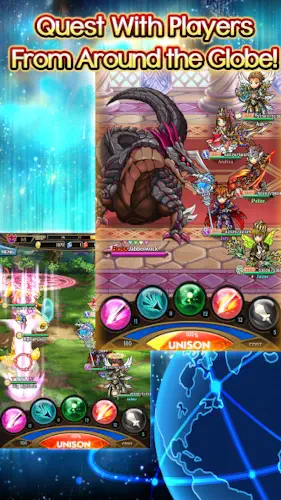
Unison League is a free to play social RPG built around the idea that mobile role playing does not have to be a solo experience.
Unison League combines stage based RPG combat with online multiplayer. Players travel through the fantasy world of Granvia, fight monsters, improve their equipment, develop their characters, and work with other players during cooperative quests. The game also expands beyond ordinary PvE battles with guild competition, including intense 10v10 battles where teams coordinate their attacks and attempt to destroy the opposing guild’s Crystal.
The result is an RPG where character strength matters, but teamwork can be just as important. Choosing an appropriate class, building equipment around that role, communicating during combat, and knowing when to launch a powerful Unison Attack can change how a battle unfolds.
What Is Unison League?
Ateam Entertainment and the Developer Behind Unison League
Unison League comes from Ateam Entertainment, a developer associated with mobile games that emphasize accessible gameplay and social interaction. That philosophy is particularly visible here, where multiplayer cooperation is not simply an optional feature added around the edges of an RPG. It is one of the foundations of the game’s design.
Rather than making the player experience completely self contained, Unison League encourages players to interact through cooperative stages, guilds, chat, battle commands, and competitive events. This approach explains why the game can feel closer to a social RPG than a traditional offline mobile adventure.
Ateam Entertainment’s Approach to Social RPGs
The social structure of Unison League is visible almost immediately once players move beyond basic character progression. Communication tools allow players to interact in the lobby and during battles, while guild systems give regular players a reason to return and cooperate with the same community.
The game’s character customization also contributes to this social approach. Players can create a hero with different faces, hairstyles, outfits, gear, and appearance options, then use stickers and character animations to express themselves while interacting with others.
This makes customization more than a cosmetic side activity. In a game built around guilds and multiplayer encounters, the character becomes part of the player’s social identity.
Unison League Release and Platform Availability
Unison League is designed as a mobile-focused free-to-play RPG, with its gameplay built around online interaction and real-time cooperation. Players should therefore approach it differently from an offline RPG: an internet connection is important for its multiplayer systems, and the game’s strongest features are tied to active online participation.
Its long-running structure also revolves around continuing events, equipment development, guild activities, and multiplayer content rather than a short campaign with a clearly defined ending.
Unison League on Android and iOS
On mobile devices, Unison League is built around quick access to cooperative RPG content while still offering deeper progression systems for players who stay with the game. Android and iOS players can participate in quests, develop equipment, customize their heroes, communicate with teammates, and take part in guild activities.
The mobile format works particularly well for the game’s drop-in co-op structure because players can move between individual progression and multiplayer content without needing a traditional desktop-style RPG setup.
Unison League on PC and Mac
The game’s identity is primarily tied to its mobile RPG experience, so players considering Unison League on PC or Mac should distinguish between official platform availability and methods that may rely on additional software. The defining experience remains its mobile oriented design, real-time multiplayer systems, and touch friendly interface.
Unison League Gameplay
How Real Time Co-Op Quests Work
Unison League gameplay is built around cooperation rather than treating multiplayer as an optional side activity. Its quests allow players to enter fantasy battles together, fight monsters in real time and combine different character roles to clear stages more effectively. That structure gives each encounter a more social rhythm than a typical mobile RPG where the player controls an entire team alone.
Drop-In Multiplayer Stages
The game’s multiplayer stages are designed to make cooperation easy to access. Instead of spending most of the session preparing a complicated party before entering a battle, players can join other adventurers and move directly into combat. The emphasis is on getting players into the action and giving them a reason to communicate while the battle is happening.
This is particularly important for players searching for a Unison League real time co-op RPG experience, because the fun comes from seeing different players contribute to the same encounter rather than simply borrowing another player’s character as an AI-controlled support unit.
Playing With Up to Four Other Players
Cooperative quests can bring together a group of up to five players, creating enough room for different classes and abilities to complement one another. A well balanced group can approach difficult encounters differently from a party built around a single role, making class selection and timing meaningful during tougher fights.
The five player structure also keeps battles relatively focused. Everyone has a visible contribution, while communication can happen through quick commands instead of requiring lengthy conversations in the middle of combat.
Exploring Granvia With Friends
Exploring Granvia becomes more engaging when another player is actively fighting alongside you. Rather than simply moving through a fantasy setting to complete a checklist of objectives, cooperative quests turn each stage into a shared activity where players fight monsters, react to threats, and work toward clearing the encounter.
For players who enjoy social RPGs, this gives Granvia a practical purpose: it is the world where your customized character, equipment, class, and teamwork choices are actually put to work.
Combat and Team Coordination
Fighting Monsters in Real Time
Combat in Unison League takes place in real time, so players are not simply issuing commands and waiting for an automated battle to finish. Attacks, abilities, support actions and Unison mechanics create moments where paying attention to the team can produce better results.
That distinction matters because a strong character alone does not necessarily create the most effective party. A player who understands when to attack, support teammates, or prepare a powerful ability can have a greater impact than someone who focuses only on individual damage.
Tactical Collaboration Versus Brute Force
Unison League gives teams a reason to think about how their abilities work together. Different classes naturally encourage different approaches, while equipment and character development determine how effectively each player can perform their chosen role.
A group with complementary abilities can therefore handle situations differently from a group that simply relies on raw combat power. This is where the game’s social RPG design becomes most apparent: progression makes characters stronger, but cooperation determines how that strength is used.
Timing Commands During Battles
Communication is especially useful during real-time encounters. Players can use commands and other communication options to signal their intentions without stopping the entire battle.
The result is a combat system where timing matters. A well timed support action or coordinated offensive push can be more useful than repeatedly using abilities without considering what the rest of the party is doing.
The Five Unison League Classes
One of the most important decisions in Unison League gameplay is choosing a class. Warrior, Ranger, Cleric, Mage and Lancer provide different combat identities, allowing players to select a role that matches how they prefer to contribute to a team.
Warrior
The Warrior is suited to players who prefer a direct combat role. Its identity revolves around engaging enemies at close range and contributing through physical attacks and durability.
For newcomers who want a straightforward frontline role in cooperative quests, Warrior provides an easy to understand starting point while still leaving room for deeper equipment and ability optimization.
Ranger
The Ranger offers a different approach to combat, favoring ranged attacks and giving players who prefer distance based fighting another way to contribute.
Its value becomes more noticeable when players understand positioning and timing rather than simply attacking continuously. In a coordinated party, having different combat ranges can give the team more flexibility when dealing with enemies.
Cleric
The Cleric fills the supportive side of the party. Instead of measuring success purely through damage, Cleric players can focus on keeping teammates in fighting condition and helping the group survive demanding encounters.
This makes Cleric particularly appealing to players who enjoy support roles and prefer influencing the outcome of a battle through team utility.
Mage
Mage represents the game’s magical combat option, giving players a class centered around powerful spell-based attacks and a different style of battlefield contribution.
For players attracted to fantasy magic and ability-driven combat, Mage offers a natural fit while adding another layer of class variety to cooperative teams.
Lancer
Lancer provides another frontline-oriented option with its own combat identity, giving players more choice than simply selecting between a damage dealer and a support character.
Its inclusion helps make the class system feel broader, particularly for players who want to experiment with different melee-focused builds as their equipment collection develops.
Choosing a Class for Your Playstyle
There is no single class that makes sense for every player. The better choice depends on whether you prefer direct attacks, ranged combat, magical abilities, frontline pressure, or supporting teammates.
For a first-time player, the most useful approach is to choose a role that feels natural rather than immediately chasing the theoretically strongest setup. Once you become familiar with Unison League gameplay, equipment affinity, abilities, proficiency and team composition become much more important in determining how effectively that class performs.
Unison League Attack Gameplay
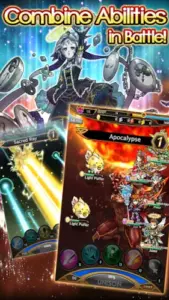
Unison Attacks are among the most recognizable parts of Unison League’s combat system. Instead of treating powerful summons as completely individual abilities, the game allows players to coordinate their summons with other members of the team for dramatic combined attacks.
Combining Summons With Guildmates
The Unison system creates a direct connection between individual progression and team coordination. Players bring their own developed characters and summons into battle, but the most memorable moments can happen when multiple teammates synchronize their actions.
This gives powerful summons a strategic role rather than making them feel like another button to press whenever it becomes available.
Timing Synchronized Unison Attacks
Timing is the key to getting the most from a coordinated Unison Attack. Activating powerful abilities independently can produce useful damage, but synchronizing the team’s actions creates a much bigger payoff.
That timing element gives cooperative battles a recognizable rhythm. Players need to watch what their teammates are doing and recognize when the group is ready to commit to a major offensive sequence.
Massive Creatures and Cinematic Strikes
The visual payoff is another reason Unison Attacks stand out. Large summoned creatures and powerful attack effects provide a dramatic change of pace from ordinary monster encounters.
These sequences give battles a stronger sense of spectacle without abandoning the game’s underlying multiplayer structure. The animation is not simply there to look impressive; it reinforces the idea that several players have combined their actions into one major attack.
Unison League Character Customization
Building Your Own Hero
Character customization is a major part of Unison League’s identity. Players are not restricted to a predetermined protagonist with a fixed appearance. Instead, they can create a hero whose appearance can change as their collection of cosmetic options grows.
That makes customization especially valuable in a social RPG, because the character other players see in a guild or lobby becomes part of the player’s identity.
Face Customization
Players can adjust facial characteristics when creating their hero, giving the character a more personalized appearance instead of relying on a generic avatar.
This is particularly useful for players who enjoy spending time creating a recognizable character before focusing heavily on equipment progression.
Hairstyles and Outfits
Hairstyles and outfits expand the cosmetic side of character creation. As players acquire different appearance options, they can change the look of their hero without having to abandon the character they have already developed.
The system gives long-term progression a visual dimension: new cosmetic pieces can make an established character feel different even when the underlying combat build remains familiar.
Gear Skins and Appearance Options
Equipment does not have to be viewed only through statistics. Appearance options and gear skins allow players to shape how their character looks while continuing to develop combat strength.
That combination is useful for players who care about both performance and presentation, particularly when their customized hero appears in multiplayer spaces.
Mixing Appearance and Stats
One of the appealing aspects of the customization system is the ability to think about appearance and progression separately. Players can pursue a particular visual style while continuing to improve the underlying combat capabilities of their character.
This creates a useful distinction between how your Unison League character looks and how effectively that character performs in battle.
Customizing Your Player Room
Creating a Room Friends Can Visit
Character customization extends beyond the avatar itself. Players can also personalize their own room, creating a private social space that other players can visit.
The room system adds a quieter side to Unison League. After spending time fighting monsters and participating in guild battles, players have somewhere to express their personality without focusing on combat statistics.
Stickers, Animations, and Social Expression
Stickers and character animations provide additional ways for players to communicate. These small interactions are particularly useful in a multiplayer RPG because not every social moment needs a full chat conversation.
Together with customized avatars and player rooms, these features reinforce Unison League’s identity as a social RPG rather than simply an online game with cooperative combat attached.
Unison League Gear and Character Progression
Collecting and Upgrading Equipment
Equipment is central to character development. Players collect gear, improve their equipment and gradually build stronger characters capable of handling more demanding content.
The progression loop is straightforward at first but becomes more meaningful as players begin thinking about which pieces are worth developing and how those items complement their selected class.
Matching Gear Affinity With Your Class
Gear affinity becomes particularly important once players move beyond the earliest stages. Instead of treating every equipment piece as equally useful, players should consider how the gear fits their chosen class and preferred role.
A Warrior, Mage, Cleric, Ranger or Lancer can therefore approach equipment development differently. Building around class affinity creates a clearer progression path than simply equipping whatever item has the highest basic number.
Developing Equipment With Special Materials
Equipment development also requires resources and materials. These systems give players reasons to continue completing quests and participating in different forms of content rather than treating every battle as an isolated activity.
The result is a familiar but effective RPG loop: play content, collect resources, improve equipment, strengthen the character, and return to more demanding challenges.
Reaching the True Potential of Your Gear
Upgrading equipment is not simply about making an item slightly stronger. Long term development is about pushing useful gear toward its full potential and creating a setup that supports the character’s chosen role.
For players interested in optimizing their build, this is where equipment collection becomes more strategic. The best progression choices depend on class, abilities, available resources, and the type of content the player intends to tackle.
Learning New Abilities
Character progression also includes learning abilities that expand what a class can do in combat. New abilities can change how a familiar class approaches battles, giving experienced players more options than their starting toolkit provides.
This helps prevent progression from becoming purely statistical. A stronger character is not only about bigger numbers; additional abilities can change the way players interact with enemies and teammates.
The Proficiency System
The Proficiency system adds another progression layer by allowing players to develop their character beyond basic equipment upgrades.
Rather than making gear the only measure of advancement, proficiency gives players another long-term development path to work toward as they spend more time with the game.
Unlocking Stronger Abilities
As proficiency develops, players can work toward stronger abilities and expand their combat options. This creates a reason to continue investing in a class instead of constantly abandoning an established character whenever a new piece of equipment becomes available.
For dedicated players, proficiency can therefore become part of the longer term build strategy alongside equipment and class development.
New Unison Gauge Abilities
The Unison Gauge introduces another layer to combat strategy. New abilities connected to the gauge give players additional options beyond their ordinary skills and create more decisions during demanding encounters.
Because these abilities can also matter in competitive situations such as guild battles, learning when to use the gauge becomes part of mastering the broader Unison League gameplay system. Players who understand how their class, equipment, proficiency, and Unison abilities interact have considerably more control over the outcome of difficult battles than players who simply focus on increasing combat power.
Unison League Guild Battles
How 10v10 Guild Battles Work
Unison League guild battles turn the game’s cooperative foundation into a competitive 10v10 real time RPG battle, where success depends on more than simply having powerful characters. Two guilds face each other while players coordinate their actions, manage combat opportunities and work toward destroying the opposing guild’s crystal. The format gives Unison League a much more social and tactical identity than a mobile RPG built entirely around solo progression.
Real Time Guild Versus Guild Combat
The real time format means guild members are actively participating rather than simply submitting teams and waiting for an automated result. Your class, equipment, abilities, and timing all become relevant when the opposing guild is also fighting for control of the battlefield.
A strong character can certainly contribute, but coordinated players have a major advantage. Warriors, Rangers, Clerics, Mages, and Lancers bring different strengths to the team, making class balance important when a guild prepares for competitive battles.
Destroying Enemy Crystals
The central objective is to destroy the opposing guild’s crystal. This gives every clash a clear purpose: defeating enemies is useful, but the broader goal is pushing the battle toward the enemy crystal rather than treating combat as a collection of disconnected encounters.
That objective also creates moments where guilds have to decide whether to concentrate on attacking, supporting teammates, or responding to pressure from the opposing side. The result is a battle system where positioning and coordination can matter as much as raw combat power.
Team Coordination and Battle Strategy
The most interesting part of Unison League guild battles is how individual character builds fit into a larger team strategy. A player who understands when to attack, defend, support, or use a powerful ability can be more valuable than someone who simply focuses on dealing maximum damage.
Building an Effective Guild Team
A competitive guild needs players who complement one another. Damage focused classes can pressure opponents, while support oriented characters can keep teammates active during prolonged encounters. The goal is not simply to gather the strongest individual players but to create a lineup capable of handling different situations.
Class selection therefore becomes part of guild preparation. A team overloaded with one type of role can struggle when opponents exploit its weaknesses, while a balanced composition gives the guild more options during a chaotic fight.
Timing Matters More Than Button Mashing
Real-time combat makes ability timing particularly important. Using a major ability too early can waste an opportunity, while saving it for the right moment can help turn a losing exchange into an advantage.
This is especially relevant when guildmates coordinate their attacks. Instead of every player acting independently, successful teams can create windows where several abilities work together and put immediate pressure on the opposing guild.
Guild Rankings and Competitive Rewards
Guild battles also give Unison League a long-term competitive layer. Players are not simply completing a match and moving on; guild performance can contribute to rankings and competitive rewards, giving active groups a reason to continue improving their coordination.
For players who enjoy competition, this creates a stronger endgame loop than ordinary quest grinding. Your guild becomes part of your progression, and improving its performance can be just as satisfying as upgrading an individual character.
Why Guild Wars Are Central to the Unison League Experience
Guild wars are where Unison League’s social design becomes most obvious. The game combines character progression, class roles, equipment builds, real time combat and communication into battles where your decisions affect other players.
That makes Unison League guild battles particularly appealing to players who find conventional mobile RPG combat too solitary. If you prefer an RPG where your guildmates matter and coordination can influence the outcome of a fight, the 10v10 format is one of the game’s strongest reasons to keep playing.
Unison League Graphics and Design
Unison League takes a deliberately colorful anime inspired approach to its presentation, using character focused artwork, compact battle scenes and flashy effects to make real time multiplayer combat feel energetic without relying on the fully 3D environments common in newer mobile RPGs. Its visual identity is built around readability and personality, particularly during cooperative battles where several characters and effects can appear on screen at once.
Colorful Anime Style Visuals
The anime-style presentation gives Unison League a bright, immediately recognizable personality. Characters are designed with expressive faces, distinctive costumes and exaggerated fantasy equipment, while enemies and abilities use bold visual effects to keep battles lively.
Rather than aiming for photorealism, the game leans into the appeal of colorful fantasy character design. That approach works particularly well for players who enjoy anime RPGs where collecting equipment and customizing an avatar are as much a part of the experience as combat.
The 2D Stage Driven Presentation
One of the game’s defining visual choices is its 2D stage driven presentation. Instead of placing players inside a large, continuously explorable 3D battlefield, Unison League focuses attention on the active combat encounter.
This keeps the action visually concentrated. Characters, enemies, attacks, and interface elements remain easy to follow, which is useful when multiple players are fighting together in real time. The result feels closer to a character-driven online RPG battle screen than a conventional open-world mobile RPG.
Unison Attack Battle Cinematics
The Unison Attack system provides some of the game’s biggest visual moments. When players coordinate their summons, the resulting attack can shift the battle from ordinary character actions into a much more dramatic presentation.
Massive summoned creatures and powerful effects give these attacks a sense of scale that ordinary abilities do not always have. Because Unison Attacks are connected to multiplayer coordination, the spectacle also reinforces the game’s central idea: individual characters become considerably more exciting when players combine their abilities.
Character and Avatar Presentation
Character customization is closely tied to Unison League’s visual appeal. Players can create their own hero and change aspects of their appearance through hairstyles, faces, outfits, equipment, and other cosmetic choices.
Gear That Changes More Than Combat Stats
Equipment progression is therefore visible as well as numerical. As players collect stronger gear and different appearance options, their avatar can gradually develop a distinct look rather than remaining visually identical throughout the game.
This is particularly effective in a social RPG because your character is not just a combat unit. It is the avatar other players see during cooperative quests and guild activities.
Visual Effects During Multiplayer Combat
Multiplayer battles rely heavily on effects to communicate what is happening. Attacks, skills, healing actions, summons and Unison abilities each contribute to a busy but energetic battlefield.
The challenge for this type of presentation is avoiding visual confusion. Unison League addresses that by keeping encounters relatively contained instead of placing players in enormous environments where important combat actions could disappear into the scenery.
Unison League User Reviews
What Players Like About Unison League
The strongest positive reactions to Unison League tend to center on the same feature that separates it from more solitary mobile RPGs: other players are genuinely part of the experience. The combination of real time cooperation, extensive avatar customization, class based combat, Unison Attacks and competitive guild battles gives the game a distinctly social identity.
Real Time Co-Op With Other Players
Real-time cooperation is one of the game’s biggest attractions. Players can enter quests alongside other adventurers and actively contribute during the battle rather than simply relying on automated teammates.
For players searching for a Unison League real time co-op RPG, this multiplayer structure can be more appealing than conventional mobile RPGs where most progression happens alone. Team coordination gives even familiar encounters a different feel depending on who is playing alongside you.
Deep Avatar Customization
Avatar customization is another feature that receives attention from players who enjoy expressing their personality through their character. Faces, hairstyles, outfits, equipment appearances and other customization options allow players to create a hero that feels personal.
The system becomes especially meaningful in a game with such a strong social component. Your avatar is not merely a combat statistic sheet; it is the character other players encounter during quests and guild activities.
Five Distinct Classes
The five classes: Warrior, Ranger, Cleric, Mage, and Lancer, give players several ways to approach combat. Each class encourages a different role, which makes choosing a main character more than a cosmetic decision.
Players who enjoy experimenting with different playstyles can also find replay value in learning how each class interacts with equipment, abilities and team composition.
Unison Attack Team Coordination
Unison Attacks provide some of the most memorable cooperative moments. Rather than treating powerful summons as completely individual abilities, the system encourages players to coordinate their attacks.
The appeal comes from both the visual spectacle and the teamwork behind it. Successfully synchronizing a major attack makes the group feel like an actual party rather than several unrelated characters fighting on the same screen.
10v10 Guild Battles
For competitive players, 10v10 guild battles add another reason to stay invested. Guild members have to coordinate against another group while working toward the destruction of the opposing crystal.
That creates a competitive layer beyond ordinary quest progression. A player’s class, equipment, timing, and ability to cooperate can all become relevant when the opposing guild is actively fighting back.
Anime Style Graphics
The anime inspired visual style also has a dedicated audience. Unison League does not attempt to deliver the detailed 3D presentation of newer mobile RPGs. Instead, it focuses on colorful character designs, customized avatars, flashy effects and dramatic Unison Attack sequences.
For players who prefer stylized fantasy characters over photorealistic graphics, this approach gives the game a recognizable personality.
Common Unison League Complaints
The same systems that make Unison League distinctive can also create frustrations. The game’s reliance on an active community, older visual presentation, progression economy and multiplayer connectivity means it is not equally suited to every type of player.
Medium Playerbase and Matchmaking Concerns
A social RPG depends heavily on having enough active players. A smaller or less active playerbase can make cooperative matchmaking feel less reliable, particularly compared with the enormous communities surrounding the biggest mobile RPGs.
This matters because multiplayer is not simply an optional feature in Unison League. Co-op quests and guild activities are fundamental parts of the game’s identity, so players who encounter difficulty finding active teammates may notice the limitation more than they would in a primarily single player RPG.
Free to Play and Pay to Win Concerns
Progression can also raise concerns for players who are highly competitive but do not want to spend money. Gear collection, upgrades, powerful abilities, and limited rewards can create pressure to invest significant time or resources into keeping a character competitive.
For casual players, that may be less problematic because the game can still be approached as a social fantasy RPG. Competitive guild players, however, are more likely to notice the gap between gradual free progression and faster progression supported by spending.
The Older 2D Presentation
The game’s 2D stage-based presentation can feel dated to players accustomed to modern 3D mobile RPGs. Unison League’s visual strengths are its character designs, colorful effects, and customization rather than technically advanced environments.
That is not necessarily a flaw if you enjoy the game’s anime aesthetic, but players expecting expansive 3D worlds and modern cinematic presentation may find the graphics less impressive.
Requirements for Stable Internet
Because real time cooperation is central to the experience, a stable internet connection is important for multiplayer activities. This makes Unison League less convenient than an RPG designed primarily around offline or asynchronous play.
Connection quality can become particularly noticeable during coordinated battles, where delays or interruptions can interfere with timing and communication.
Resource Demands on Older Devices
Players using older mobile hardware may also encounter limitations when several characters, abilities and visual effects appear during multiplayer combat. The more demanding the encounter becomes, the more important device performance can be.
For anyone considering a Unison League Android experience on an older phone, available storage, memory, and overall device performance are worth considering before committing to long sessions.
The Social Focus May Not Suit Solo Players
Perhaps the biggest issue is simply that Unison League is not designed around solitary play. Its strongest systems encourage cooperation, guild participation, and interaction with other players.
Someone looking for a completely self-contained RPG with no dependence on guilds or multiplayer may find the game’s social structure distracting rather than rewarding. Conversely, players who enjoy building relationships with guildmates can see this same design choice as one of its greatest strengths.
Unison League Tips and Tricks
Beginner Tips
Start With Real Time Co-Op Quests
New players should experience Unison League real time co-op quests early rather than treating the game as a purely solo RPG. Cooperative stages introduce the game’s central rhythm: choosing the right ability, reacting to teammates and understanding how different classes complement one another.
Playing alongside other adventurers also makes it easier to understand where your chosen class fits within a party. Instead of learning every system at once, focus first on surviving encounters, contributing consistently and recognizing when your team needs damage or support.
Choose a Class That Fits Your Role
Warrior, Ranger, Cleric, Mage, and Lancer each provide a different approach to combat. Your first class should therefore match the role you actually enjoy playing rather than simply choosing whichever class looks strongest.
If you prefer direct combat, a more offensive class can feel natural. Players who enjoy keeping teammates alive may prefer Cleric, while those who like ranged or magical attacks can build around Ranger or Mage. Lancer offers another distinct combat identity for players who enjoy a different balance of offense and durability.
Join a Guild Early
Joining a guild early makes more sense in Unison League than waiting until the late game. Guilds connect directly to the game’s social and competitive systems, particularly its 10v10 battles.
A guild can also make cooperative progression feel less random. Having familiar players available gives you opportunities to learn team coordination rather than repeatedly entering battles with strangers.
Learn to Coordinate Unison Attacks
Do not treat Unison Attacks as abilities that should automatically be triggered whenever they become available. Their real value comes from synchronization.
Pay attention to what your teammates are preparing and look for moments when several players can contribute to the same offensive window. Learning this timing early will make later cooperative battles considerably easier to understand.
Customize Your Character and Room
Unison League gives customization a genuine social purpose. Spend some time creating an avatar that reflects your preferred style, then experiment with your player room and available decorative options.
Because other players can encounter your character and room, customization becomes part of the multiplayer experience rather than a system that exists only inside a menu.
Upgrade Gear With Class Affinity in Mind
Avoid treating every piece of equipment as equally useful. Gear progression works best when your equipment choices support the class and role you are actually building.
A stronger item is not automatically the best long-term choice if it does not fit your character’s direction. Think about your class before investing valuable resources into upgrades.
Advanced Unison League Strategy
Optimize Gear Affinity and Proficiency
Once you understand the basic systems, start looking beyond simple equipment strength. Gear affinity and proficiency can have a meaningful impact on how effectively your character performs within its intended role.
Instead of constantly replacing equipment without a plan, develop a coherent setup and invest resources into equipment that supports your preferred class. This reduces wasted progression and gives your character a clearer identity.
Coordinate Guild Battle Tactics
Unison League 10v10 guild battles demand a different mindset from ordinary quests. Your guild needs to think about the battle as a team objective rather than a collection of individual fights.
Communication becomes especially important when deciding when to pressure opponents, when to support teammates, and when to prepare a coordinated push toward the enemy crystal.
Think About the Team Before the Individual
A highly developed character can still underperform if its actions do not complement the rest of the guild. Competitive teams should consider class balance, ability timing and the strengths of individual members when developing battle tactics.
Time Unison Attacks Around Team Actions
Advanced players should treat Unison Attacks as part of a larger sequence rather than isolated abilities. Watch the battlefield, identify when teammates are ready, and avoid wasting a major synchronized attack on an insignificant moment.
The best timing can create a concentrated burst of pressure that is considerably more effective than several players activating their strongest options independently.
Use Chat for Fast Battle Commands
Fast communication can make a major difference during real-time multiplayer. Use chat to communicate immediate intentions, particularly when coordinating attacks or responding to an unexpected change in the battle.
The goal is not constant conversation. Short, useful commands are more valuable when the battle is moving quickly.
Take Advantage of Events, Raids and Crafting
Events and raid content can provide additional opportunities to collect resources and strengthen your character. Crafting and gear enhancement are similarly important because they turn collected materials into longer term progression.
Rather than focusing exclusively on ordinary quests, rotate between available content when it makes sense for your current goals. This can keep progression moving while reducing the feeling of repeating the same activity indefinitely.
Make Better Use of Unison Gauge Abilities
The Unison Gauge adds another layer of decision making to combat. Strong abilities become more valuable when their timing complements the rest of the party.
Learn which situations justify using your gauge and which situations are better handled with ordinary abilities. Saving a powerful option for an important encounter can have considerably more impact than spending it simply because it is available.
Unison League Similar Games
| RPG Toram Online | An anime style MMORPG focused on open world exploration, character builds, equipment and flexible combat. It offers considerably more freedom in how players develop their characters. | Unison League is the stronger choice for players who specifically want structured real time co-op, coordinated team attacks, and guild versus guild battles rather than a more open ended MMORPG experience. |
| Tales of Wind | A colorful MMORPG combining quests, character progression, customization, social systems, PvP and a persistent fantasy world. | Unison League stands out through its tightly integrated multiplayer combat, especially its synchronized Unison Attacks and 10v10 guild battles. The teamwork is more central to its identity. |
| AVABEL Online | A larger scale online RPG with MMORPG progression, PvP, guild combat, tournaments and battles that can reach much larger player counts. | Unison League offers a more focused team experience. Instead of relying primarily on massive scale battles, it makes smaller co-op groups and coordinated Unison Attacks a major part of the gameplay loop. |
| GrandChase | An anime inspired action RPG with multiplayer oriented progression and a roster driven approach to combat. It appeals to players who want faster action and recognizable character driven gameplay. | Unison League has the advantage for players who want to create and customize their own avatar, choose from distinct RPG classes, collect gear, and build a character that represents them inside the game’s social world. |
| Alchemia Story | A fantasy MMORPG built around anime presentation, character development, exploration, and online RPG progression. It is another natural option for players who enjoy social anime RPGs. | Unison League is more compelling for players who prioritize organized multiplayer cooperation, guild competition, and synchronized attacks instead of primarily exploring a broader MMORPG world. |
| SAO Integral Factor | An anime MMORPG-style RPG based around the Sword Art Online universe, with cooperative gameplay, character progression, equipment and action-focused combat. | Unison League doesn’t depend on an established anime franchise to create its appeal. Its own identity comes from avatar customization, class roles, guild warfare and the distinctive Unison Attack mechanic. |
| Valkyrie Connect | A character collection RPG with anime presentation, team building, progression, and multiplayer oriented features. It is a good alternative for players who enjoy collecting characters and building combat teams. | Unison League is better suited to players who want direct avatar ownership and real time player coordination rather than primarily managing a collection of predefined heroes. |
Why Unison League Still Has an Edge
The biggest difference is that Unison League doesn’t rely on just one feature to separate itself from other mobile RPGs. Its appeal comes from how several systems overlap: real time co-op quests, five playable classes, customizable avatars, equipment progression, Unison Attacks, social lobbies and 10v10 guild warfare. Ateam’s own description specifically highlights simultaneous co-op for up to five players and real time guild battles involving teams of up to 10.
Conclusion
Unison League is worth playing if you want a social, real time multiplayer RPG where teamwork matters. Its biggest strengths are the combination of cooperative combat, five classes, deep avatar customization, Unison Attack coordination and 10v10 guild warfare.
It is less convincing for players seeking offline play, a solo first RPG structure or cuttingedge 3D graphics.
Unison League FAQ
What is Unison League and what makes its gameplay different?
Unison League is a real time multiplayer RPG from Ateam Entertainment built around cooperative battles, customizable avatars, gear progression, guild competition and synchronized Unison Attacks. Players can team up with up to four other players during co-op quests, while guild battles expand the competitive side of the game.
Where can I get the Unison League download for Android?
The safest place to get the Unison League download for Android is the official Google Play listing. The game is free to play with optional in-app purchases, and the current listing shows more than 1 million downloads.
Does Unison League have real time co-op multiplayer?
Yes. Real time co-op is one of Unison League’s defining features. Players can enter quests together with up to four other players, making timing, class roles and coordinated attacks more important than simply relying on individual character power.
How do Unison League guild battles work?
Guild battles put teams against each other in real time, with teams of up to 10 players competing to destroy the opposing side’s crystals. The game’s Unison Attack system also rewards coordinated timing between guild members, giving organized teams a major advantage.
Where can I find Unison League guides, builds and community discussions?
For detailed mechanics, gear information, Unison Attacks, events and beginner resources, the Unison League Wiki is a useful reference. For player discussions, troubleshooting, class questions and build advice, the Unison League subreddit is the stronger community resource. The Wiki itself also points players toward the game’s community spaces and forums.
Unison League Wiki: Unison League Wiki
Community forum: Unison League Reddit community