
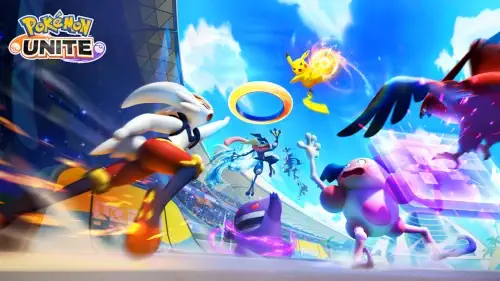
Pokémon UNITE is a 5v5 team based multiplayer online battle arena game that transforms the Pokémon universe into a strategic competitive experience.

Pokémon UNITE game combines familiar Pokémon characters with classic MOBA systems such as lanes, role assignments, leveling, and coordinated team fighting. Unlike more complex MOBAs, Pokémon UNITE streamlines controls and mechanics to create a smoother learning curve. Movement, abilities, and interactions are designed to feel intuitive on both touchscreen devices and controllers.
Instead of traditional Pokémon turn based battles, players control individual Pokémon in real time while competing in objective focused multiplayer matches. Teams work together to earn points, defeat wild Pokémon, level up, and dominate key areas of the map.
Accessibility is one of the game’s strongest advantages. Players who may find traditional MOBAs overwhelming can still understand Pokémon UNITE quickly because the rules are simplified without removing strategy. This creates an experience that feels approachable for beginners while still offering enough depth to keep experienced players engaged.
Overview of Pokémon UNITE
What is Pokémon UNITE?
Pokémon UNITE is a cross-platform MOBA that allows players to control Pokémon in multiplayer battles. Unlike traditional Pokémon games focused on exploration and turn based combat, Pokémon UNITE places players into team based arenas where strategy, positioning, and scoring determine victory.
Matches feature two teams of five players competing across a structured battlefield. Players defeat wild Pokémon, level up, unlock stronger moves, and score points by depositing collected energy into enemy goal zones. Instead of destroying a central base like many MOBAs, teams win by earning the highest score before the timer expires.
The game is available on both Nintendo Switch and mobile platforms, allowing players to enjoy cross-platform matchmaking and flexible gameplay experiences.
Core Purpose
The primary goal of Pokémon UNITE is to deliver accessible multiplayer strategy gameplay while maintaining the excitement of competitive team battles. Rather than relying purely on reaction speed, the game encourages players to think about positioning, timing, and cooperation.
Teamwork remains central to the experience. Players must coordinate lane assignments, support teammates during objectives, and balance offensive pressure with defensive awareness. Strategic map movement and communication play major roles in determining match outcomes.
Pokémon progression adds another layer to gameplay. During each match, Pokémon evolve, gain stronger abilities, and become more impactful over time. This progression system creates momentum shifts and gives matches a clear sense of growth.
Who It’s For
Pokémon UNITE appeals to several types of players because it blends accessibility with competitive systems.
- Pokémon fans who want to experience familiar characters in multiplayer combat.
- Casual players looking for shorter matches that fit into busy schedules.
- MOBA newcomers who prefer simplified mechanics and easier onboarding.
- Competitive gamers interested in ranking ladders and team based progression.
- Cross-platform players who enjoy switching between mobile devices and consoles.
This broad audience makes Pokémon UNITE one of the most approachable entries in the MOBA genre.
Pokémon UNITE Key Features
5v5 Team Battles
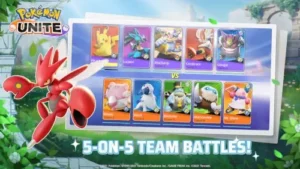
Pokémon UNITE revolves around structured five versus five matches where two teams compete to score points and control the battlefield. Unlike deathmatch focused games, victory depends on coordination and objective management rather than simply defeating opponents.
The map structure encourages lane assignments, strategic rotations, and coordinated attacks. Team fights become especially important during major objectives and late game scoring opportunities.
Pokémon Playable Roster
One of the game’s biggest attractions is its roster of playable Pokémon. Players can choose iconic characters from across the Pokémon franchise, each with unique abilities and combat styles.
The roster continues to expand through updates, allowing new strategies and playstyles to emerge over time. Different Pokémon cater to aggressive, defensive, supportive, or tactical approaches.
Pokémon Roles
Each Pokémon belongs to a defined role that influences how it contributes to the team.
- Attacker: High offensive damage with lower durability.
- Defender: Durable frontline protection.
- Speedster: Fast movement and burst damage.
- Supporter: Healing, buffs, and utility.
- All Rounder: Balanced combat versatility.
These roles encourage balanced team compositions and create strategic variety.
Match Progression and Evolution
Pokémon evolve during matches, which creates a strong sense of progression. Players begin with weaker forms and gradually become stronger through experience gain.
Evolution unlocks improved abilities and enhanced combat effectiveness. This mechanic reinforces momentum and encourages efficient farming early in matches.
Unite Moves
Unite Moves function as powerful ultimate abilities unique to each Pokémon. These moves often influence large team fights and can dramatically shift momentum.
Timing Unite Moves correctly becomes a major strategic decision, especially during critical objective battles.
Wild Pokémon Objectives
Neutral wild Pokémon scattered across the map provide experience points and scoring resources. Defeating them contributes to progression while also influencing map control.
Major neutral objectives often provide team wide buffs or advantages that can determine match outcomes.
Ranked Ladder System
Competitive players can participate in ranked matchmaking to climb through skill tiers. Ranking systems reward consistent performance and encourage long term progression.
Seasonal resets and rewards provide ongoing incentives for competitive play.
Held Items and Builds
Held Items allow players to customize Pokémon performance through stat bonuses and strategic effects. These loadout choices create variation between builds and support multiple playstyles.
Players can adapt builds depending on team composition or personal preference.
Cross Platform Support
Pokémon UNITE supports both mobile devices and Nintendo Switch systems, creating a shared ecosystem that expands matchmaking opportunities.
Cross platform play makes it easier for friends to join regardless of preferred platform.
Seasonal Events and Modes
Regular events introduce limited time gameplay variations, rewards, and cosmetic unlocks. These updates help maintain engagement and encourage players to return frequently.
Pokémon UNITE Game Mechanics
Core Gameplay Loop
The gameplay loop follows a consistent but rewarding structure:
Select Pokémon → Enter Match → Farm Wild Pokémon → Gain Experience → Evolve → Score Points → Defend Goals → Win Through Strategy.
This loop creates a balance between action, progression, and tactical decision-making.
Scoring System
Instead of destroying a central enemy structure, players score points by depositing Aeos energy into opposing goal zones.
Scoring requires timing and positioning because enemies can interrupt deposits. Successful scoring often depends on map awareness and coordination.
Lane Structure
The battlefield is divided into multiple sections:
- Top Lane
- Bottom Lane
- Central Jungle Area
Each role performs better in certain map positions, creating structured lane assignments and team responsibilities.
Experience and Leveling
Experience is earned by defeating enemies and wild Pokémon. Leveling unlocks stronger moves and improves combat effectiveness.
Because progression resets every match, each session creates a fresh competitive environment.
Team Fighting
Team fights are moments where players combine abilities to secure objectives or eliminate enemies.
Positioning, cooldown management, and timing become extremely important during these engagements.
Objective Control
Major objectives provide buffs and map advantages that significantly influence match outcomes.
Teams that secure objectives often gain stronger pressure during mid-game and late-game stages.
Role Synergy
Balanced team composition creates stronger overall performance. Different Pokémon abilities complement one another, encouraging coordination rather than individual play.
Match Timing Strategy
Strong players understand how strategy changes across match phases:
- Early Game: Farming and lane control.
- Mid Game: Objective fights and rotations.
- Late Game: Team fights and scoring pressure.
Understanding timing creates better decision-making throughout the match.
Pokémon UNITE Graphics and Design
Visual Style
Pokémon UNITE uses bright colors, clean presentation, and highly readable environments. The art direction stays faithful to the Pokémon franchise while adapting characters for MOBA combat.
Character Design
Pokémon remain instantly recognizable while receiving expressive animations suited for competitive gameplay.
Abilities feature clear visual indicators that improve readability during fast-paced fights.
Map Design
Maps are designed to support structured MOBA gameplay with lanes, objectives, and jungle areas clearly separated.
This layout makes navigation intuitive for new players.
User Interface
The HUD emphasizes clarity through cooldown indicators, objective markers, minimap placement, and accessible controls.
Menus are optimized for quick interaction across platforms.
Animation and Combat Effects
Combat animations remain smooth and visually readable even during crowded engagements.
Ability effects are colorful without becoming visually overwhelming.
Design Philosophy
The design prioritizes accessibility while preserving strategic depth. Every visual element supports readability, helping players quickly understand information during combat.
Pokémon UNITE User Reviews and Feedback
Positive Feedback
Players frequently praise Pokémon UNITE for its approachable gameplay, polished visuals, and enjoyable team battles.
Many appreciate the ability to experience MOBA mechanics without extreme complexity.
Popular Use Cases
- Casual multiplayer matches.
- Ranked progression.
- Playing with friends.
- Experimenting with Pokémon builds.
Criticism
Some users criticize monetization systems, interface clutter, and occasional balance concerns.
Competitive players may also become frustrated by matchmaking inconsistencies.
Overall Reception
Despite criticism, Pokémon UNITE remains widely popular due to its accessibility and strong Pokémon identity.
The game attracts both casual users and dedicated competitive players.
Pokémon UNITE Practical Use Cases
Casual Multiplayer Sessions
Short matches make Pokémon UNITE ideal for quick gaming sessions.
Competitive Ranked Play
Players seeking progression can climb ranks and improve strategic understanding.
Pokémon Role Mastery
Repeated play allows users to specialize in certain Pokémon and refine gameplay.
Team Coordination Practice
The game supports communication and synergy development.
Cross Platform Gaming
Flexible access allows players to enjoy matches across multiple devices.
Learning MOBA Fundamentals
Pokémon UNITE serves as an excellent entry point into MOBA mechanics because of its simplified systems and shorter match structure.
Pokémon UNITE Tips and Tricks
Farm Early for Experience
Early-game farming is one of the most important habits to build in Pokémon UNITE because level advantages directly influence how effective your Pokémon becomes during the first major objectives. Defeating wild Pokémon quickly allows you to unlock abilities faster, evolve earlier, and gain access to stronger damage, survivability, or utility skills before enemy players. Teams that consistently farm efficiently often enter mid game fights with a noticeable power advantage. Instead of chasing unnecessary fights during the opening minutes, prioritize clearing camps, securing lane experience, and maintaining consistent level progression.
Understand Your Pokémon Role
Each Pokémon is designed with a specific battlefield purpose, and understanding that role dramatically improves match performance. Attackers excel at ranged damage but usually require protection, while Defenders initiate engagements and absorb pressure for teammates. Speedsters specialize in mobility and ambushes, Supporters strengthen allies, and All Rounders provide flexibility between offense and durability. Trying to force fights outside your role often leads to poor positioning and unnecessary deaths. Playing according to your Pokémon’s intended strengths creates stronger team synergy and helps maintain balanced engagements throughout the match.
Watch Objective Timers
Map objectives are often more important than random eliminations because they create major momentum swings. Powerful neutral objectives provide buffs, scoring opportunities, and map control advantages that can decide the outcome of a close match. Paying attention to timers allows players to rotate early, prepare positioning, and coordinate with teammates before an important battle begins. Teams that arrive late frequently lose control of objectives and fall behind in experience and pressure. Developing awareness of objective timing separates casual gameplay from strategic decision-making.
Use Unite Moves Carefully
Unite Moves act as ultimate abilities that can completely change the direction of a fight when used correctly. Because these skills have long cooldowns, wasting them during low impact skirmishes often creates disadvantages during critical moments. Saving Unite Moves for team fights, defensive situations, or objective contests increases their overall value. Timing matters just as much as activation, since using an ultimate too early or too late may reduce its impact. Learning when to commit a Unite Move becomes increasingly important during ranked and competitive matches.
Score Opportunistically
Scoring is the primary win condition in Pokémon UNITE, which means timing deposits correctly matters more than reckless aggression. Attempting to score while surrounded by enemies often results in losing collected points and giving the opposing team momentum. Strong players look for safe scoring windows created by distractions, defeated opponents, or successful team fights. Rotating to undefended goals or scoring after clearing enemy pressure creates more efficient opportunities. Understanding when to attack and when to secure points improves overall match consistency.
Stay Near Teammates
Pokémon UNITE rewards coordinated teamwork rather than isolated solo play. Moving with allies increases survivability, improves objective control, and creates stronger team-fight potential. Lone players are often easy targets for coordinated enemies, especially during late game encounters. Staying near teammates allows healing, crowd control combinations, and layered abilities to work effectively together. Group positioning becomes increasingly important as matches progress because a single lost fight can quickly determine the final outcome.
Build Held Items Strategically
Held Items provide meaningful stat boosts that influence how each Pokémon performs in battle. Choosing the correct setup depends on your role, combat style, and intended strategy. Offensive Pokémon benefit from attack focused items, while tanks require durability and sustain options. Support focused builds may prioritize cooldown reduction or healing enhancement. Experimenting with different combinations helps players optimize performance and adapt to changing team compositions. Strong item choices can noticeably improve damage output, survivability, and overall efficiency.
Learn Rotation Timing
Rotations refer to moving between lanes and objectives at the correct moments, and mastering this mechanic significantly improves map control. Staying in one lane too long may limit opportunities to assist teammates or secure important objectives. Effective rotations allow players to support fights, reinforce pressure, and capitalize on enemy mistakes. Knowing when to leave lane, assist jungle control, or prepare for upcoming objectives creates stronger momentum for the entire team. Players who rotate efficiently often influence the pace of the match far more than those who remain stationary.
Pokémon UNITE Similar Games
| Game | Main Similarity |
|---|---|
| Mobile Legends: Bang Bang | 5v5 mobile MOBA gameplay with hero progression and ranked competition. |
| League of Legends: Wild Rift | Lane strategy, team coordination, and objective based multiplayer combat. |
| Honor of Kings | Hero focused MOBA structure with strong emphasis on teamwork and competitive play. |
| Arena of Valor | Mobile MOBA mechanics featuring lane control, role based gameplay, and strategic objectives. |
| Brawl Stars | Short multiplayer matches built around teamwork, map control, and fast decision making. |
Pokémon UNITE Community
Squad Play
Pokémon UNITE becomes significantly more engaging when played with friends because communication naturally improves coordination and teamwork. Squad play allows players to create pre-made groups, assign lane roles, and plan strategies before entering matches. Teams with consistent communication often perform better because they can rotate together, defend objectives, and execute coordinated attacks. Playing with familiar teammates also creates a stronger social experience that encourages long term engagement.
Ranked Community
The ranked ladder fuels an active competitive community where players constantly discuss progression, strategies, and performance improvements. Competitive players often analyze meta shifts, compare Pokémon viability, and share ranking experiences across different skill tiers. Ranked environments create a sense of achievement because climbing divisions reflects personal improvement and teamwork development. This progression focused structure keeps players invested over long periods.
Pokémon Strategy Sharing
A major part of the community revolves around sharing builds, guides, and gameplay knowledge. Players frequently exchange role recommendations, held item setups, lane strategies, and matchup advice. Tier lists and character discussions help newcomers understand current meta trends while allowing experienced players to refine their approaches. Strategy sharing strengthens the learning ecosystem surrounding the game.
Online Communities
Pokémon UNITE maintains an active online presence through community forums, social platforms, and discussion groups. Players post highlights, match analysis, balance opinions, and educational content across multiple channels. These spaces allow fans to discuss updates, explore tactics, and connect with other players who share competitive interests. Community interaction adds another layer of engagement beyond the game itself.
Cross Platform Multiplayer
Cross-platform support strengthens the social environment by allowing players to connect regardless of device preference. Nintendo Switch and mobile users share matchmaking pools, creating a larger player base and faster queue times. Friends can continue playing together without platform limitations, making long-term progression more flexible and accessible.
Seasonal Updates
Regular updates help maintain community excitement through new Pokémon releases, balance adjustments, and rotating events. Seasonal changes introduce fresh strategies and shift the competitive meta, encouraging players to adapt and experiment. These updates keep gameplay from becoming repetitive and give the community new content to discuss and explore.
Conclusion
Pokémon UNITE successfully blends the charm of the Pokémon universe with the competitive structure of the MOBA genre. It delivers a multiplayer experience focused on teamwork, strategic movement, scoring objectives, and coordinated battles. Unlike many traditional MOBAs, it simplifies core systems without removing strategic depth, making it approachable for new players while still rewarding long-term mastery.
Key Strengths
One of Pokémon UNITE’s biggest strengths is its recognizable roster of Pokémon combined with clearly defined battlefield roles. The shorter match structure makes gameplay more accessible for mobile and casual audiences, while ranked progression keeps competitive players invested. Strong visual clarity, cross platform support, and strategic teamplay create a balanced multiplayer experience that remains easy to learn but difficult to master.
Pokémon UNITE stands out as a beginner-friendly MOBA that successfully balances accessibility with competitive depth. Its combination of familiar characters, objective focused gameplay, and social multiplayer systems creates a strong long term experience for a wide audience. Players who enjoy teamwork, tactical decision making, progression systems, and fast-paced multiplayer matches will likely find Pokémon UNITE both rewarding and highly replayable.
![[store用]evergreen 英語](https://i.ytimg.com/vi/EUbBD3w9rSc/hqdefault.jpg)
FAQ
What is Pokémon UNITE?
Pokémon UNITE is a f2p 5v5 multiplayer online battle arena game where players control Pokémon in team based matches focused on scoring points, capturing objectives, and coordinating strategies. Unlike traditional MOBAs that rely on destroying a central base, matches revolve around depositing points into enemy goal zones while controlling the map and supporting teammates.
Where can I find the official Pokémon UNITE download?
Download Pokémon UNITE from the Official Google Play Store
Is Pokémon UNITE beginner friendly for new MOBA players?
Yes, Pokémon UNITE is widely considered one of the most beginner friendly MOBAs available. Matches are shorter, controls are simplified for mobile and console devices, and familiar Pokémon characters make it easier for newcomers to understand roles and gameplay mechanics. The game gradually introduces advanced systems like held items, ranked play, and strategic rotations.
Is Pokémon UNITE worth playing in 2026?
Pokémon UNITE continues to remain relevant thanks to regular updates, seasonal events, new Pokémon releases, and a strong competitive ecosystem. The combination of fast-paced matches, approachable mechanics, and ranked progression creates long-term replay value for both casual and competitive players.