
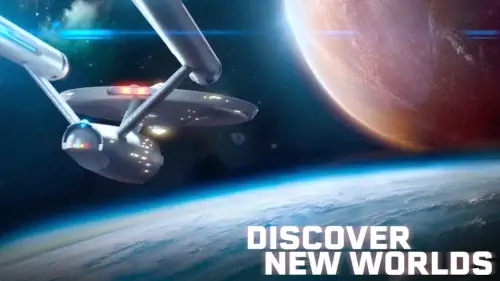
Star Trek Fleet Command it’s closer to a living, breathing slice of the Star Trek universe.

Star Trek Fleet Command game places you in the captain’s chair as a rising commander tasked with constructing a starbase, assembling fleets, and navigating a galaxy shaped by exploration, diplomacy, and combat. Whether you’re mining distant systems or clashing with rival alliances, every action feeds into a wider multiplayer universe.
Developed by Scopely, Star Trek Fleet Command operates as a sci-fi MMO strategy experience, explore, expand, exploit, and exterminate. The game’s strongest appeal lies in its fusion of classic strategy mechanics with iconic officers, fleet driven combat, alliance politics, and large scale galactic competition.
What Is Star Trek Fleet Command?
Star Trek Fleet Command is a massively multiplayer online strategy game set within the Star Trek universe. Rather than operating in isolated missions, players exist within a persistent galaxy where thousands of commanders compete, cooperate, and collide.
The game heavily integrates Star Trek lore, factions, and characters. Familiar species, technologies, and political rivalries form the backbone of the gameplay environment, giving the experience a strong narrative identity beyond generic sci-fi aesthetics.
Players assume the role of a starbase commander and fleet strategist. Progression revolves around managing infrastructure, recruiting officers, dispatching ships, and making tactical decisions across both PvE and PvP encounters.
Key gameplay pillars include:
-
Base Building – Expanding and upgrading your station
-
Officer Recruitment – Unlocking and leveling legendary characters
-
Exploration – Navigating star systems and story arcs
-
Mining & Resources – Fueling upgrades and research
-
PvP / PvE Combat – Engaging hostile forces and rival players
Designed primarily as a mobile focused free to play experience, the game emphasizes accessibility while maintaining MMO scale systems and competitive depth.
Star Trek Fleet Command Game Overview & Evolution
Since its launch in 2018, Star Trek Fleet Command has evolved into a long running live service strategy game. Continuous updates, new officer releases, and gameplay refinements have kept the title active well beyond its initial release cycle.
Operating under a free to play model, progression follows a familiar structure: players begin with modest capabilities and gradually expand through upgrades, research, grinding activities, and event participation.
A defining aspect of the experience is the power level system. Strength is not only measured by fleet composition but by cumulative upgrades, officer tiers, research progress, and technological advancements. Growth feels incremental yet strategically meaningful.
Alliances play a central role in long-term success. Cooperative mechanics, including Armadas, territory conflicts, and large scale warfare, encourage social coordination and collective strategy rather than purely solo progression.
Recent and ongoing 2025 roadmap highlights include:
-
Public Squads – Streamlined cooperative gameplay
-
Refine All – Quality of life resource management upgrades
-
Voyager 30th Content – Nostalgia driven expansions
-
Expanded event cycles and gameplay systems
Longevity stems from layered progression, constant content rotation, alliance competition, and the emotional pull of Star Trek nostalgia.
Star Trek Fleet Command Features:
Fleet & Ship Customization
Fleet composition sits at the heart of strategic decision making. Ships are not merely cosmetic upgrades; faction identity shapes their performance philosophy.
Each major faction embodies a distinct combat doctrine:
-
Federation Ships – Emphasize durability and endurance
-
Klingon Ships – Focus on raw aggression and firepower
-
Romulan Ships – Blend balance, precision, and versatility
Choosing ships becomes a strategic commitment rather than a simple upgrade path. Fleet identity influences combat efficiency, survivability, and tactical flexibility.
Officer System & Crew Synergies
One of the game’s strongest pillars is its officer system. Players recruit iconic Star Trek characters, each carrying unique abilities, stat modifiers, and synergy potential.
Crew composition directly affects combat performance. Officers generate bonuses that enhance endurance, damage output, shield efficiency, resource gains, and specialized abilities.
Synergy logic often revolves around complementary roles, pairing officers that boost survivability with those enhancing offensive capabilities. The result is a layered strategic system where crew selection can outweigh raw ship power.
Exploration & System Control
The galaxy map functions as both playground and battlefield. Systems, sectors, and territories define progression, conflict zones, and resource opportunities.
Territory Capture mechanics, particularly within Origin Sector spaces introduce structured competitive objectives. Control, presence, and scoring become key strategic factors for alliances seeking dominance.
Exploration is not passive travel; it’s tied to missions, rewards, strategic positioning, and territorial influence.
Gameplay Activities & Modes
Star Trek Fleet Command offers a broad mix of activities:
-
Mining & Resource Gathering – Economic backbone of upgrades
-
PvE Missions & Story Arcs – Lore driven progression
-
PvP Combat & Raids – Competitive risk reward engagements
-
Armadas & Alliance Warfare – Cooperative combat systems
-
Limited Time Events – Dynamic content injections
Events such as Section 31 introduce thematic variety while reinforcing progression incentives and engagement loops.
Star Trek Fleet Command Graphics, Audio & Interface Design
Visually, the game delivers polished 3D space environments with strong attention to ship and station detail. Battles carry a cinematic presentation style that mirrors Star Trek’s dramatic flair.
Ship models, visual effects, and space backdrops contribute to an immersive sci-fi atmosphere rather than a purely functional interface.
UI strengths include:
-
Clear fleet management systems
-
Intuitive mobile optimization
-
Accessible navigation layers
However, challenges remain:
-
Lag in densely populated systems
-
Performance variability across devices
-
Occasional responsiveness dips
Despite these friction points, the presentation remains one of the game’s most consistently praised elements.
Star Trek Fleet Command User Reviews and Community Feedback
Like most long running mobile MMOs, player sentiment around the game tends to be passionate, polarized, and deeply shaped by personal playstyle.
Positive Impressions
One of the most consistently praised aspects is the strong Star Trek atmosphere. From ship designs to faction conflicts and familiar lore references, many players feel the game captures the spirit of the franchise remarkably well. For Trekkies, this sense of immersion alone often becomes a major retention driver.
Alliance dynamics also receive frequent praise. Coordinated wars, diplomacy, territory control, and large-scale conflicts create a social layer that many players consider the true core of the experience. The game often feels less like a solo strategy title and more like a persistent multiplayer ecosystem.
Another surprisingly common positive note involves customer support responsiveness. While not universally agreed upon, many players report relatively quick issue resolution compared to other mobile MMOs.
For dedicated fans of the franchise, the game offers strong long term engagement value. The combination of progression systems, faction reputation, and alliance warfare keeps players invested for months or even years.
Common Criticisms
The most widespread criticism revolves around heavy grind mechanics. Progression, upgrades, and resource accumulation can demand significant time investment, especially at mid to high levels.
Pay to win concerns frequently surface in community discussions. While spending does not guarantee victory, financial investment can accelerate progression, influence power gaps, and shape PvP outcomes.
Some veteran players also argue that the strategic depth plateaus at higher levels, where power metrics and upgrade scaling sometimes outweigh nuanced tactical decisions.
Performance related complaints, including occasional lag or inconsistencies, appear periodically, particularly during large alliance conflicts or crowded server events.
Star Trek Fleet Command Game Mechanics
At its foundation, the gameplay loop revolves around familiar MMO strategy pillars.
Base Development & Upgrades
Your station functions as both progression anchor and strategic backbone. Buildings unlock new systems, improve efficiency, and determine your overall power ceiling.
Resource Economy & Refining
Resource gathering, mining nodes, and refining cycles form the economic engine of the game. Efficient refining often becomes more important than raw farming volume, particularly as upgrade costs scale.
Combat System
Combat operates through a hybrid structure:
-
Turn based resolution logic governs outcomes
-
Real time visual presentation delivers cinematic battles
While engagements appear dynamic, results are largely driven by ship strength, officer synergy, and power calculations.
Territory & Node Control Logic
Territory warfare revolves around resource nodes, strategic positioning, and alliance coordination. Control is rarely static; it evolves through cycles of conflict and diplomacy.
Faction Reputation & Blueprint Unlocks
Faction reputation directly influences progression pathways. Blueprints, ships, and technologies often hinge on long-term reputation management decisions.
Alliance Territory Ownership Cycles
Alliances act as geopolitical entities. Territory ownership, defensive infrastructure, and expansion strategies define server-level power structures.
Star Trek Fleet Command Strategy & Progression Insights
Beyond raw progression, deeper patterns emerge.
The tension between power vs. skill is a defining characteristic. Tactical decision making matters, but statistical strength frequently shapes engagement viability.
Timing becomes a critical PvP factor. Knowing when to attack, defend, relocate, or shield often determines survival more than fleet composition alone.
Grinding efficiency evolves into a strategic discipline. Smart refinement cycles, targeted farming, and event participation outperform brute force resource collection.
Faction reputation management subtly influences long term competitiveness. Poor early decisions can slow later unlocks.
Territory strategy often favors coordination over aggression. Alliances win wars through logistics, timing, and collective discipline rather than isolated strength.
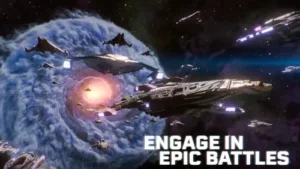
Star Trek Fleet Command Tips for New Players
Early decisions can significantly affect long term experience.
Avoid rushing Operations levels. Faster upgrades may look appealing but often create resource bottlenecks and defensive vulnerabilities.
A dual faction reputation strategy provides flexibility. Locking into a single faction too early can limit blueprint and ship access.
Alliance choice is arguably the most important decision. Active alliances dramatically improve progression, protection, and event rewards.
Bulk refining, particularly after recent updates, can provide better efficiency compared to constant small cycles.
Combat prediction often relies on power metrics. Understanding relative strength prevents costly miscalculations.
Tactical PvP timing techniques, such as attacking during vulnerability windows or leveraging shield cycles, reduce unnecessary losses.
Star Trek Fleet Command Similar Games & Alternatives
Players drawn to this type of gameplay often explore adjacent titles.
Star Trek Timelines emphasizes crew collection and lore heavy RPG systems, appealing strongly to franchise enthusiasts.
EVE Echoes offers significantly deeper alliance driven PvP and economic complexity, though with a steeper learning curve.
Vega Conflict leans more heavily into fleet combat mechanics and engagements.
Sins of a Solar Empire represents a deeper strategic inspiration, focusing on macro scale systems.
Supremacy 1 echoes territory warfare themes within a different historical framework.
What distinguishes Fleet Command is its blend of accessibility and lore driven structure. Compared to more complex strategy titles, it prioritizes approachability, persistent progression, and franchise immersion, though often at the cost of grind intensity.
Conclusion:
Viewed holistically, the game succeeds most strongly in immersion, community depth, and visual polish. For Star Trek fans, the atmosphere alone can justify long term investment.
However, the experience is undeniably shaped by grind intensity, monetization pressure, and occasional performance concerns. These elements influence pacing, competitiveness, and player expectations.
The ideal audience becomes clear: Star Trek enthusiasts, long term MMO strategists, and players who genuinely enjoy alliance driven ecosystems.
For those seeking a deep tactical simulator, expectations may require adjustment. But for players who value persistent progression, social warfare, and franchise immersion, the game stands as a compelling, if demanding strategy sandbox.

FAQ
Is Star Trek Fleet Command free to play?
Yes, Star Trek Fleet Command is free to download and play on mobile devices. While in-app purchases exist, players can progress through strategy, missions, and events.
Where can I download Star Trek Fleet Command?
Download Star Trek Fleet Command from Google Play Store
What is the official website for Star Trek Fleet Command?
The official Star Trek Fleet Command page is hosted by Scopely, where players can find updates, patch notes, support, and event announcements.
What type of game is Star Trek Fleet Command?
It’s a real time strategy MMO combining base building, ship upgrades, exploration, PvE missions, and PvP combat set within the Star Trek universe.
How can beginners progress faster in Star Trek Fleet Command?
Focus on upgrading your Operations building, complete daily missions, research key technologies, join an active alliance, and prioritize ship strength early.