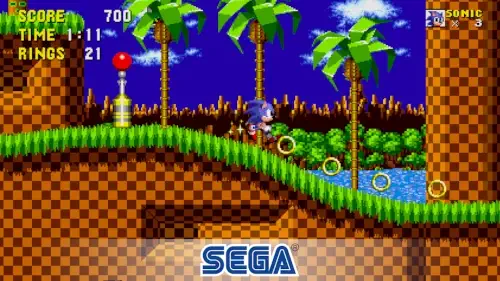
Sonic the Hedgehog Classic at decades after its debut, it remains one of the most recognizable and influential platformers ever created.
Originally developed and published by SEGA, the Sonic the Hedgehog Classic game burst onto the scene in 1991 and immediately shifted expectations for what a platformer could feel like. At a time when precision jumps and slow exploration dominated the genre, Sonic introduced something radically different: momentum driven gameplay that rewarded rhythm, flow, and lightning-fast reflexes. Run fast, react faster, and master movement with surgical precision. Yet beneath that simplicity lay a deeply tuned physics system that made every slope, spring, and loop feel alive.
What Is Sonic the Hedgehog Classic?
Sonic the Hedgehog is a momentum based platformer built around speed, physics, and fluid traversal. First released on the Sega Genesis / Mega Drive, the game quickly became the console’s defining mascot experience.
The premise is iconic: players control Sonic the Hedgehog, battling the brilliant yet tyrannical Doctor Robotnik (later known as Eggman). Robotnik has imprisoned innocent animals inside robotic shells, and Sonic’s mission is to free them while thwarting the villain’s industrial ambitions.
Progression is structured across six distinct zones, each divided into three acts, followed by the climactic Final Zone. Along the way, players collect rings for survival and seek out Special Stages to obtain the powerful Chaos Emeralds, keys to unlocking the game’s coveted good ending.
Though born in the early 90s, the game has since seen numerous ports and re-releases, appearing on modern mobile devices, PC collections, and retro compilations. Its accessibility today ensures that new generations continue to discover its design brilliance.
Sonic the Hedgehog Classic Gameplay and Design
The Six Iconic Zones
Sonic’s journey unfolds across a sequence of visually and mechanically diverse environments:
-
Green Hill Zone – The legendary introduction, blending flowing speed paths with platforming fundamentals
-
Marble Zone – Slower, more deliberate gameplay emphasizing hazards and timing
-
Spring Yard Zone – Pinball inspired chaos with springs, bumpers, and vertical traversal
-
Labyrinth Zone – A tense underwater challenge testing patience and oxygen management
-
Star Light Zone – High speed precision mixed with explosive hazards
-
Scrap Brain Zone – A punishing finale combining traps, mechanics, and escalating difficulty
Each zone feels distinct, not only aesthetically but mechanically, forcing players to adapt rather than rely on a single playstyle.
Level Design Philosophy
What truly distinguished Sonic was its delicate balance between speed and precision.
Levels were built like playgrounds of motion: sweeping loops, sloped terrain, hidden vertical routes, and environmental hazards designed to either amplify or punish momentum. Players could blaze through stages with mastery, yet reckless speed often led directly into spikes, enemies, or bottomless pits.
This duality created a dynamic tension – Sonic was fast, but the world demanded control.
Every zone established its own environmental identity. Green Hill celebrated flow. Marble Zone imposed restraint. Labyrinth introduced anxiety. Scrap Brain demanded perfection. Together, they formed a masterclass in pacing and mechanical variety.
Sonic the Hedgehog Classic Features
Momentum Based Gameplay
Unlike traditional platformers, Sonic’s movement relied heavily on acceleration, inertia, and terrain physics.
Speed wasn’t merely cosmetic, it was systemic. Hills increased velocity. Poor timing disrupted flow. Mastery required understanding how Sonic carried momentum through jumps, slopes, and obstacles.
The result was gameplay that felt musical, a rhythm of movement, reaction, and precision.
Power-Ups & Monitors
Scattered across levels, monitors provided temporary advantages:
-
Shields – Protection from a single hit
-
Invincibility – Brief unstoppable momentum
-
Speed Shoes – Enhanced velocity for daring runs
-
Extra Lives (1-Ups) – Precious survival boosts
These bonuses subtly altered risk taking behavior, encouraging aggressive play while rewarding exploration
Rings & Survival Mechanics
Rings introduced one of Sonic’s most brilliant systems.
Rather than a traditional health bar, rings acted as a buffer. A single ring could prevent defeat. Losing them after damage created frantic recovery moments. Hoarding them increased confidence but also tension.
It was elegant, intuitive, and psychologically engaging.
Special Stages & Chaos Emeralds
Giant rings unlocked entry into surreal rotating Special Stages.
Here, players navigated shifting mazes to secure Chaos Emeralds, collectibles tied directly to the game’s ending. This mechanic added replayability, exploration incentives, and long term goals beyond simple level completion.
16-Bit Visual Excellence
Even today, Sonic’s visuals remain striking.
Parallax scrolling created depth and motion. Vibrant color palettes defined each zone’s mood. Sprite animations delivered fluidity rarely seen at the time. Sonic himself felt expressive, energetic, and alive.
The game radiated personality.
Iconic Level Aesthetics
Loops became symbolic of Sonic’s identity.
They weren’t just visual flair, they represented freedom, velocity, and the franchise’s design philosophy. Each environment reinforced its mechanical themes through visual storytelling.
Soundtrack & Audio Design
Sonic’s soundtrack became legendary for good reason.
Upbeat melodies amplified momentum. Zone themes embedded themselves into gaming history. Audio feedback, ring collection, springs, enemy hits, provided crisp, satisfying reinforcement for every action.
Together, visuals and sound forged a timeless artistic signature.
Sonic the Hedgehog Classic Game Mechanics
Movement & Physics
At the heart of Sonic the Hedgehog Classic lies a movement system that feels radically different from traditional platformers. Instead of rigid, step by step navigation, the game thrives on momentum and acceleration. Sonic doesn’t simply run, he builds speed, reacts to slopes, and converts terrain into kinetic energy.
This momentum driven design transforms levels into flowing playgrounds. Downhill paths accelerate Sonic naturally, while uphill sections challenge players to preserve velocity. Jumping isn’t just traversal either; spin attacks allow Sonic to remain offensive while airborne, seamlessly blending movement with combat.
Combat System
Combat in Sonic’s world is elegantly simple yet deeply satisfying. Spin attacks function as both weapon and shield, allowing Sonic to destroy Badniks through precise timing rather than complex button inputs.
Enemy interaction emphasizes reflexes over brute force. Poor timing leads to damage, while well executed jumps and rolls reward players with uninterrupted speed. This design philosophy keeps gameplay fast, reactive, and rhythm-based.
Rings, Damage & Death
Rings act as Sonic’s lifeline, introducing one of the most iconic risk reward systems in gaming history. Taking damage doesn’t immediately end a run, instead, Sonic explosively scatters rings, offering a brief chance for recovery.
This mechanic creates constant tension. Players are rarely safe, but rarely doomed either. Environmental hazards add further pressure, especially time limits and drowning sequences, which force players to balance exploration with urgency.
Boss Encounters
Boss battles shift the pacing without abandoning Sonic’s core identity. Success depends on pattern recognition, reflexes, and precise timing rather than drawn out damage exchanges.
Each encounter feels like a test of mastery, players learn attack rhythms, anticipate movement, and strike at exact moments. These battles punctuate the experience with memorable spikes of intensity.
Sonic the Hedgehog Classic Player Reviews & Legacy Perspective
Positive Reception
Few games have redefined player expectations quite like Sonic’s debut. The revolutionary emphasis on speed-based gameplay challenged the slower, methodical norms of early platformers.
Its timeless design remains one of its greatest achievements. Levels feel handcrafted for replayability, rewarding both cautious exploration and high speed mastery. For many players, the game also represents a powerful nostalgia anchor, a defining entry point into the Sonic franchise.
Common Criticisms
Modern audiences occasionally encounter friction, particularly in mobile or ported versions. Control limitations can impact precision, especially in high-speed sequences.
Newcomers may also find the difficulty curve unforgiving. Classic design conventions, including the absence of save states, demand patience, memorization, and skill development.

Sonic the Hedgehog Classic Tips & Tricks for Better Runs
Mastering Sonic’s physics is the key to smoother progression. Slopes are not obstacles but opportunities; downhill rolling dramatically increases speed while conserving momentum.
Maintaining loop velocity requires anticipation. Entering loops at optimal speed prevents stalls and preserves flow. Shields and monitors should be prioritized whenever possible, as they dramatically increase survivability.
Special Stages demand calm navigation over reckless speed. Controlled movements often outperform aggressive inputs. Farming extra lives through safe zones and repeated monitor collection can significantly ease later challenges.
Sonic the Hedgehog Classic Similar Games & Comparisons
Classic Sonic Titles
Sonic the Hedgehog 2 expanded upon the original’s speed philosophy, introducing larger stages and refined mechanics. Sonic 3 & Knuckles further deepened the formula with layered level design and enhanced character abilities.
Together, these titles illustrate the evolution of Sonic’s identity while preserving the kinetic DNA established in the original.
Other Platforming Legends
While Sonic pursued velocity, Super Mario World emphasized precision and structured progression. Rocket Knight Adventures blended platforming with dynamic combat mobility, and Ristar explored elastic movement mechanics with creative traversal.
Positioning Sonic Classic
What distinguishes Sonic is its relationship with speed itself. Momentum is not a reward, it is the language of the game. Where others prioritize control or combat complexity, Sonic prioritizes flow, rhythm, and kinetic satisfaction.
Conclusion
Sonic’s lasting appeal stems from its bold mechanical identity. The fusion of speed, physics driven movement, and elegant simplicity created an experience that still feels distinctive decades later.
Its influence on platforming design remains undeniable, inspiring countless games that experimented with movement dynamics and pacing philosophy.
Today, the game remains ideal for players who appreciate skill based progression, arcade-style mastery, and pure mechanical clarity. Sonic the Hedgehog Classic isn’t just historically important, it’s still genuinely fun.
A foundational platforming masterpiece whose speed centric design continues to define and differentiate the genre.
FAQ
Is Sonic the Hedgehog Classic free to play?
Yes, Sonic the Hedgehog Classic is free to download on mobile devices. The game includes optional ads and in-app purchases, such as ad removal features.
Where can I download Sonic the Hedgehog Classic?
You can download Sonic the Hedgehog Classic from its official Google Play Store
What is the official page for Sonic the Hedgehog Classic?
The official game information, updates, and support can be found on SEGA’s official Sonic the Hedgehog Classic website and store listings.
What makes Sonic the Hedgehog Classic still popular?
Its timeless level design, ultra fast gameplay, iconic soundtrack, and nostalgic value continue to attract both longtime fans and new players.
Can I play Sonic the Hedgehog Classic offline?
Yes, the core gameplay can be enjoyed offline, though some features like ads, updates, or cloud syncing may require an internet connection.